Explore our collection of Phase 3 phonics resources for Reception, including practical Phase 3 phonics activities, games, PowerPoints, worksheets, sound mats, word cards and assessment materials. Everything you need to help children become confident readers and writers as they learn new graphemes, digraphs, trigraphs and tricky words.
During Phase 3 phonics, children build on the blending and segmenting skills introduced in Phase 2 while learning many of the most common Phase 3 sounds, including ai, ee, igh, oa, oo, ar, or, ur, ow, oi, air and ear. Our teacher-made resources provide plenty of opportunities to practise reading, spelling and writing using these new grapheme-phoneme correspondences.
Designed for Reception classrooms, these resources support the updated 2021 Letters and Sounds progression and complement other systematic synthetic phonics programmes used in schools.
Our structured Phase 3 phonics PowerPoints introduce new digraphs and trigraphs through engaging whole-class teaching, with plenty of opportunities for blending, segmenting, reading and spelling.
Phase 3 phonics builds on the blending and segmenting skills introduced in Phase 2 phonics. During this stage, children learn a wider range of grapheme-phoneme correspondences, including digraphs and trigraphs, while continuing to develop confidence with reading, spelling and writing.
As children become familiar with Phase 3 sounds such as ai, ee, igh, oa, oo, ar, or, ur, ow, oi, air and ear, they begin reading longer words, captions and simple sentences. Regular revision and decoding practice help secure these new grapheme-phoneme correspondences and prepare children for the next stage of phonics.
Our collection of Phase 3 phonics resources includes everything you need to reinforce new learning throughout Reception.
For an engaging decoding activity, try our Phase 3 Read and Colour activity, which encourages careful blending, decoding and comprehension.
One of the biggest developments in Phase 3 is learning that some sounds are represented by two or three letters working together. Children also learn a wider range of tricky words, helping them become increasingly fluent readers and confident writers. Regular practice with digraphs, trigraphs and tricky words builds confidence and prepares children for reading more complex texts.
Whether you’re planning whole-class phonics sessions, small-group interventions or independent learning, our teacher-made Phase 3 phonics resources are designed to save planning time while keeping learning engaging and purposeful. They support the updated 2021 Letters and Sounds progression and complement other systematic synthetic phonics programmes used in schools.
Looking for teaching guidance rather than classroom resources? Visit our comprehensive Phase 3 phonics guide to learn about Phase 3 sounds, digraphs, trigraphs, tricky words, progression and practical teaching ideas for Reception.
Phase 3 phonics is usually taught in Reception after children are secure with the grapheme-phoneme correspondences introduced in Phase 2.
Phase 3 introduces many new grapheme-phoneme correspondences, including digraphs such as ai, ee, oa, oo, ar, or, ur, ow and oi, together with trigraphs such as igh and air. Children also continue blending, segmenting and reading tricky words.
Digraphs are two letters representing one sound, such as sh or ai. Trigraphs are three letters representing one sound, such as igh or air.
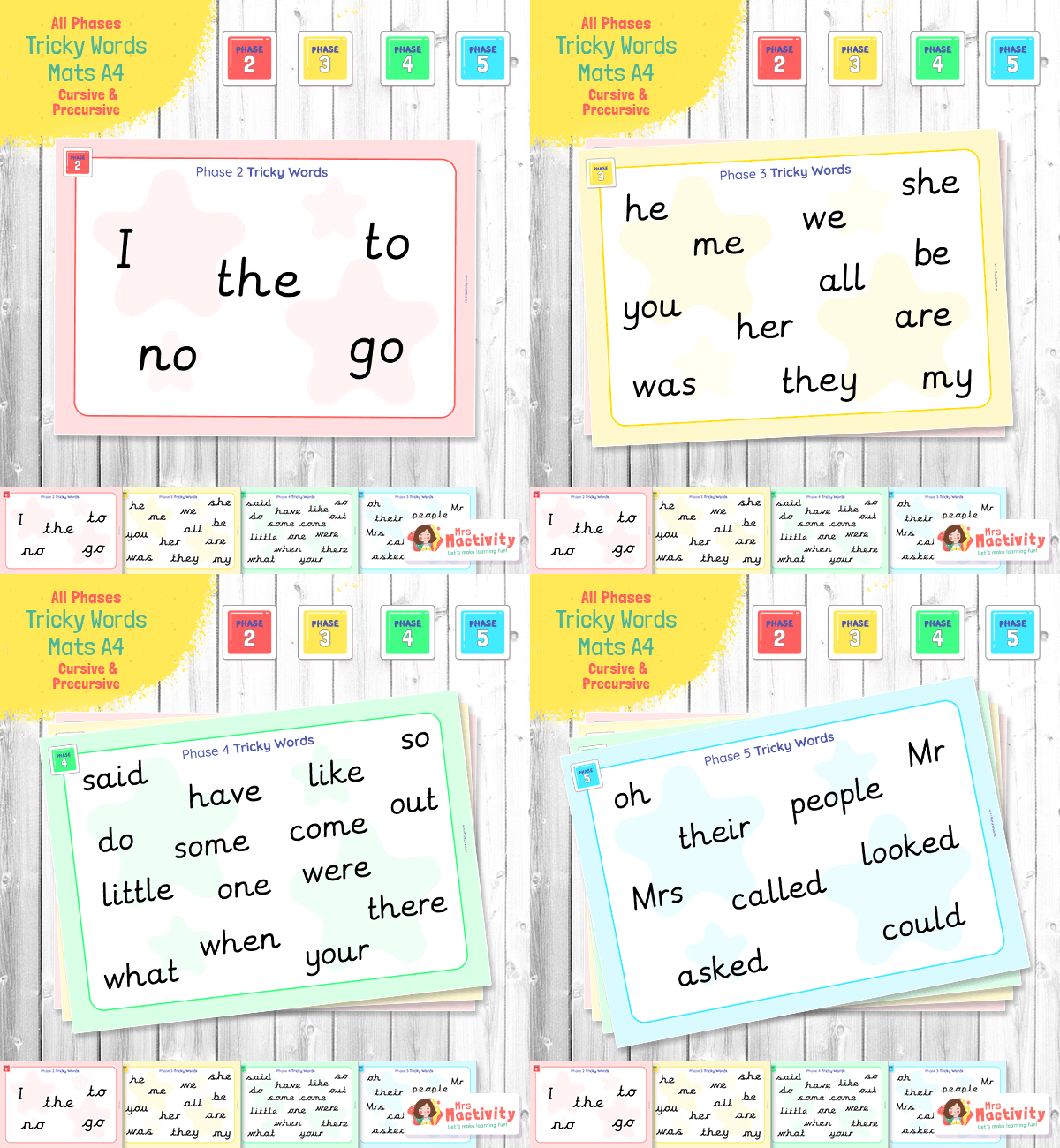
The tricky words taught in Phase 3 vary slightly between phonics programmes but often include words such as he, she, we, me, be, was, you, they, all and are.
After Phase 3, children usually move on to Phase 4 phonics, where they continue blending and segmenting while learning to read and spell words containing adjacent consonants.
| Cookie | Duration | Description |
|---|---|---|
| _fbp | 3 months | Facebook sets this cookie to display advertisements when either on Facebook or on a digital platform powered by Facebook advertising after visiting the website. |
| _ga | 1 year 1 month 4 days | Google Analytics sets this cookie to calculate visitor, session and campaign data and track site usage for the site's analytics report. The cookie stores information anonymously and assigns a randomly generated number to recognise unique visitors. |
| _ga_* | 1 year 1 month 4 days | Google Analytics sets this cookie to store and count page views. |
| _gcl_au | 3 months | Google Tag Manager sets the cookie to experiment advertisement efficiency of websites using their services. |
| Cookie | Duration | Description |
|---|---|---|
| edd-rvi | 3 months | Description is currently not available. |
| GFE_RTT | 5 minutes | No description available. |
| m | 1 year 1 month 4 days | No description available. |
| Cookie | Duration | Description |
|---|---|---|
| fr | 3 months | Facebook sets this cookie to show relevant advertisements by tracking user behaviour across the web, on sites with Facebook pixel or Facebook social plugin. |
| NID | 6 months | Google sets the cookie for advertising purposes; to limit the number of times the user sees an ad, to unwanted mute ads, and to measure the effectiveness of ads. |
| VISITOR_INFO1_LIVE | 6 months | YouTube sets this cookie to measure bandwidth, determining whether the user gets the new or old player interface. |
| VISITOR_PRIVACY_METADATA | 6 months | YouTube sets this cookie to store the user's cookie consent state for the current domain. |
| YSC | session | Youtube sets this cookie to track the views of embedded videos on Youtube pages. |
| yt-remote-connected-devices | never | YouTube sets this cookie to store the user's video preferences using embedded YouTube videos. |
| yt-remote-device-id | never | YouTube sets this cookie to store the user's video preferences using embedded YouTube videos. |
| yt.innertube::nextId | never | YouTube sets this cookie to register a unique ID to store data on what videos from YouTube the user has seen. |
| yt.innertube::requests | never | YouTube sets this cookie to register a unique ID to store data on what videos from YouTube the user has seen. |