What is Phase 5 phonics?
Phase 5 phonics is usually taught during Year 1 and builds on the grapheme-phoneme correspondences introduced in earlier phases. Pupils learn new graphemes, alternative spellings, alternative pronunciations and split digraphs, helping them read and spell an increasingly wide range of words.
A key part of Phase 5 is understanding that one sound can be represented in several different ways. Pupils also learn that the same grapheme can sometimes represent different sounds, depending on the word. This develops greater flexibility, accuracy and fluency in both reading and spelling.
Phase 5 phonics resources, worksheets and activities
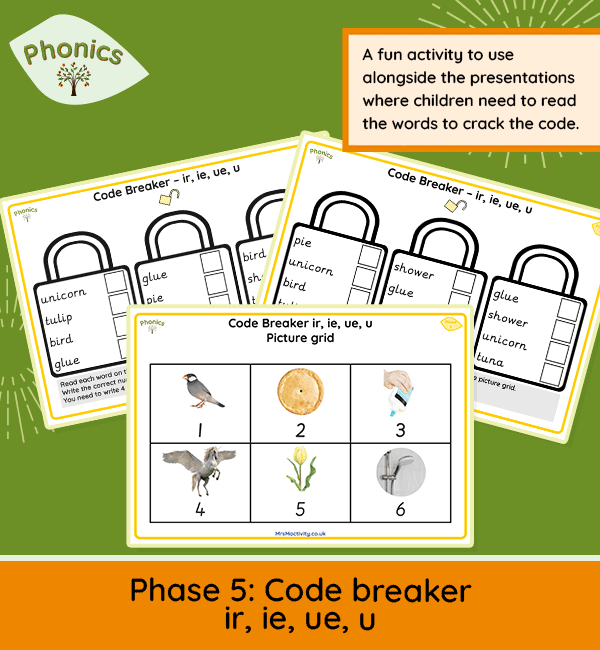
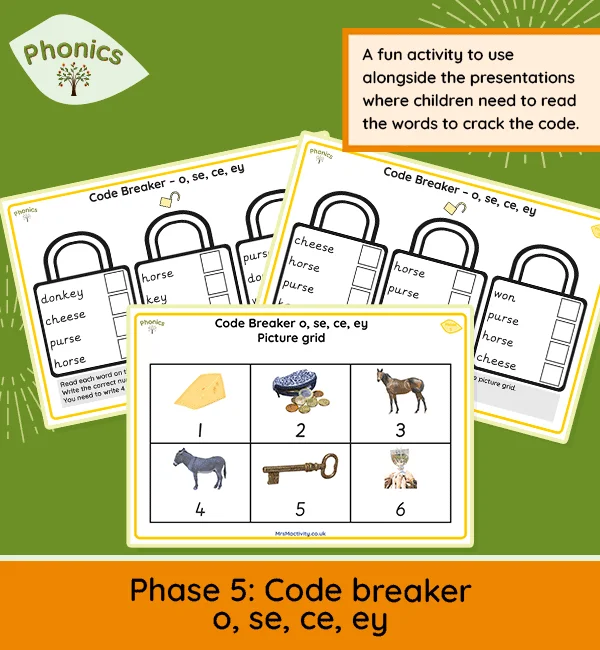
Our teacher-made Phase 5 phonics resources provide structured practice for daily phonics lessons, intervention groups, independent work and home learning.
- Phase 5 phonics worksheets for new graphemes and spelling patterns
- Alternative spelling activities for different ways to represent the same sound
- Alternative pronunciation resources for graphemes with more than one sound
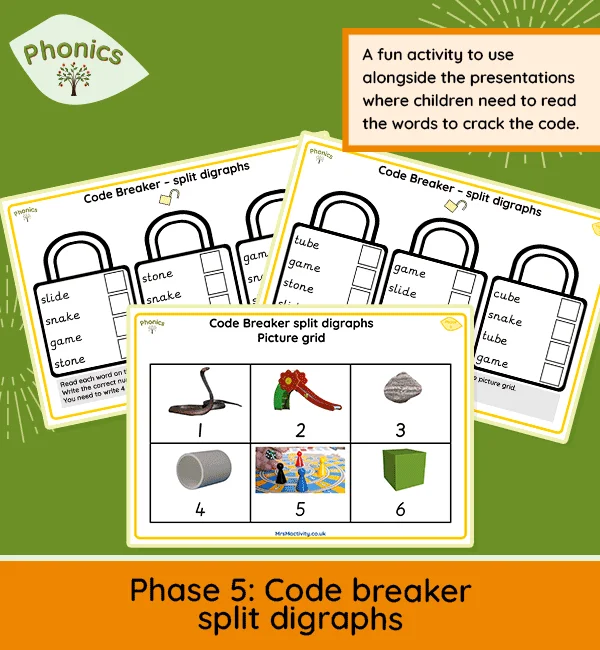
- Split digraph worksheets, games and reading activities
- Phase 5 tricky word activities
- Reading and spelling tasks using Phase 5 words and sentences
- Phonics games to build decoding speed and reading fluency
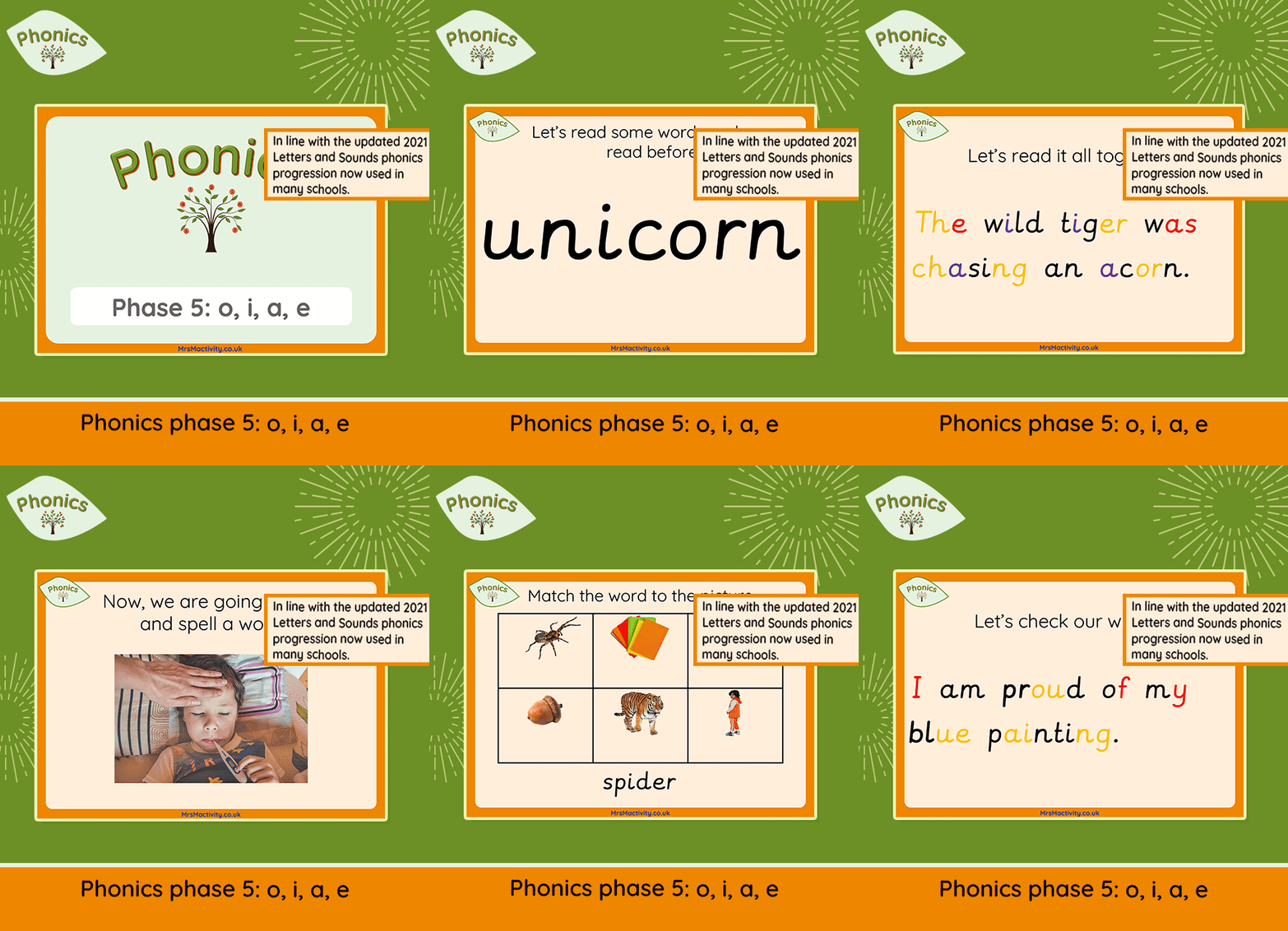
- PowerPoints for whole-class Phase 5 phonics teaching
- Assessment and Phonics Screening Check practice resources
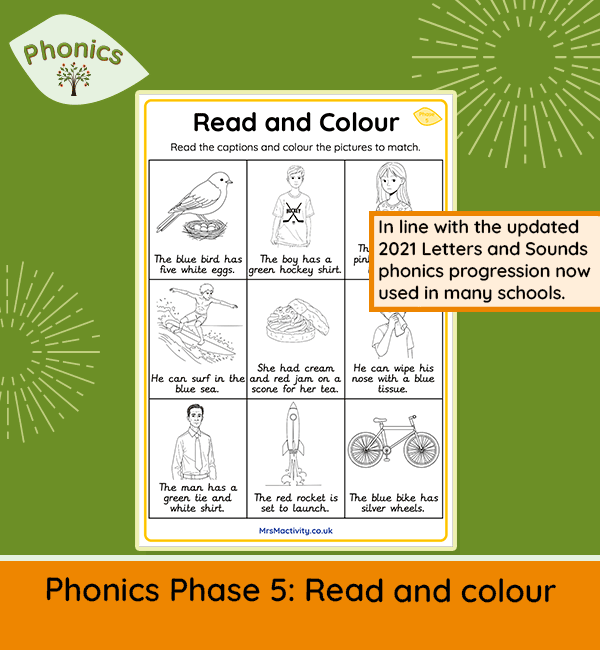
For additional decoding and comprehension practice, try our Phase 5 Read and Colour activity. You can also explore our Phase 5 phonics PowerPoints for ready-to-teach whole-class input.
Alternative spellings in Phase 5 phonics
During Phase 5, pupils learn that a phoneme can be represented by several different graphemes. For example, the /ai/ sound may be written as ai in rain, ay in play or a-e in cake. Learning these alternative spellings helps pupils recognise patterns and make increasingly informed spelling choices.
Explore our alternative spelling resources for worksheets, games and activities covering the different ways familiar sounds can be represented.
Alternative pronunciations in Phase 5 phonics
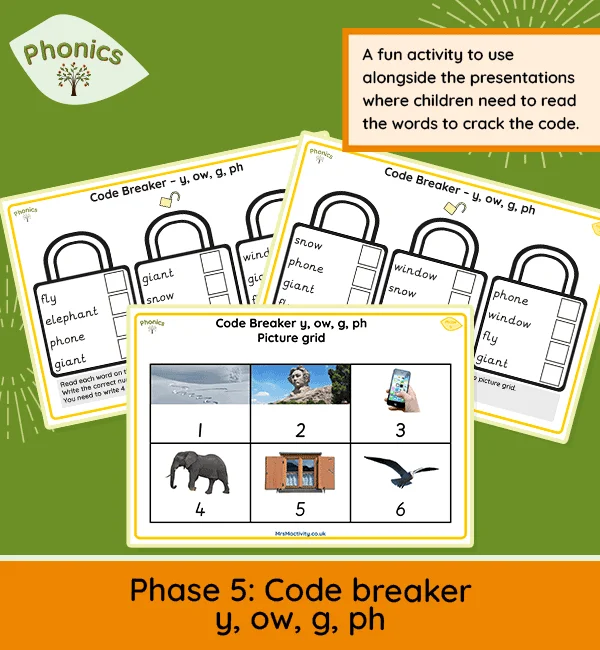
Pupils also learn that some graphemes can represent more than one sound. For example, the grapheme ow is pronounced differently in snow and cow. Practising alternative pronunciations helps pupils try different possibilities when decoding unfamiliar words.
Browse our alternative pronunciation activities to support flexible decoding, word reading and spelling.
Split digraphs in Phase 5 phonics
Split digraphs are an important part of Phase 5 phonics. Pupils learn spelling patterns such as a-e, e-e, i-e, o-e and u-e, where two letters work together to represent one sound but are separated by another letter.
Our split digraph resources include games, worksheets and reading activities for practising words such as cake, these, time, home and cube.
Phase 5 phonics and the Year 1 Phonics Screening Check
Phase 5 phonics teaching plays an important role in preparing pupils for the Year 1 Phonics Screening Check. Pupils need to apply their knowledge of new graphemes, split digraphs, alternative spellings and alternative pronunciations when decoding both real words and unfamiliar pseudo-words.
Support regular screening practice with our Phonics Screening Check resources, Phase 2–5 Tricky Word Mats and Phonics Screening Check PowerPoint.
Phase 5 phonics resources for Year 1
Whether you’re teaching whole-class phonics, supporting pupils through intervention or providing independent practice, our Phase 5 phonics resources help Year 1 pupils develop fluent decoding and increasingly accurate spelling. The collection includes practical games, worksheets, PowerPoints and reading activities that can be used throughout the school year.
Phase 5 phonics FAQs
What age is Phase 5 phonics for?
Phase 5 phonics is usually taught during Year 1, although the exact timing may vary between schools and phonics programmes.
What is taught in Phase 5 phonics?
Pupils learn new graphemes, alternative spellings, alternative pronunciations and split digraphs. They also continue practising blending, segmenting, tricky words and fluent sentence reading.
What are alternative spellings?
Alternative spellings are different graphemes that represent the same sound. For example, the /ai/ sound can be represented by ai, ay or a-e.
What are alternative pronunciations?
Alternative pronunciations occur when the same grapheme represents different sounds in different words. For example, ow is pronounced differently in snow and cow.
What are split digraphs?
Split digraphs are spelling patterns where two letters represent one sound but are separated by another letter, such as a-e in cake, i-e in time and o-e in home.
Can these resources support Phonics Screening Check preparation?
Yes. Our Phase 5 phonics worksheets, games, PowerPoints and reading activities provide regular practice with blending, decoding and reading unfamiliar words, helping pupils build confidence ahead of the Year 1 Phonics Screening Check.