Children going into phase 4 will know most of the simple GPCs, and be able to blend phonemes to read CVC words and segment CVC words for spelling. They will have some experience in reading simple two-syllable words and captions. They will know letter names and be able to read and spell some tricky words. The purpose of this phase is to consolidate children’s knowledge of graphemes in reading and spelling words containing adjacent consonants and polysyllabic words.
What are the phase 4 tricky words?
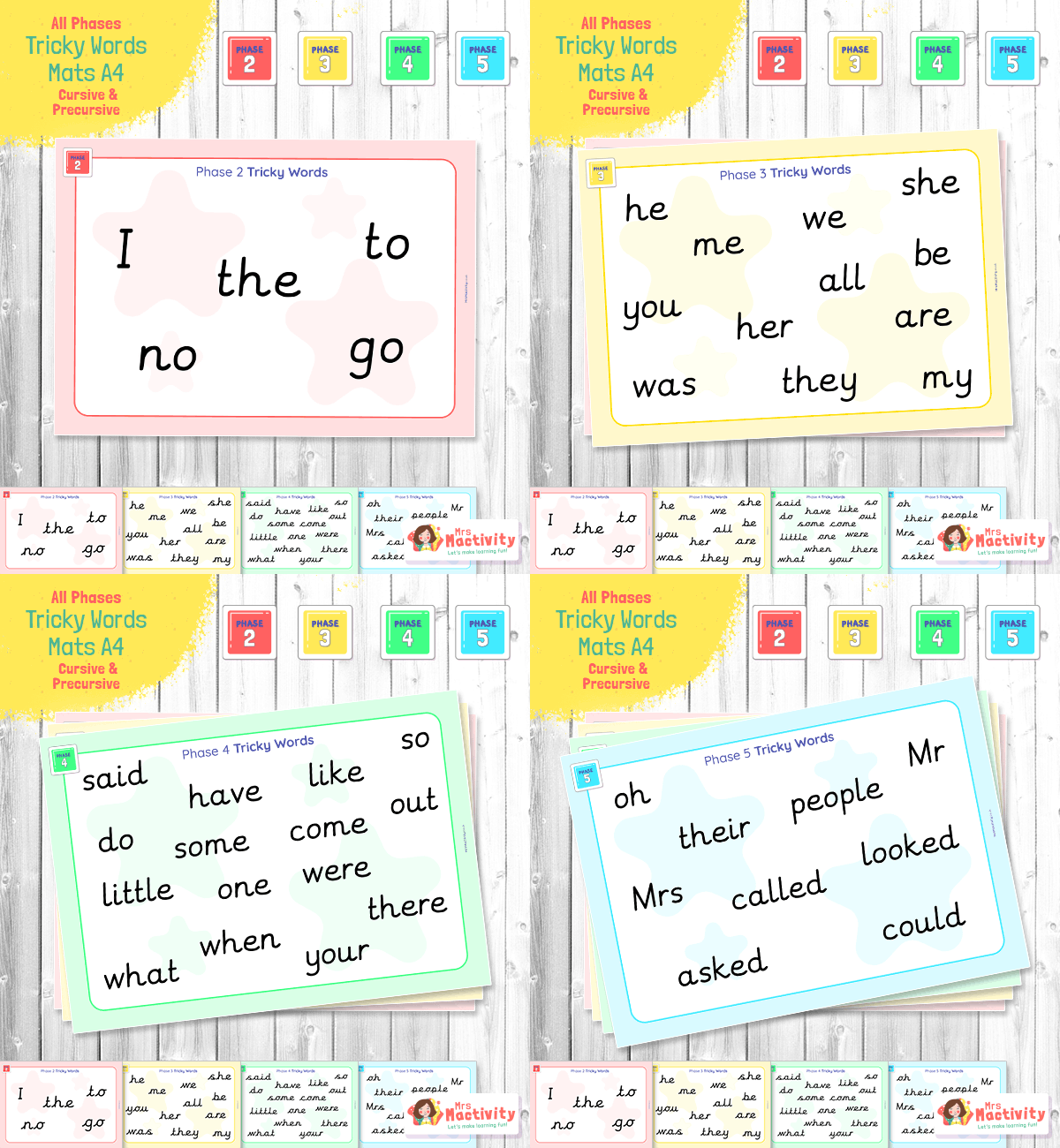
The phase 4 tricky words for children to read are: said, like, there, when, so, do, there, when, some, little, out, come, one, what, have, were.
The phase 4 tricky words for children to write are: he, she, we, be, me, was, my, you, her, they, all, are.
Use our phase 4 tricky word cards as phase 4 flashcards to help children learn to read tricky words. Tricky words are words that cannot yet be decoded at the current phonics stage children are at. We have a whole range of time-saving phase 4 tricky words resources including this phase 4 tricky words treasure hunt game. A fun way to help children learn tricky words is with our phase 4 tricky words high five game – encourage children to high five the focus tricky word each day as they leave the room. This will help children remember each word and apply it in their learning. This phase 4 tricky words car park game can be used in provision areas to engage children in phonics learning.
What are tricky words?
Tricky words are words that cannot be completely decoded, or can’t be decoded at all, at the stage of phonics learning the child is at. They need to be learned by sight, as they crop up regularly in reading texts and captions. It’s really important that children learn to read phase 4 phonics tricky words, and quite often, the best way to teach them is by using this phase 4 tricky words mirror activity, using a hand mirror, to encourage children to read the phase 4 tricky words. Use as part of your phonics provision area, or during phonics sessions.