


Year 2 spelling resources
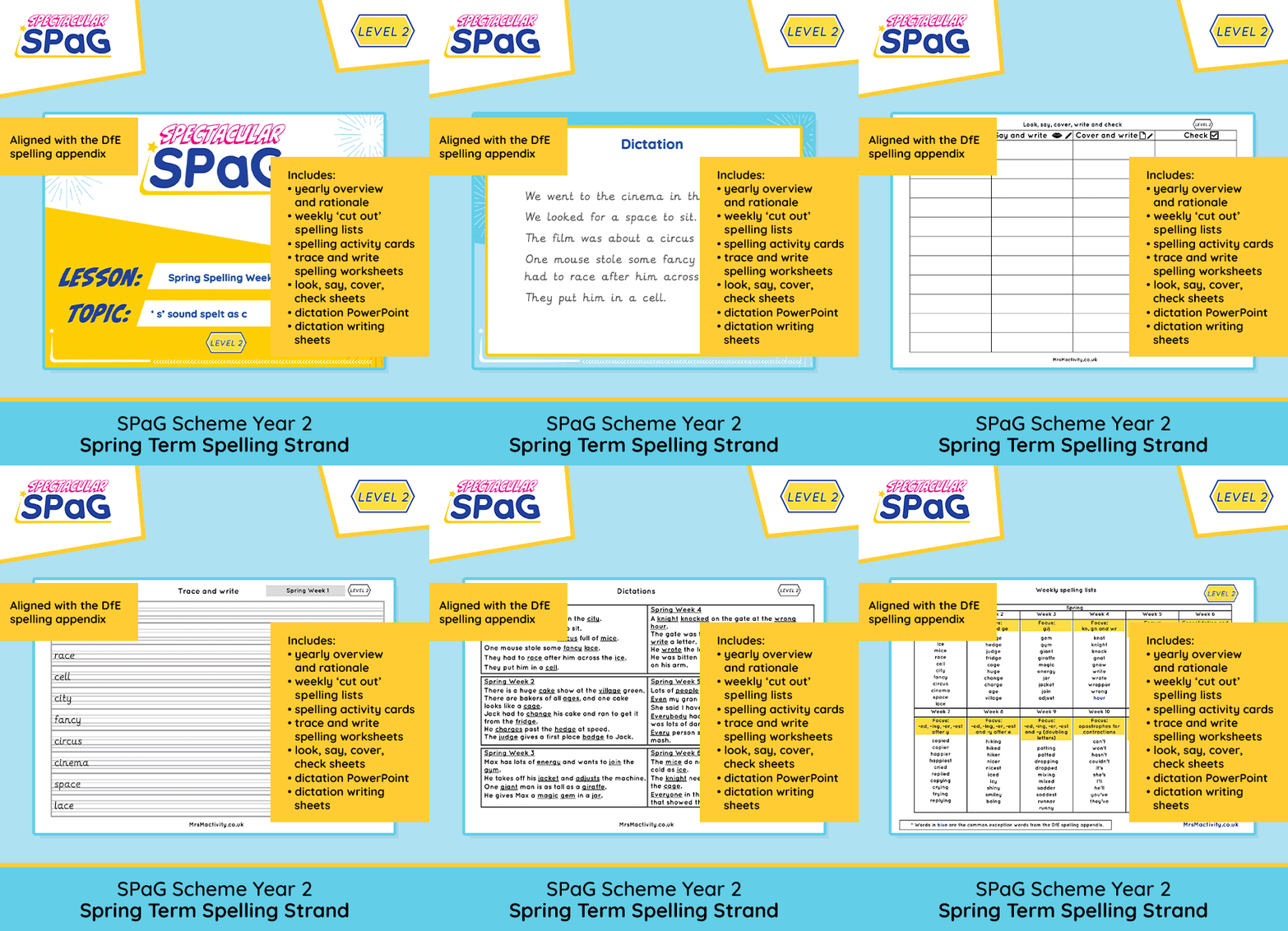
This SPaG Scheme Year 2 Spring Term Spelling Strand contains weekly spelling lists for ;a whole academic year and can be used alongside the rest of our Spectacular SPaG scheme. Where possible, we have made links ;between the spellings and the SPaG lessons, but they can also be used as stand-alone resources.
These spellings are designed to be used by Year 2 pupils as they are based upon the DfE spelling appendix for this year group. However, professionals may choose to use the spellings and related activities with older pupils if appropriate.
Each half term consists of five weeks of spellings with a sixth week for consolidation and review. This consolidation week gives teachers opportunity to assess and check retrieval of a selection of spellings from the previous five weeks and address any repeated spelling errors.
The Spectacular SPaG scheme also includes activities and worksheets to practise the weekly spellings both in school and at home.These resources can be used to fit within your own timetabled sessions for spelling practice.
We recommend that you start each week by introducing the spelling list and discussing the meaning of each word.
The Look say, cover, write and check sheets are ideal for an initial practice session in class and there are individual weekly spelling lists to be cut out and stuck into spelling books or home reading records for practice at home.
The number of spelling sessions per week will be dependent on your own timetable. Frequently revisiting the spelling lists through different activities such as tracing, writing out the spellings and using the range of tasks on the KS1 spelling activity cards will enable children to secure their knowledge in a fun and enjoyable ;way.
It is intended that children participate in a spelling test each week, checking if they have learnt the set of words. It is advisable that this is done in a spelling book as a record of individual attainment, and this also enables teachers to assess if there are any particular difficulties or children who may need an adapted version of the weekly spellings. It may be more suitable for some children to do the spelling test in a small group or 1:1 with an adult.
For the dictations, each week there is a set of sentences or a passage containing all the spellings for that week. A presentation is included to show the children the correct spellings and to allow them to peer or self asses their work. Each passage is also provided in a printable format with the focus spellings for each week underlined. This sheet also includes a lined sheet which the children can use to write each set of sentences.
Explore our Year 2 SPaG resources.