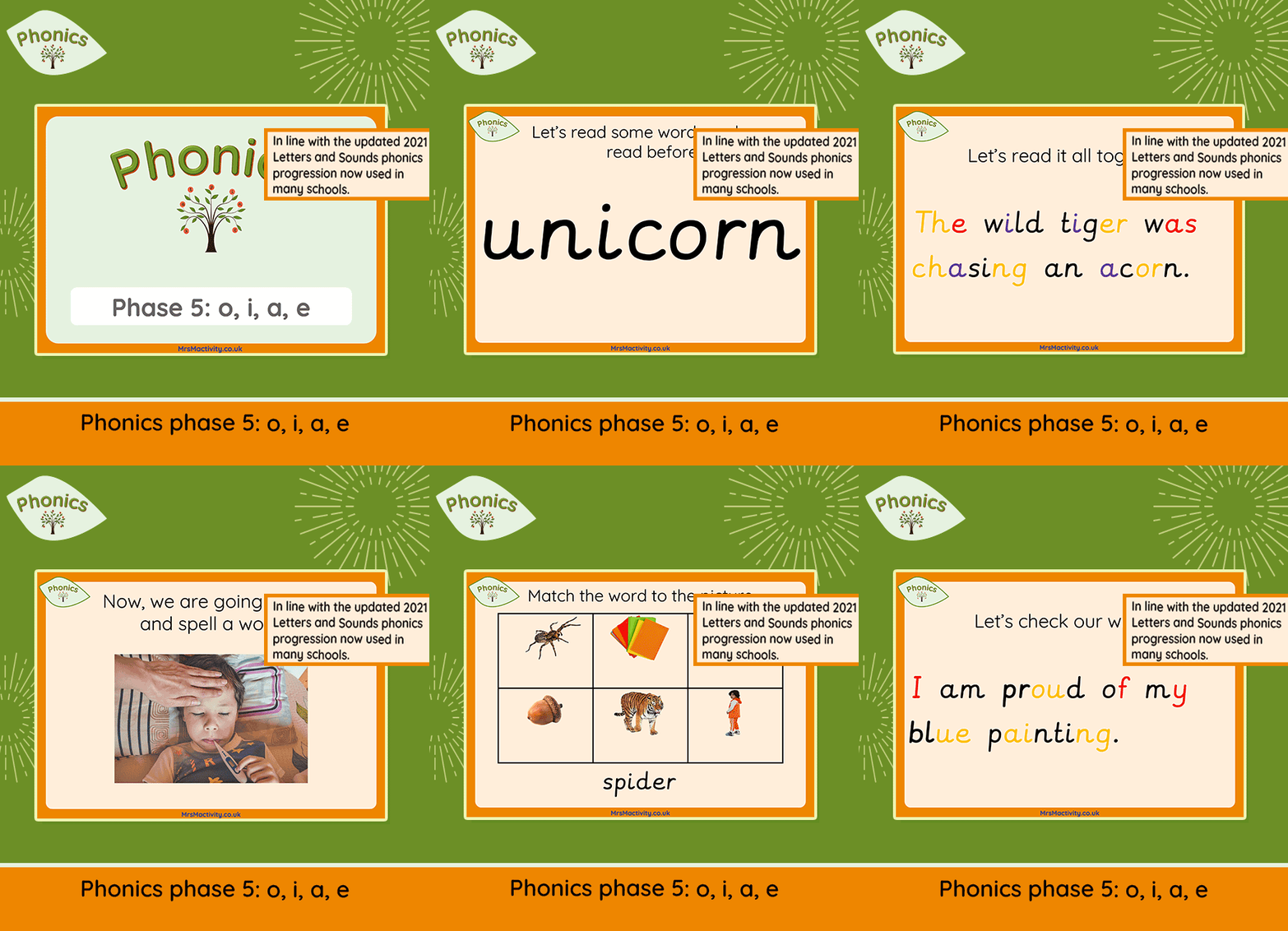
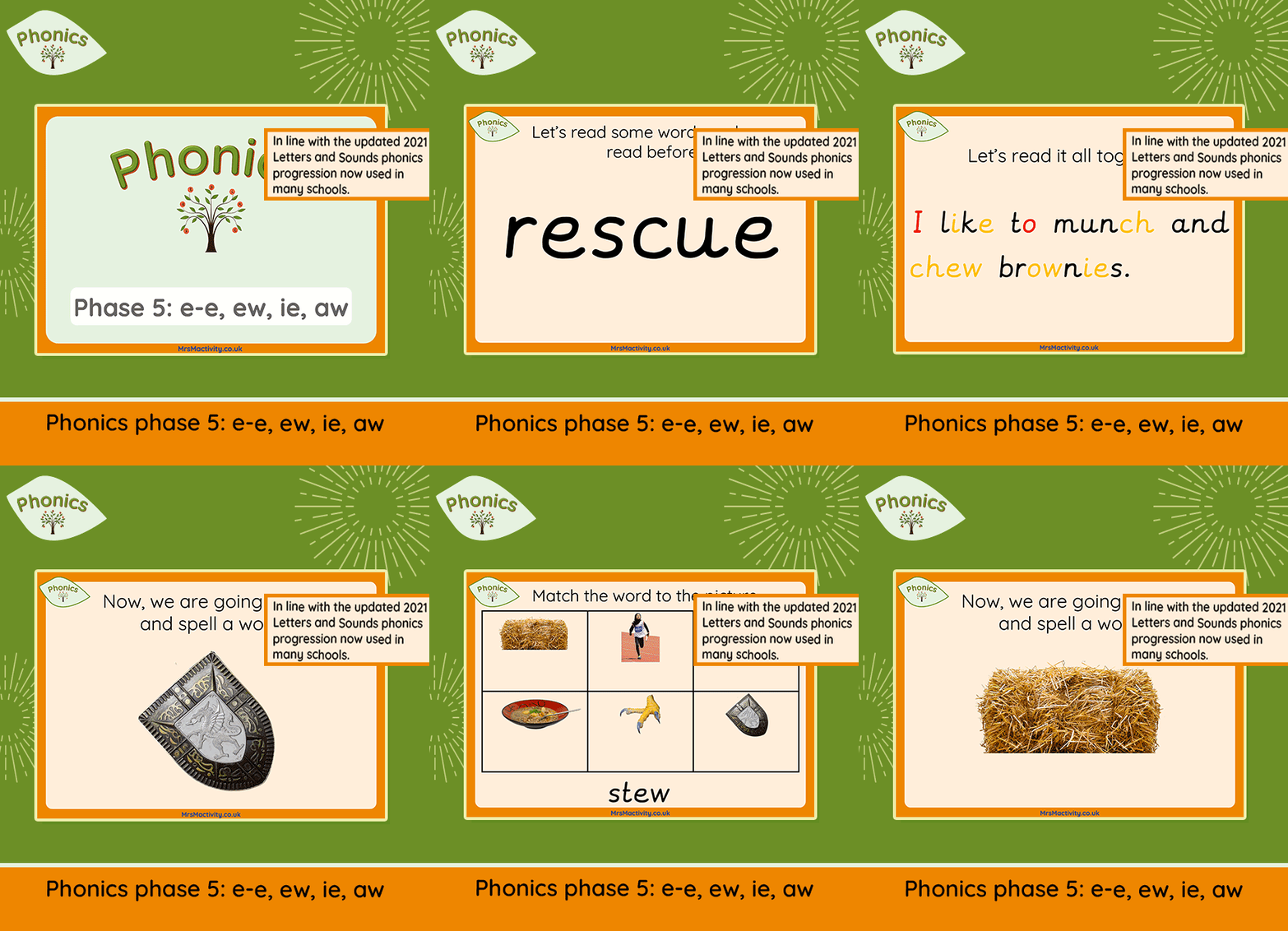
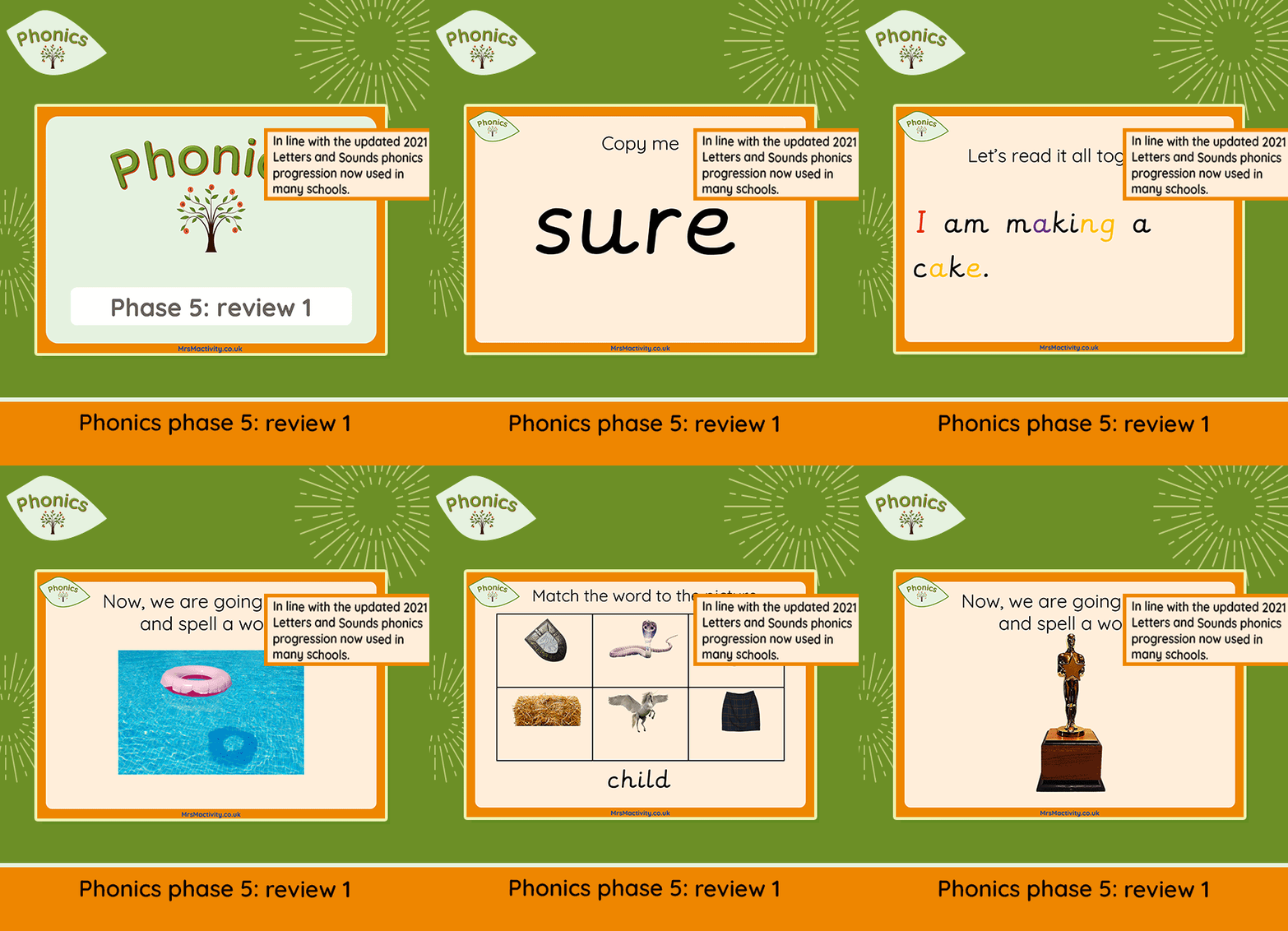
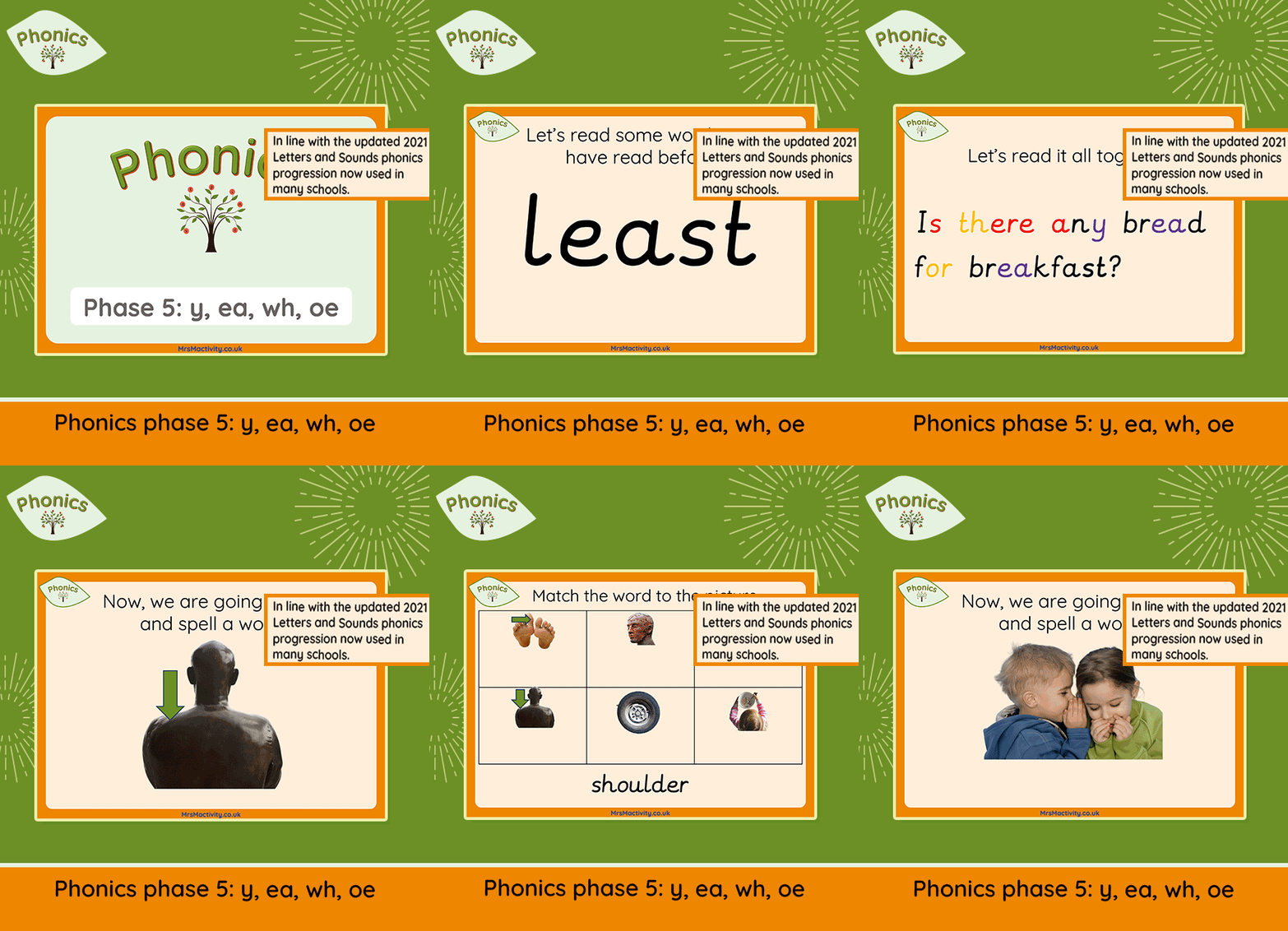
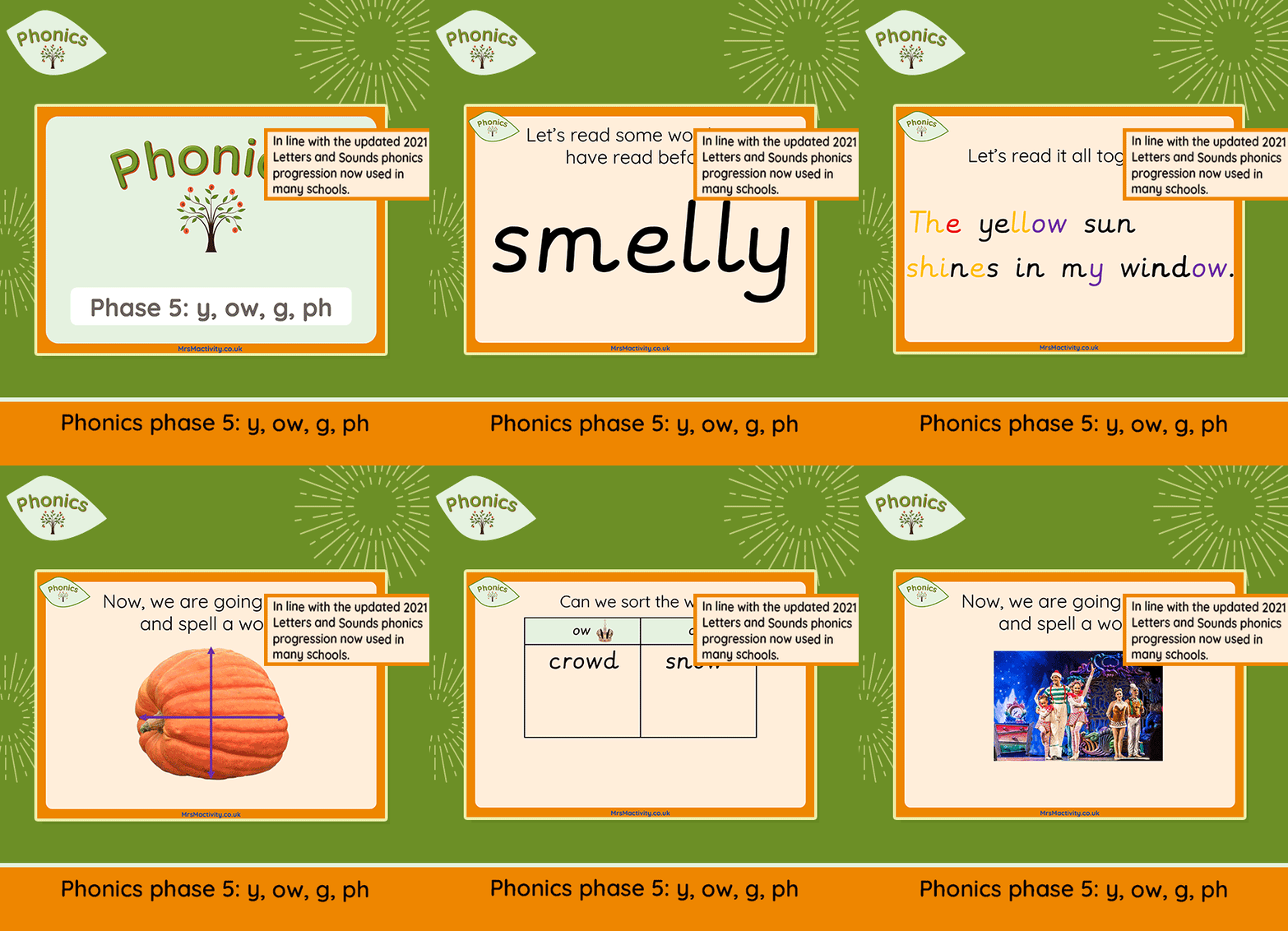
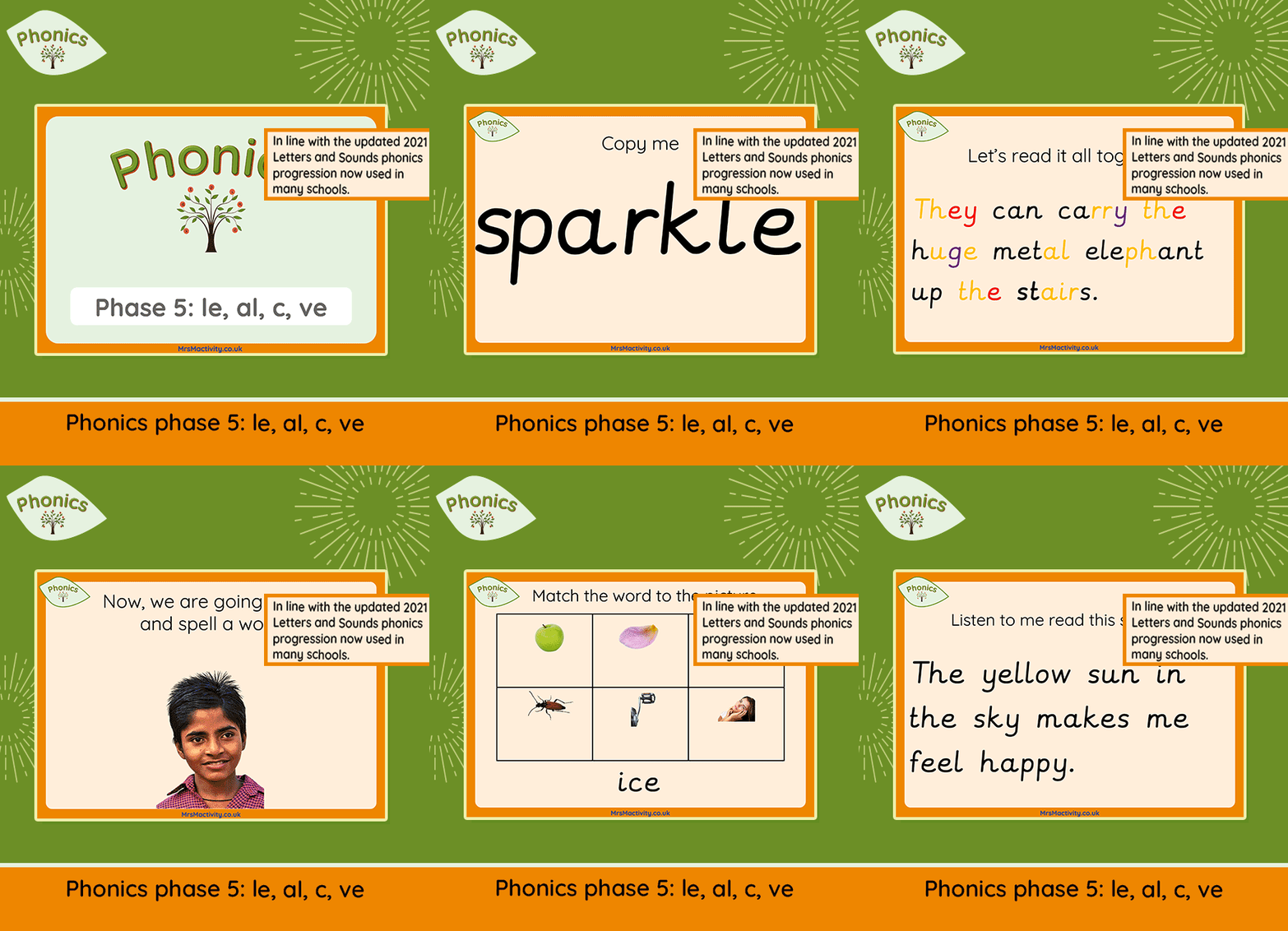
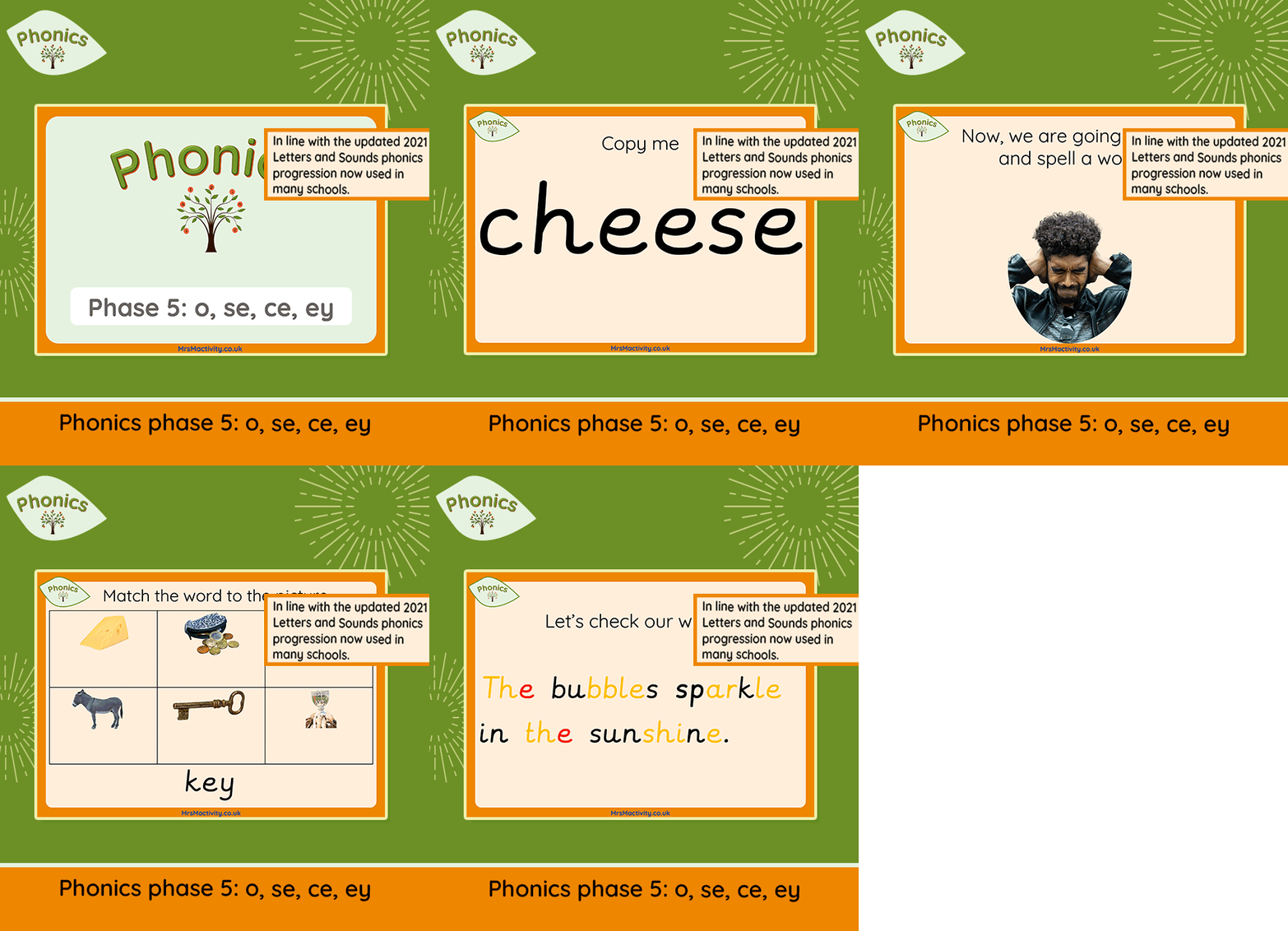
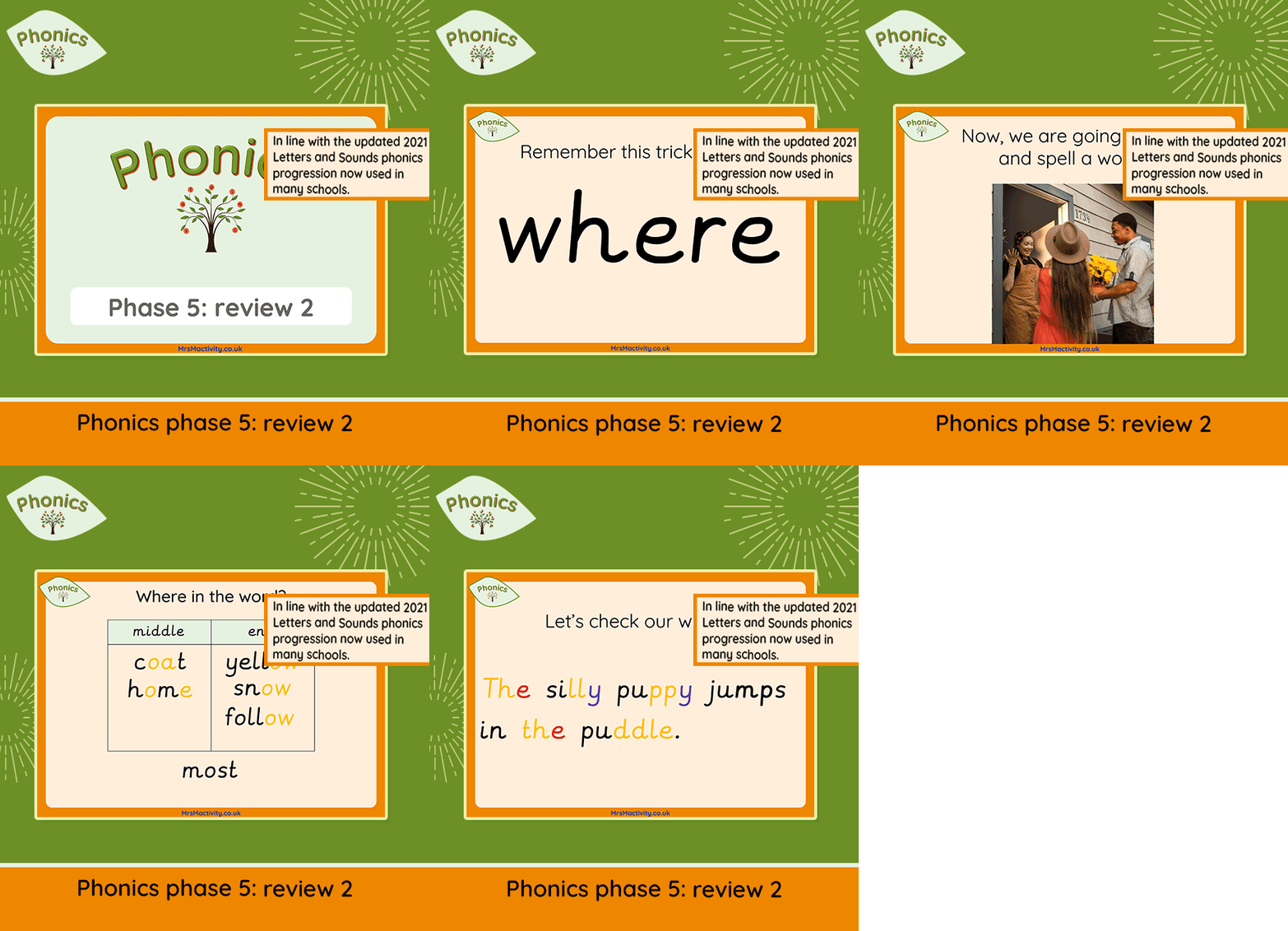
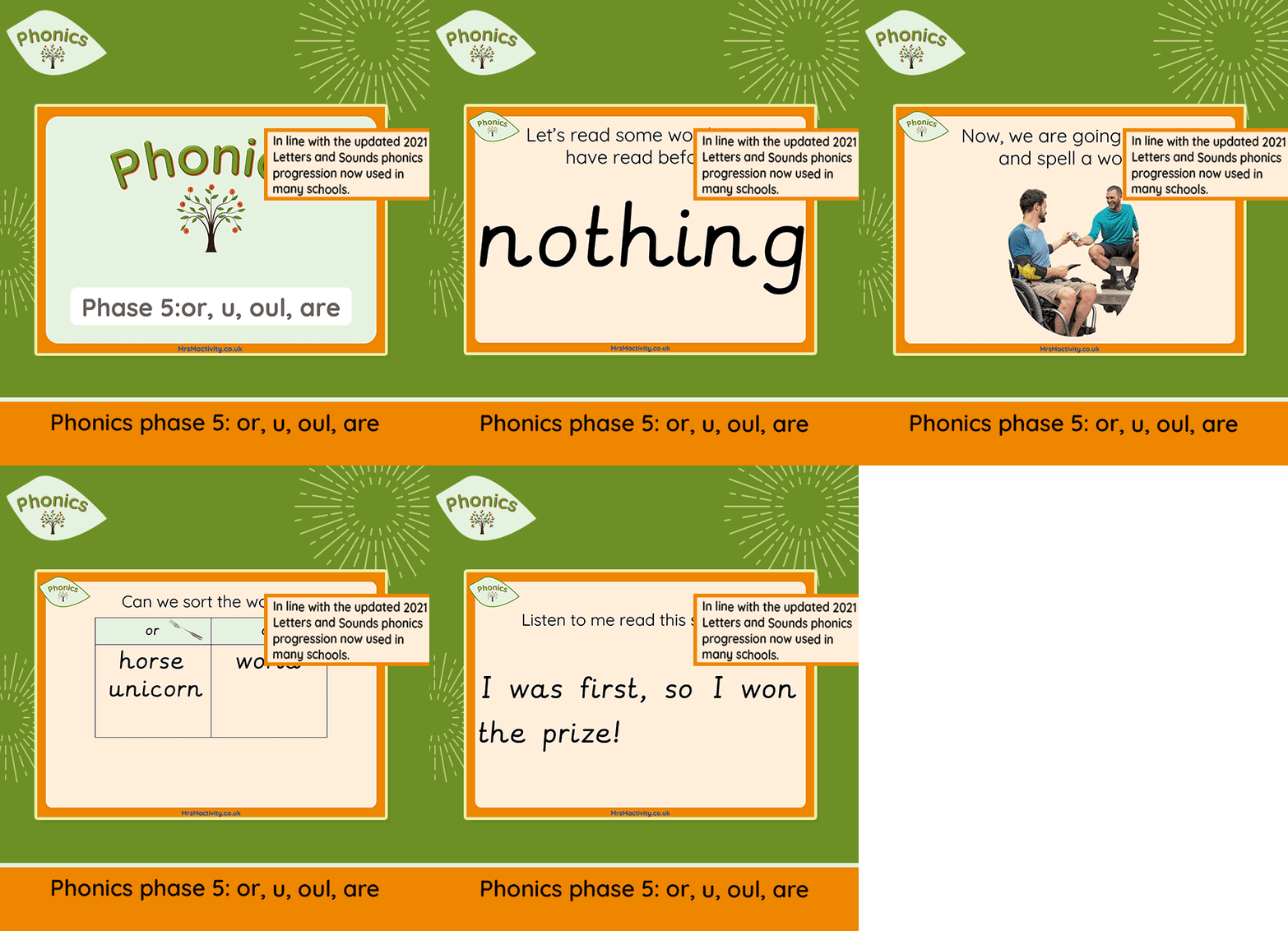
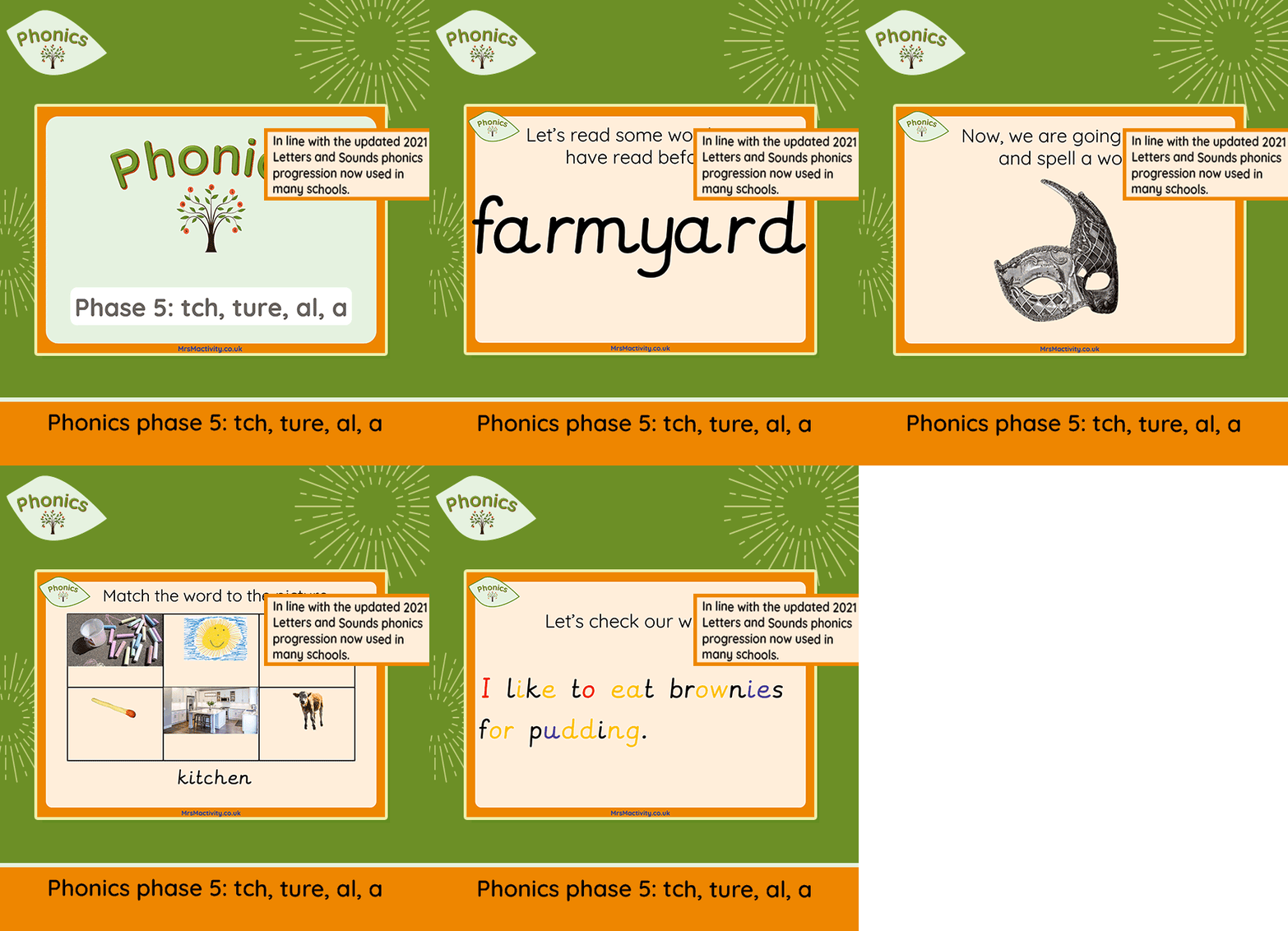
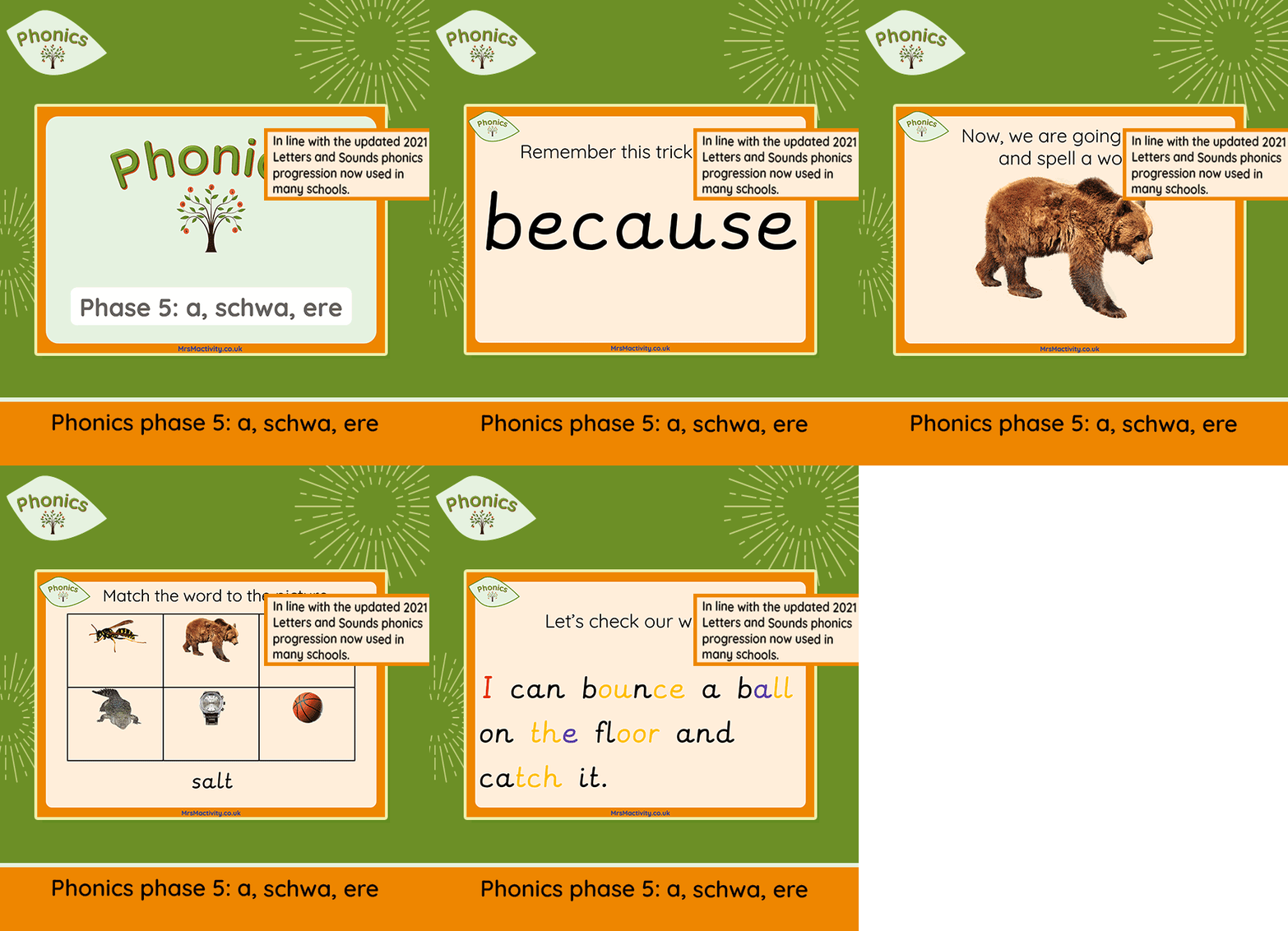
Phase 5 phonics slides for whole-class teaching
Phase 5 builds on earlier phonics learning by introducing additional graphemes and spelling patterns. Pupils learn that the same sound can often be spelled in different ways and that some graphemes can represent alternative sounds depending on the word.
Using consistent Phase 5 phonics PowerPoints helps pupils revisit key learning, practise blending and apply their phonics knowledge when reading and spelling longer words, captions and sentences.
Phase 5 phonics PowerPoint teaching sets
Explore structured lesson presentations covering common Phase 5 graphemes, spelling patterns and reading skills.
Alternative spellings, alternative pronunciations and split digraphs
During Phase 5, pupils learn that one sound can be represented in different ways and that some graphemes can have alternative pronunciations depending on the word. This helps pupils become more flexible when decoding unfamiliar words and choosing the correct spelling pattern.
These phonics lesson presentations support teaching around alternative spellings, alternative pronunciations and split digraphs while helping pupils apply their knowledge during reading and spelling activities.
For additional practice, explore our alternative spellings resources, alternative pronunciation resources and split digraph resources.
Tricky words and reading fluency
Tricky words continue to be revisited throughout Phase 5. Pupils practise reading and spelling these words accurately before applying them within captions, sentences and independent writing.
Regular use of Phase 5 phonics lesson presentations also gives pupils repeated opportunities to improve blending, decoding and reading fluency through familiar lesson routines.
Support Year 1 phonics and screening preparation
These Phase 5 phonics PowerPoints are ideal for whole-class teaching, small-group revision and targeted support. They also help pupils develop the decoding confidence needed for the Year 1 Phonics Screening Check, including practice reading unfamiliar and pseudo-words.
For wider phonics activities, worksheets and reading practice, explore our Phase 5 phonics resources.
Phase 5 phonics FAQs
What are Phase 5 phonics PowerPoints used for?
Phase 5 phonics PowerPoints are used to introduce new graphemes and spelling patterns, model blending and decoding, and support reading and spelling practice during whole-class phonics teaching.
What are alternative spellings in Phase 5?
Alternative spellings are different ways of representing the same sound, such as ai, ay and a-e for the /ai/ sound.
What are alternative pronunciations?
Alternative pronunciations occur when the same grapheme represents different sounds in different words. Phase 5 teaches pupils to try different pronunciations and use the context of the word to decide which one is correct.
What are split digraphs?
Split digraphs are spelling patterns where two letters work together to represent one sound but are separated by another letter, such as a-e in cake and i-e in time.
Can these presentations support phonics screening preparation?
Yes. These presentations help pupils practise blending, decoding and reading unfamiliar words fluently, supporting preparation for the Year 1 Phonics Screening Check.