Communication & Language • Listening & Attention • Reception
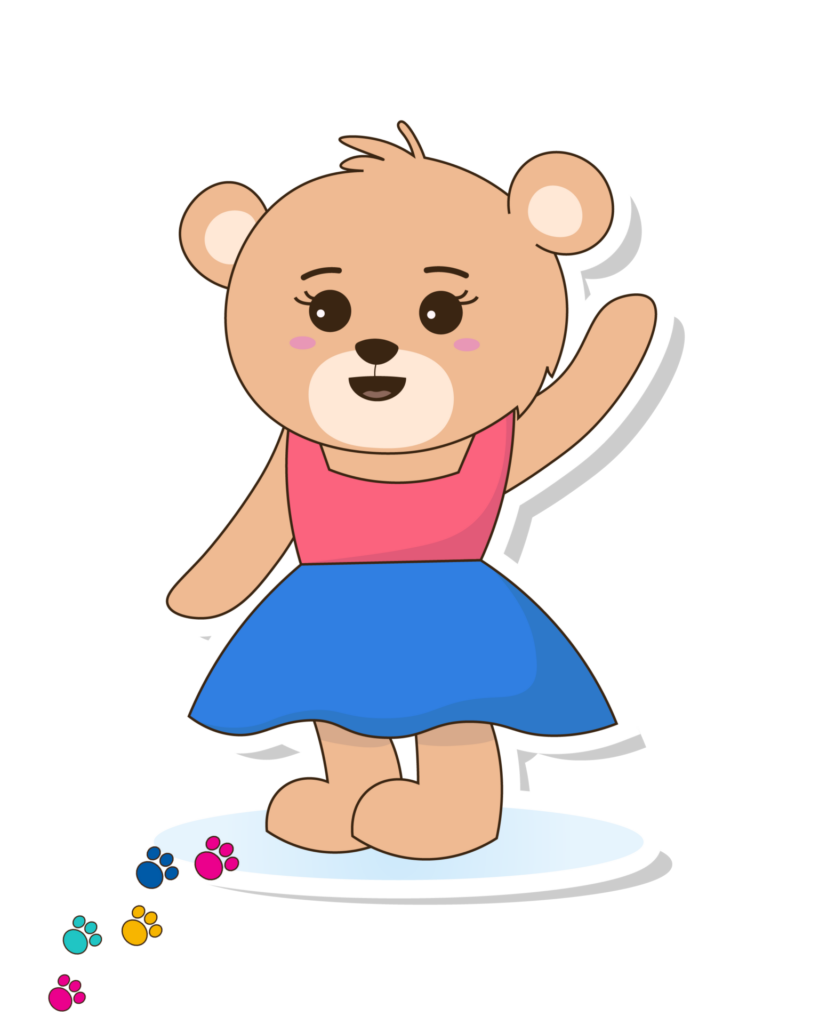
Tilly’s Steps to Attention is one of the six-week intervention units within the Foundations for Learning Intervention Programme (FLIP). It is designed to support Reception children who would benefit from additional help to develop their early listening and attention skills.
Through short, structured daily sessions built around familiar listening games, children learn to get ready to listen, sustain their attention, notice and remember what they hear, and follow increasingly complex instructions.
Access everything you need to deliver Tilly’s Steps to Attention, from guidance and identification through to six weeks of structured listening and attention intervention resources. The Unit Guide explains the programme and its progression, while the Identification and Progression Toolkit helps you identify children who may benefit from additional support and establish their starting points. Practitioner Notes and the Participation Log support observation and progress monitoring as you work through each week’s sessions.
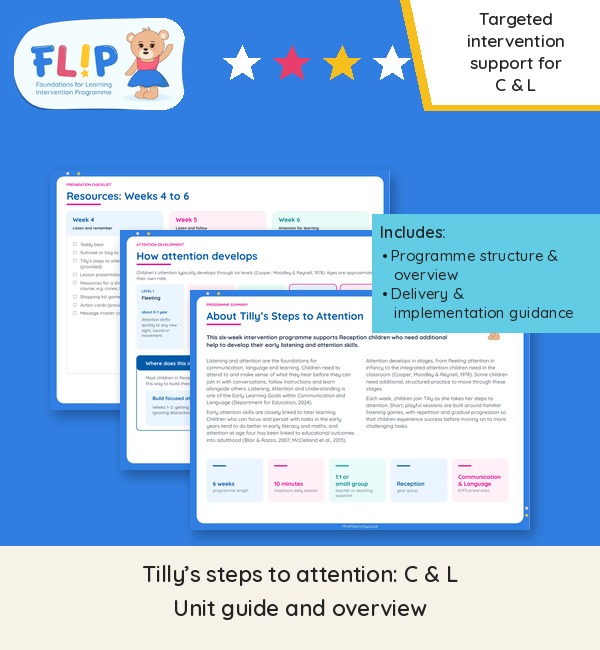
Start with the Unit Guide to prepare, deliver and review the programme.
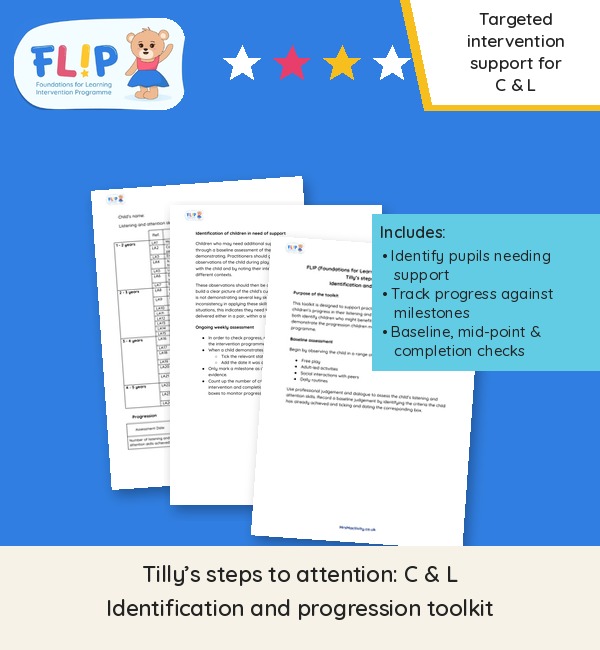
Use the Identification & Progression Toolkit to identify children, monitor progress and plan next steps.
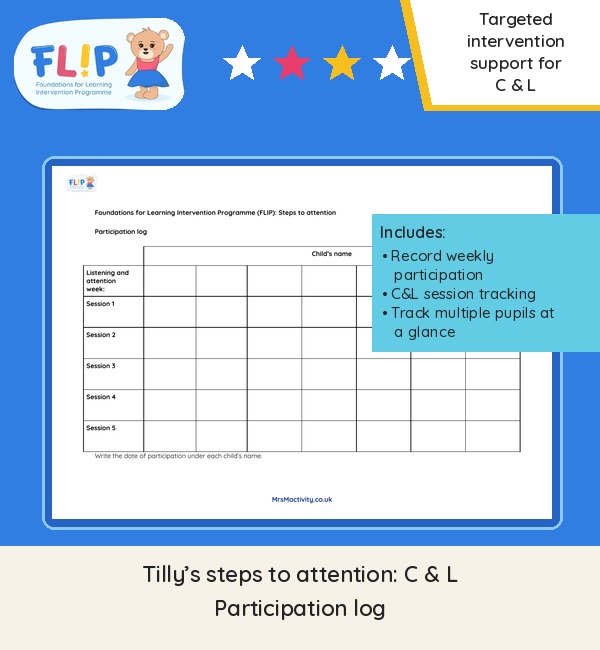
Keep a clear record of each child’s participation across the sessions.
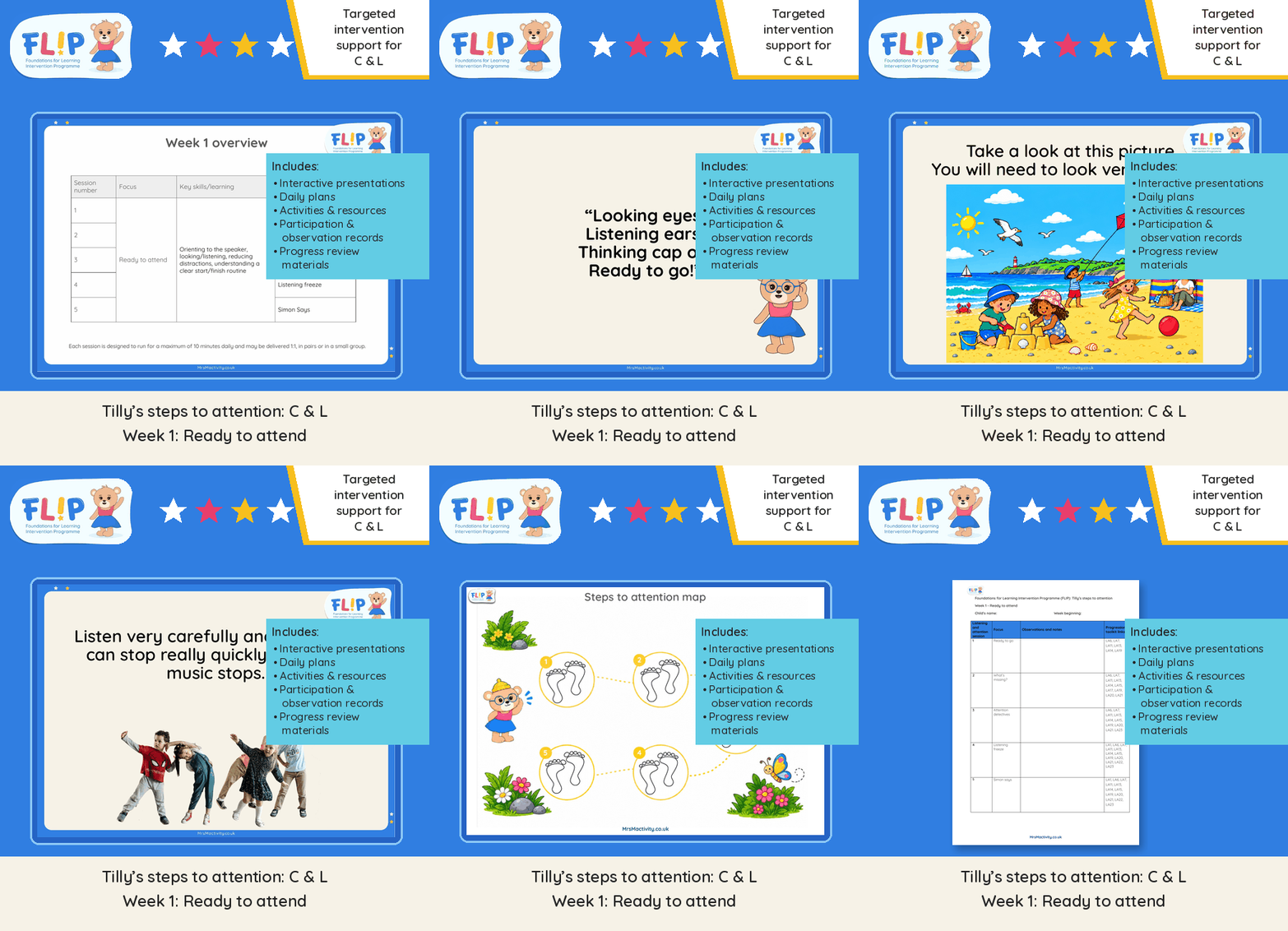
Access each week’s planning, presentation slides and practical resources as Tilly takes children step by step through the programme, with each week building on the last to develop their listening and attention skills.
Children learn the “Looking eyes, listening ears” routine and practise looking, listening and stopping on cue through games such as Listening freeze and Simon Says.
Children practise focusing for longer, listening out for special words in stories, copying actions and waiting for the signal in Popcorn.
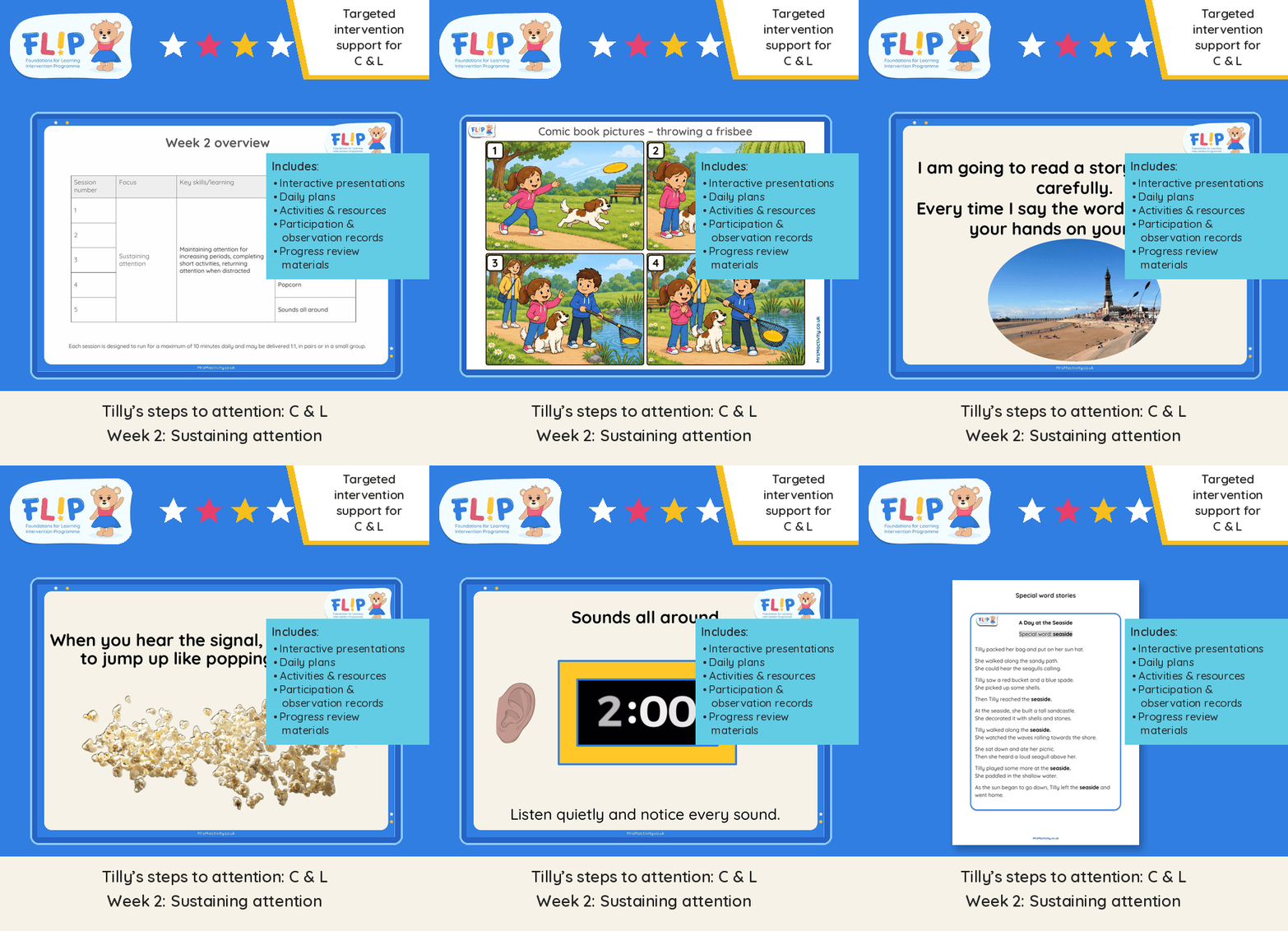
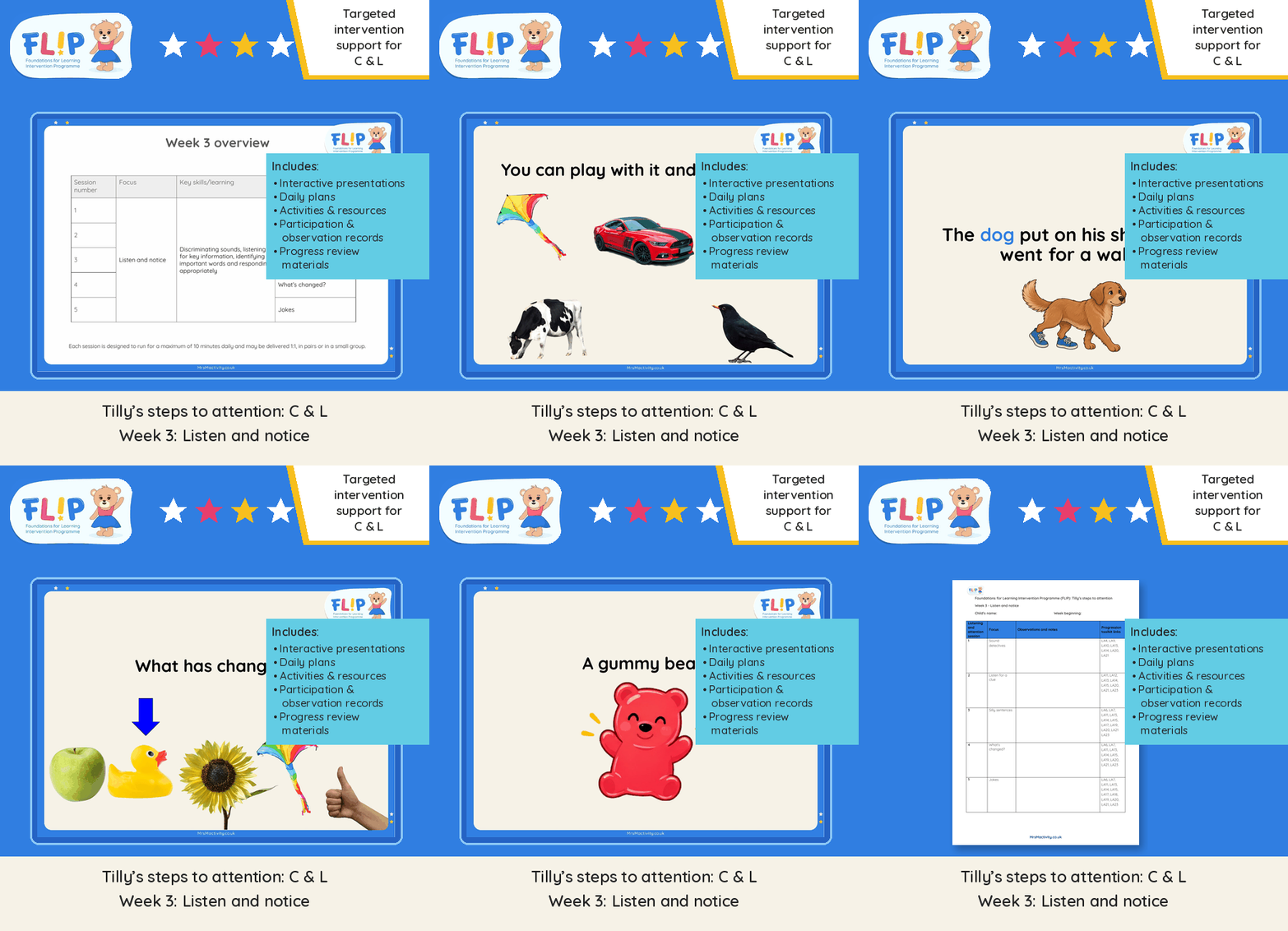
Children tell sounds apart, listen for clues to identify objects and spot the silly part of sentences as they learn to pick out key information.
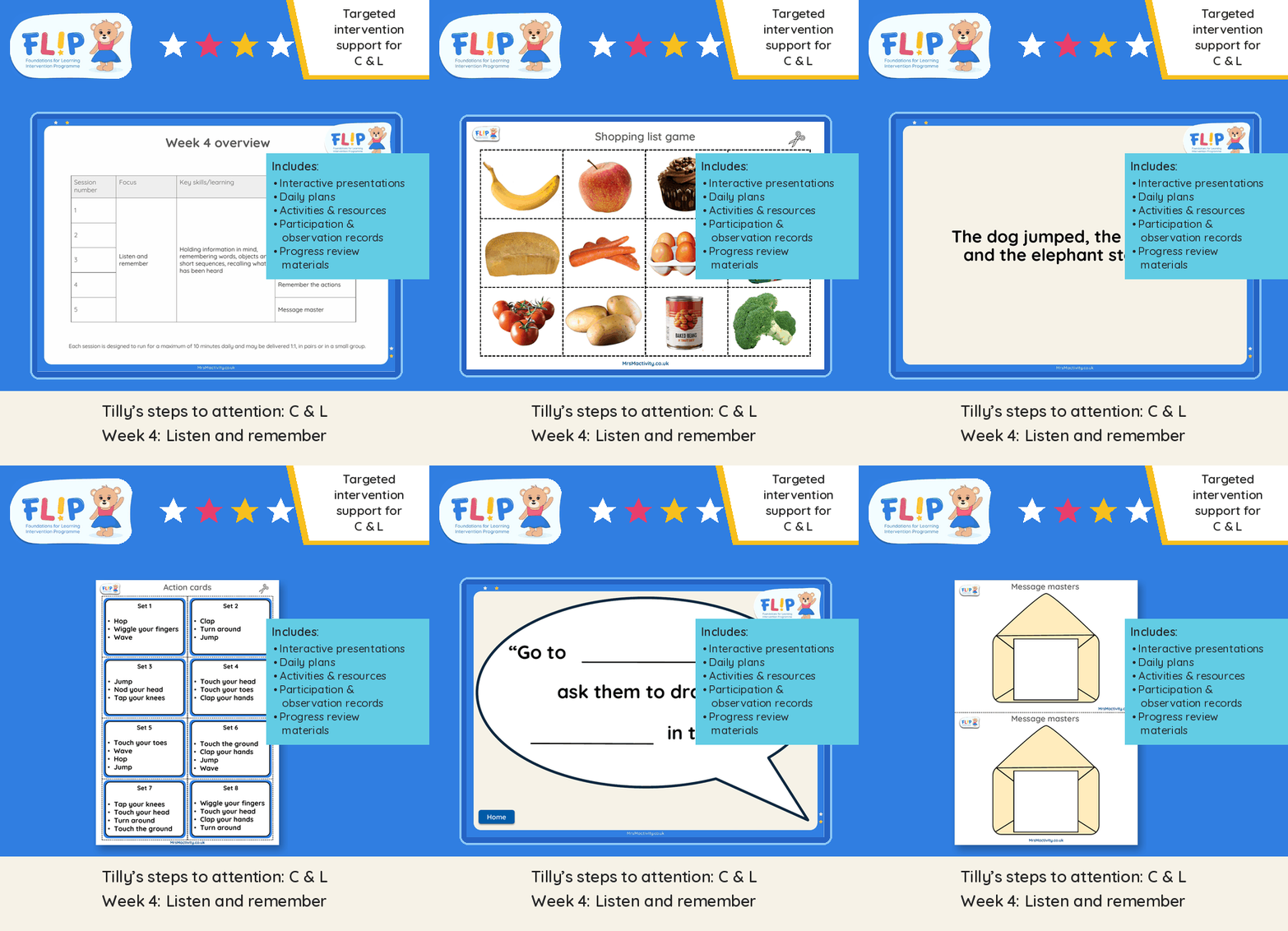
Children practise remembering what they hear, recalling words, shopping lists and actions in the right order, and passing on spoken messages accurately.
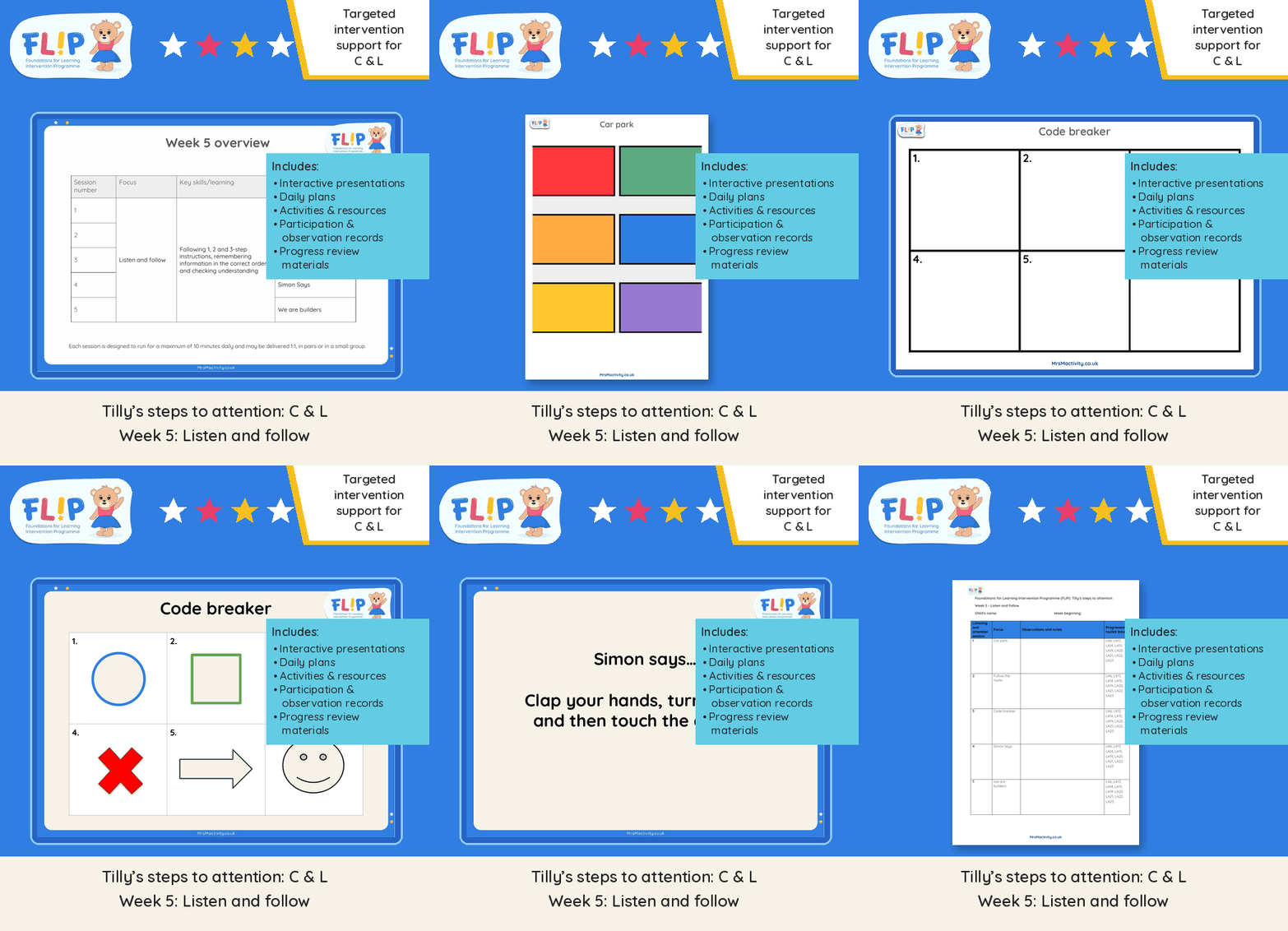
Children follow 1-, 2- and 3-step instructions to park cars, crack codes and build models, remembering each part in the correct order.
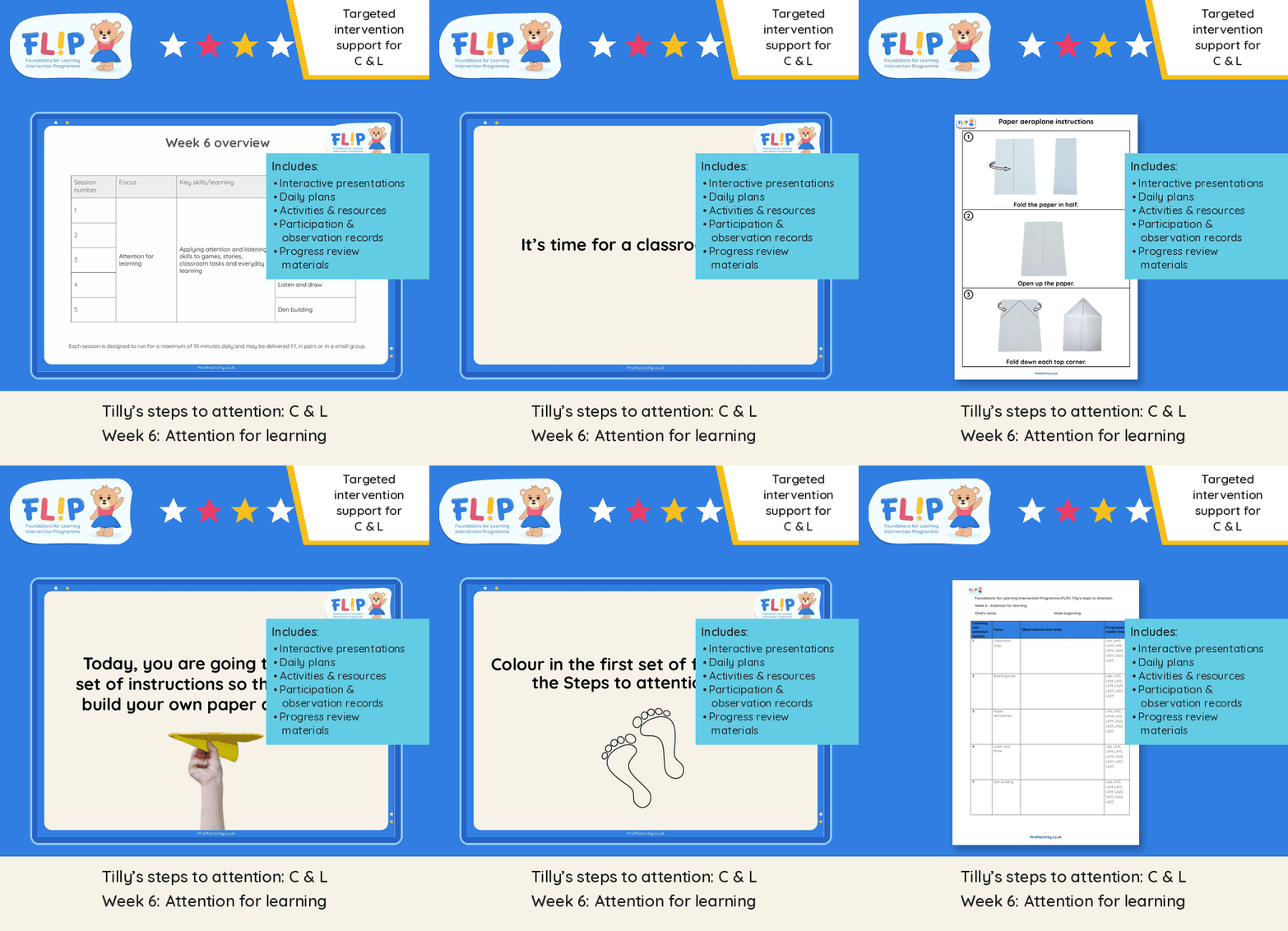
Children use their listening and attention skills in everyday learning through a classroom shop, board games, paper aeroplanes and den building.
Tilly’s Steps to Attention is one unit within the Foundations for Learning Intervention Programme (FLIP). Explore the main FLIP programme to discover other targeted Reception interventions and learn more about the wider approach to identifying need, delivering support and monitoring progress over time.
Explore the FLIP programme →Tilly’s Steps to Attention is designed for children in Reception (ages 4–5) who would benefit from additional support to develop their listening and attention skills. It can be used with individual children, pairs or small groups as a targeted intervention alongside high-quality classroom teaching.
Tilly’s Steps to Attention runs for six weeks, with one short session each day. Each session is designed to take no more than 10 minutes, making it easy to fit into the Reception day.
Yes. The six weeks are designed to build progressively, moving from getting ready to attend and sustaining attention, through listening for key information and remembering what has been heard, to following multi-step instructions and applying these skills to everyday learning. Children may need extra time on a particular step, so activities can be repeated before moving on.
Yes. The activities can be adapted to suit the individual needs of the children taking part. Many sessions include ideas to simplify or extend the activity, and you can provide additional modelling, repetition or support where needed, while keeping the weekly listening and attention focus and progression in place.
Tilly’s Steps to Attention focuses on developing children’s listening and attention skills. Children learn to get ready to listen, sustain their attention for longer, notice sounds and key information, remember what they have heard, follow 1-, 2- and 3-step instructions, and apply these skills in games and classroom tasks.
Yes. Tilly’s Steps to Attention can be particularly useful for children with SEND or identified communication and language needs who find it difficult to maintain attention, listen to spoken information or follow instructions. Sessions can be adapted to each child’s needs, with additional repetition, modelling, visual support and processing time where appropriate.
Most of what you need is included within the weekly intervention packs. You’ll also need a teddy bear to use as Tilly and a suitcase or bag to store the resources, along with a small number of everyday items for particular sessions, such as a music player, cones or hoops, toy cars, building blocks and a simple board game. Any additional resources are clearly listed within the weekly planning.
Use the Identification & Progression Toolkit, Participation Log and Practitioner Notes to record observations, monitor children’s progress throughout the programme and review next steps.
No. Tilly’s Steps to Attention has been designed to be straightforward to deliver using the included practitioner guidance and resources. Anyone delivering the intervention should have the appropriate knowledge, skills and experience to support young children and respond to their individual needs.
Yes. Children may complete one FLIP unit or several, depending on the areas in which they would benefit from additional support. Professional judgement should be used when deciding which intervention is most appropriate for each child.
FLIP has been designed to fit into everyday school practice and doesn’t require any specialist equipment.
To deliver sessions, you’ll need:
All equipment and preparation requirements are clearly explained within each FLIP unit, helping practitioners set up sessions quickly and confidently.
Yes. FLIP has been developed using established educational research and national guidance relating to early intervention, communication and language, personal, social and emotional development, physical development and inclusive practice. Throughout the programme we reference evidence from organisations including the Education Endowment Foundation, Ofsted and the Department for Education. While these organisations do not endorse FLIP, their research has informed its design.
The Department for Education’s Inclusive Mainstream Fund is intended to help mainstream schools strengthen inclusive practice through early identification, evidence-informed decision making and targeted intervention. FLIP has been developed around these same principles. Individual funding decisions remain the responsibility of schools and local authorities, so schools should always refer to the latest national and local guidance when deciding how funding is used.
Schools may choose to purchase FLIP through a range of existing budgets, depending on local priorities and funding arrangements. This may include curriculum budgets, SEND or inclusion budgets, Early Years Pupil Premium or other funding streams where appropriate. Schools should always follow their own financial procedures and local authority guidance. Pricing details are here.
FLIP combines early identification, structured intervention and progress monitoring within one consistent framework. Rather than providing isolated activities, each unit includes an Identification Toolkit, practitioner guidance, lesson presentations, practical activities and assessment materials, helping schools deliver targeted intervention with confidence.
Take a look at a complete week of FLIP with Week 1 of Tilly’s Travel Tales, our Communication & Language and Physical Development intervention. It’s free, with no membership required.
| Cookie | Duration | Description |
|---|---|---|
| _fbp | 3 months | Facebook sets this cookie to display advertisements when either on Facebook or on a digital platform powered by Facebook advertising after visiting the website. |
| _ga | 1 year 1 month 4 days | Google Analytics sets this cookie to calculate visitor, session and campaign data and track site usage for the site's analytics report. The cookie stores information anonymously and assigns a randomly generated number to recognise unique visitors. |
| _ga_* | 1 year 1 month 4 days | Google Analytics sets this cookie to store and count page views. |
| _gcl_au | 3 months | Google Tag Manager sets the cookie to experiment advertisement efficiency of websites using their services. |
| Cookie | Duration | Description |
|---|---|---|
| edd-rvi | 3 months | Description is currently not available. |
| GFE_RTT | 5 minutes | No description available. |
| m | 1 year 1 month 4 days | No description available. |
| Cookie | Duration | Description |
|---|---|---|
| fr | 3 months | Facebook sets this cookie to show relevant advertisements by tracking user behaviour across the web, on sites with Facebook pixel or Facebook social plugin. |
| NID | 6 months | Google sets the cookie for advertising purposes; to limit the number of times the user sees an ad, to unwanted mute ads, and to measure the effectiveness of ads. |
| VISITOR_INFO1_LIVE | 6 months | YouTube sets this cookie to measure bandwidth, determining whether the user gets the new or old player interface. |
| VISITOR_PRIVACY_METADATA | 6 months | YouTube sets this cookie to store the user's cookie consent state for the current domain. |
| YSC | session | Youtube sets this cookie to track the views of embedded videos on Youtube pages. |
| yt-remote-connected-devices | never | YouTube sets this cookie to store the user's video preferences using embedded YouTube videos. |
| yt-remote-device-id | never | YouTube sets this cookie to store the user's video preferences using embedded YouTube videos. |
| yt.innertube::nextId | never | YouTube sets this cookie to register a unique ID to store data on what videos from YouTube the user has seen. |
| yt.innertube::requests | never | YouTube sets this cookie to register a unique ID to store data on what videos from YouTube the user has seen. |