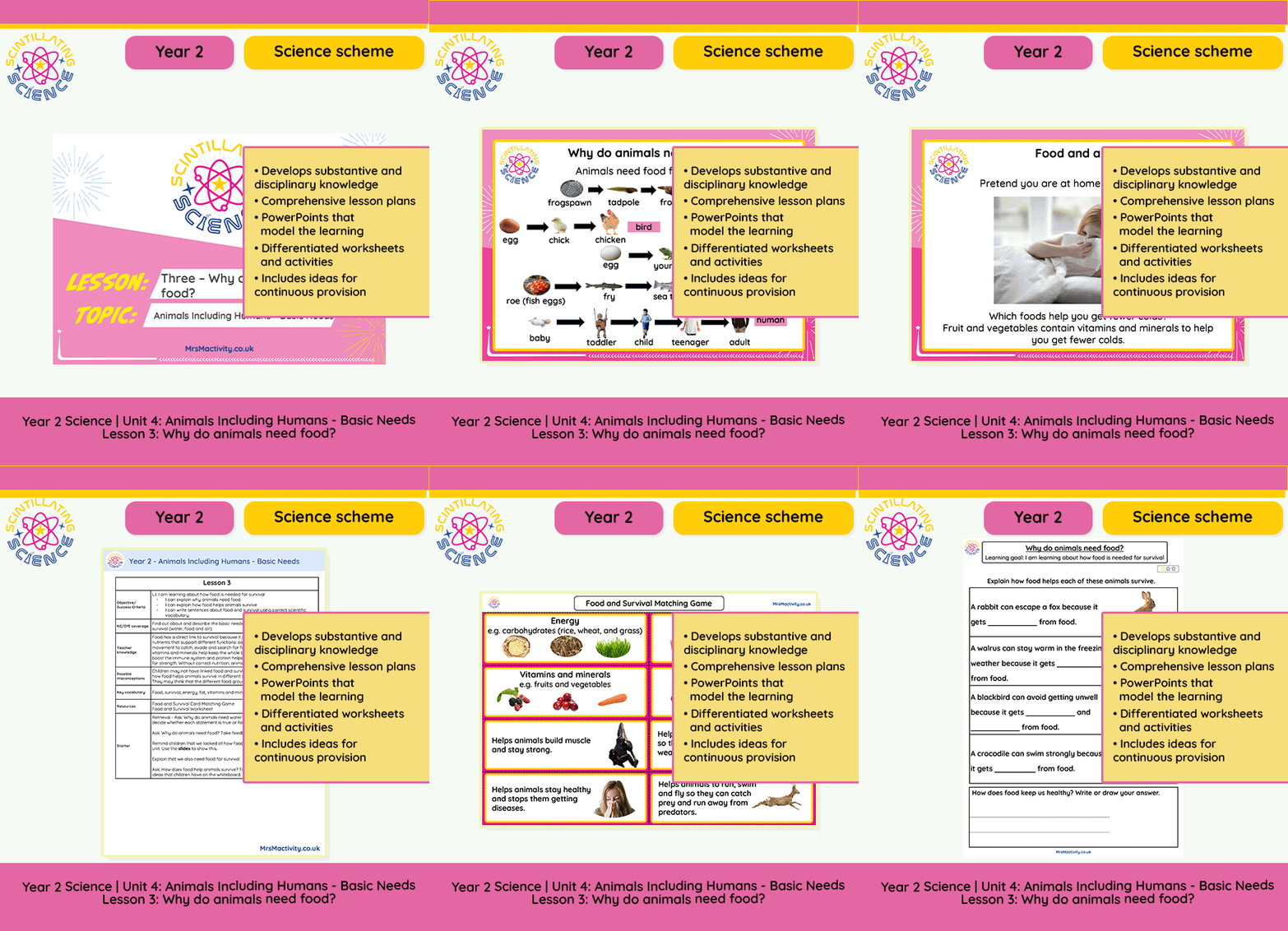
Lesson 3: Why do animals need food?
This Year 2 food for survival lesson helps pupils understand why food is one of the basic needs of animals, including humans. Pupils explore the different ways food helps animals survive, including providing energy, helping them stay warm and supporting healthy bodies and muscles.
The lesson directly supports the Year 2 Science National Curriculum requirement to find out about and describe the basic needs of animals, including humans, for survival (water, food and air). It builds on pupils’ earlier learning about food and growth by focusing specifically on the link between food and survival.
Why do animals need food to survive?
Pupils explore how food supports animals in different ways. They consider how food provides energy for movement, how fat can help animals stay warm, and how vitamins, minerals and protein support the body. Examples from different animals help pupils apply these ideas to survival in real situations.
Year 2 food for survival lesson and resources
- Launchable teaching slides
- Teacher lesson plan
- Food and Survival Card Matching Game
- Food and Survival Worksheet
- Animal survival activities
- Assessment questions and further challenge ideas
✨ How to use the launchable slides
Launch the presentation directly in your browser and use it on your interactive whiteboard.
📝 Click Notes to see teacher guidance, answers and additional information where included.
⬅️ ➡️ To move through the presentation, click on the slides first, then use the left and right cursor arrow keys on your keyboard.
For technical and copyright reasons, these presentation slides are available to launch online rather than download.
Explore the full Year 2 Animals Including Humans – Basic Needs resources, or explore our Year 2 science scheme of work and resources.
What's included
- Why do animals need food? lesson plan
- Why do animals need food? lesson presentation
- Food and survival worksheet
- Food and survival matching game
This resource is part of the Mrs Mactivity Science Scheme of Work →