Lesson 6: Testing different ear shapes
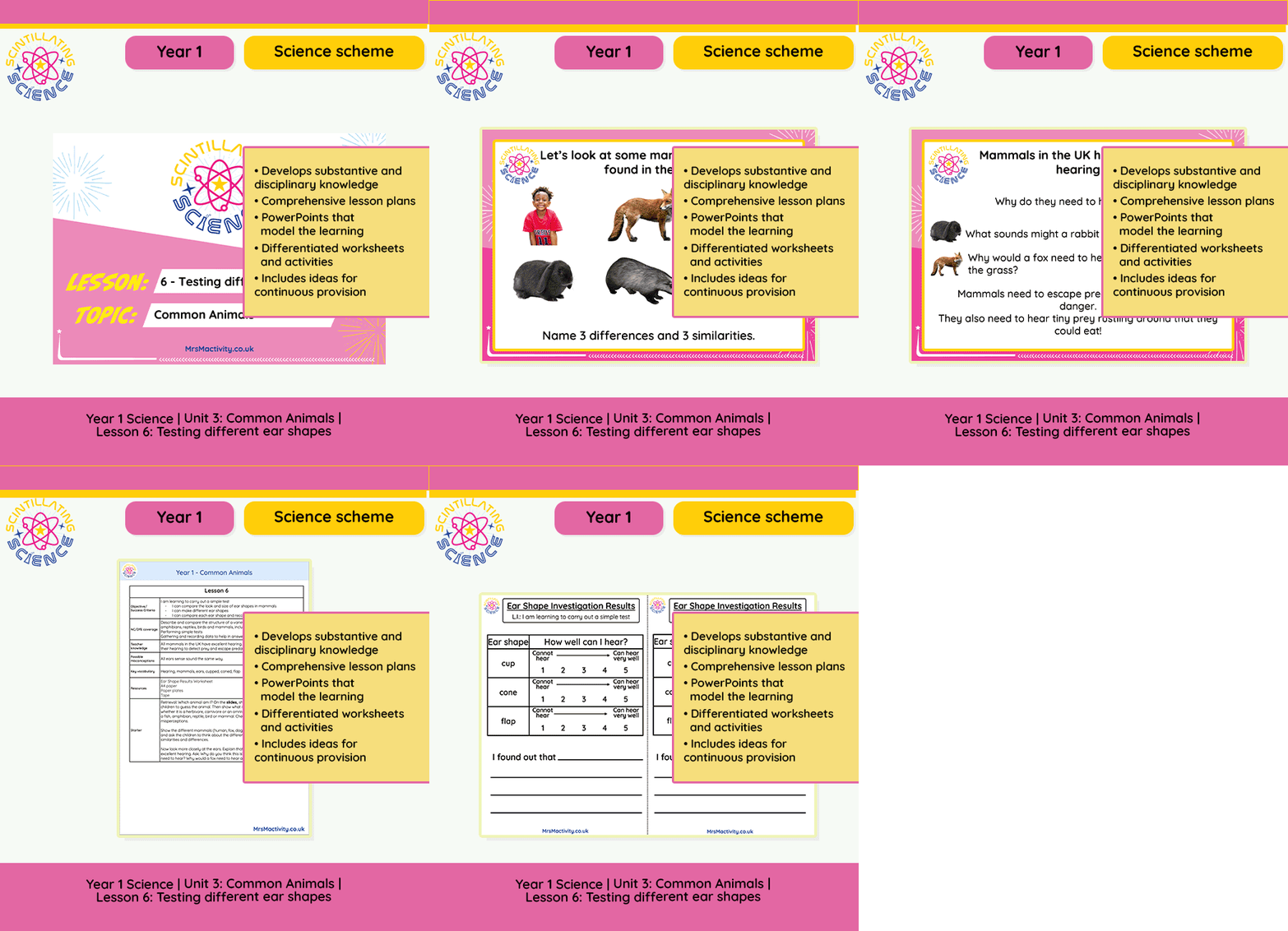
Investigate animal ears and hearing with this practical Year 1 science lesson. Pupils compare the ears of different mammals before making different ear shapes and carrying out a simple test to investigate which shape is most effective for hearing.
Aligned with the Year 1 Science National Curriculum, the lesson supports pupils to describe and compare the structure of a variety of common animals. Pupils also develop their Working Scientifically skills by performing a simple test and gathering and recording data to help answer a question.
How does ear shape affect hearing?
Pupils observe and compare the ears of mammals including humans, foxes, dogs, rabbits, badgers and bats. Working in pairs, they make cone-shaped, cup-shaped and flapped paper ears before testing each one and recording their findings. Pupils compare results and begin to consider why repeating a test can help when results are different.
Year 1 animal ears investigation and resources
This lesson includes:
- Teacher lesson plan
- launchable teaching slides
- Ear Shape Results Worksheet
- practical ear shape investigation
- opportunities to compare and record results
- assessment questions
✨ How to use the launchable slides
Launch the presentation directly in your browser and use it on your interactive whiteboard.
📝 Click Notes to see teacher guidance, answers and additional information where included.
⬅️ ➡️ To move through the presentation, click on the slides first, then use the left and right cursor arrow keys on your keyboard.
For technical and copyright reasons, these presentation slides are available to launch online rather than download.
This lesson forms part of our Year 1 Common Animals unit. Explore the wider Year 1 science curriculum and scheme or browse our primary science scheme of work.
What's included
- Testing different ear shapes lesson plan
- Testing different ear shapes lesson presentation
- Ear shape investigation sheet
This resource is part of the Mrs Mactivity Science Scheme of Work →