Lesson 4: Using senses to observe and look closely
Try a melting ice experiment in EYFS to explore how temperature affects the time it takes ice to melt. Children use thermometers and stopwatches as part of a simple practical test, comparing ice placed in water at different temperatures and observing the change from solid ice back into liquid water.
The lesson supports Understanding the World: The Natural World and develops the early scientific enquiry skill of performing simple tests and using equipment. Children learn how thermometers can show changes in temperature and use timers to begin recording how long changes take.
Does ice melt faster in warm or cold water?
Children investigate what happens when ice cubes are placed in water at different temperatures. They use thermometers to observe temperature changes and stopwatches or timers to compare how long the ice takes to melt. Further practical activities give children opportunities to investigate air through bubbles and balloons while continuing to use simple measuring equipment.
EYFS melting ice and temperature activities
This lesson includes:
- teacher lesson plan
- launchable teaching slides
- melting ice investigation
- thermometer and temperature activities
- stopwatch and timing activities
- bubble investigation
- balloon and air investigation
- ice sculpting continuous provision idea
- assessment questions
✨ How to use the launchable slides
Launch the presentation directly in your browser and use it on your interactive whiteboard.
📝 Click Notes to see teacher guidance, answers and additional information where included.
⬅️ ➡️ To move through the presentation, click on the slides first, then use the left and right cursor arrow keys on your keyboard.
For technical and copyright reasons, these presentation slides are available to launch online rather than download.
Explore more lessons in our Reception States of Matter science unit, or see our complete Reception science scheme.
What's included
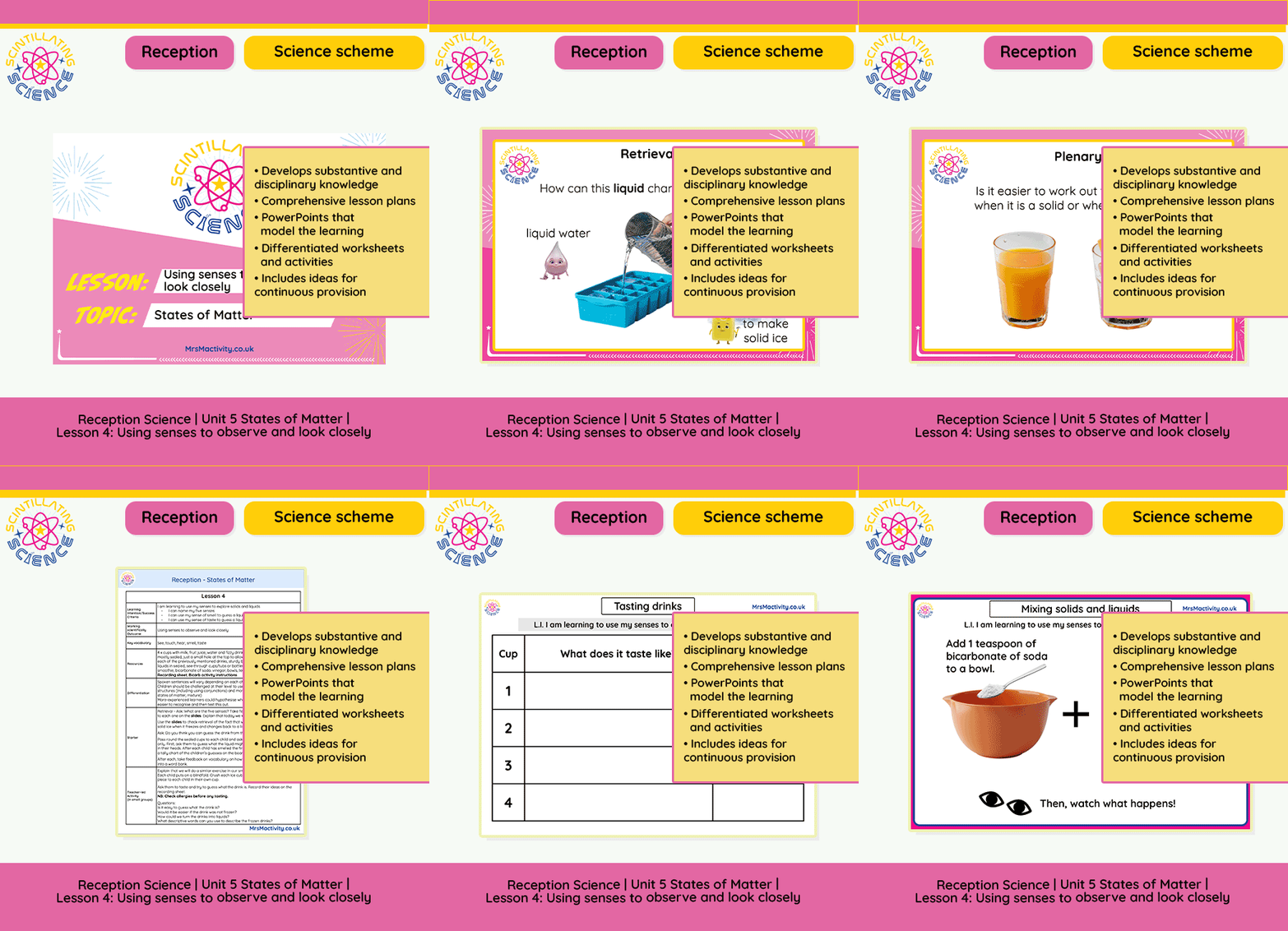
- Using senses to observe and look closely lesson plan
- Using senses to observe and look closely lesson presentation
- Bicarb activity instructions
- Tasting recording sheet
This resource is part of the Mrs Mactivity Science Scheme of Work →