This Year 2 Animals Including Humans – Growth unit helps pupils understand how humans and other animals grow and change from offspring into adults. Pupils explore human growth, compare young and adult mammals and investigate how the stages of growth can differ in animals such as butterflies.
Across six sequenced lessons, pupils also learn about the importance of healthy eating, exercise and hygiene for humans. Practical activities include comparing and measuring animal growth, exploring the butterfly life cycle, designing a healthy meal, investigating changes in pulse rate during exercise and testing effective handwashing.
Pupils should be taught to:
Animals Including Humans – Growth forms part of the Scintillating Science Year 2 scheme. Explore the Year 2 science page to see curriculum coverage, progression and the other science units available for the year.
This Year 2 Animals Including Humans unit develops pupils’ understanding of growth, offspring and what humans need to stay healthy. Pupils begin by exploring how humans and other animals change as they grow before applying their science learning to food, exercise and hygiene.
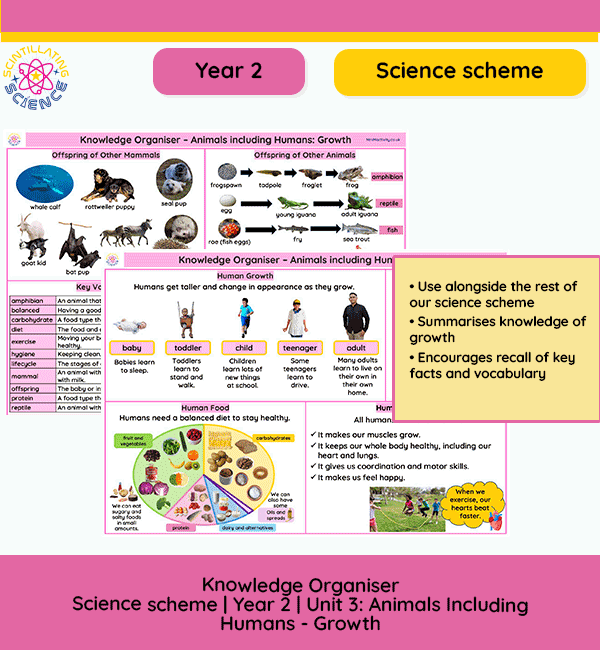
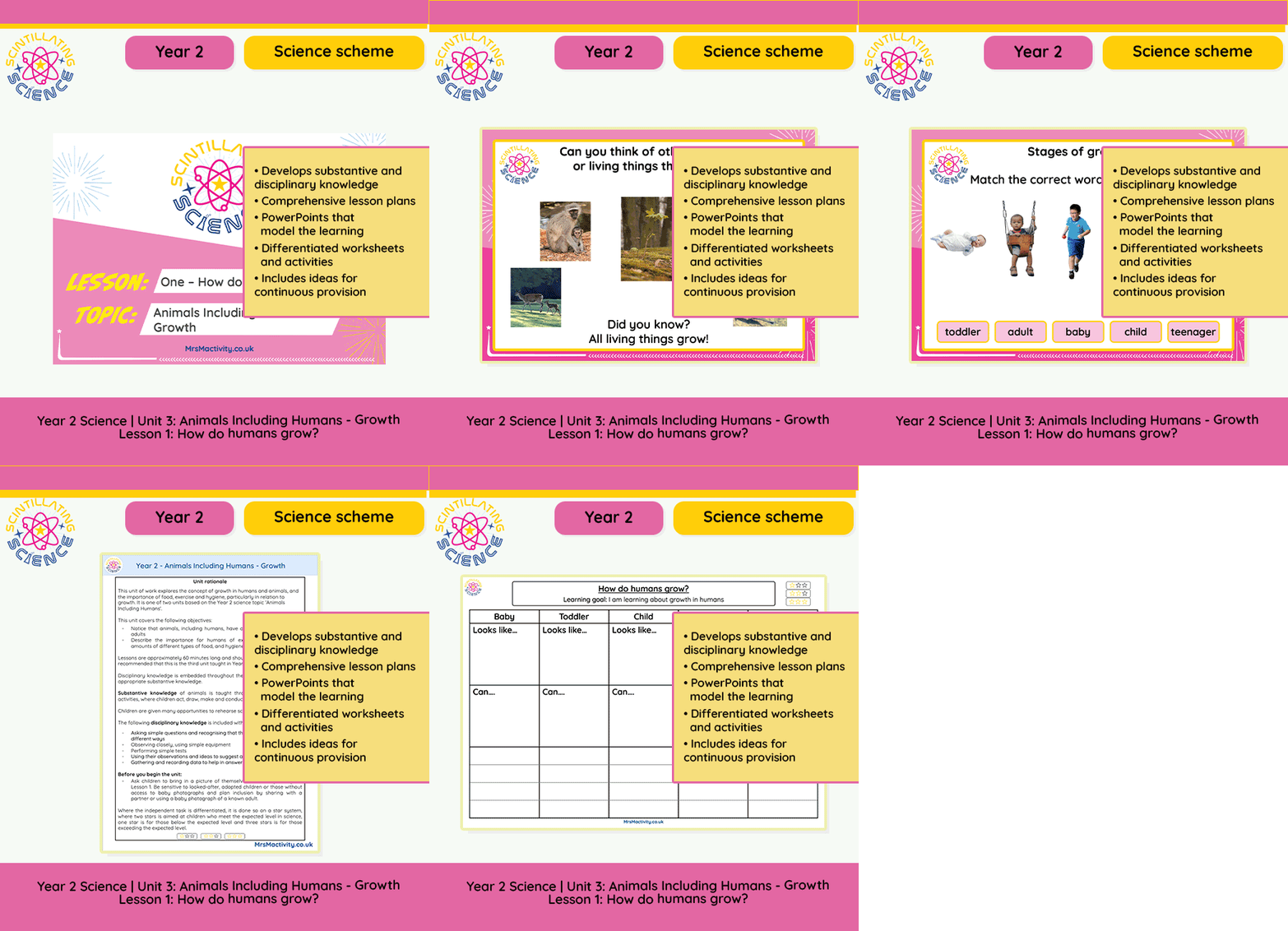
Pupils explore human growth and the stages from baby to toddler, child, teenager and adult. They compare how humans look and what they can do at different ages and use measuring activities to investigate how our bodies change as we grow.
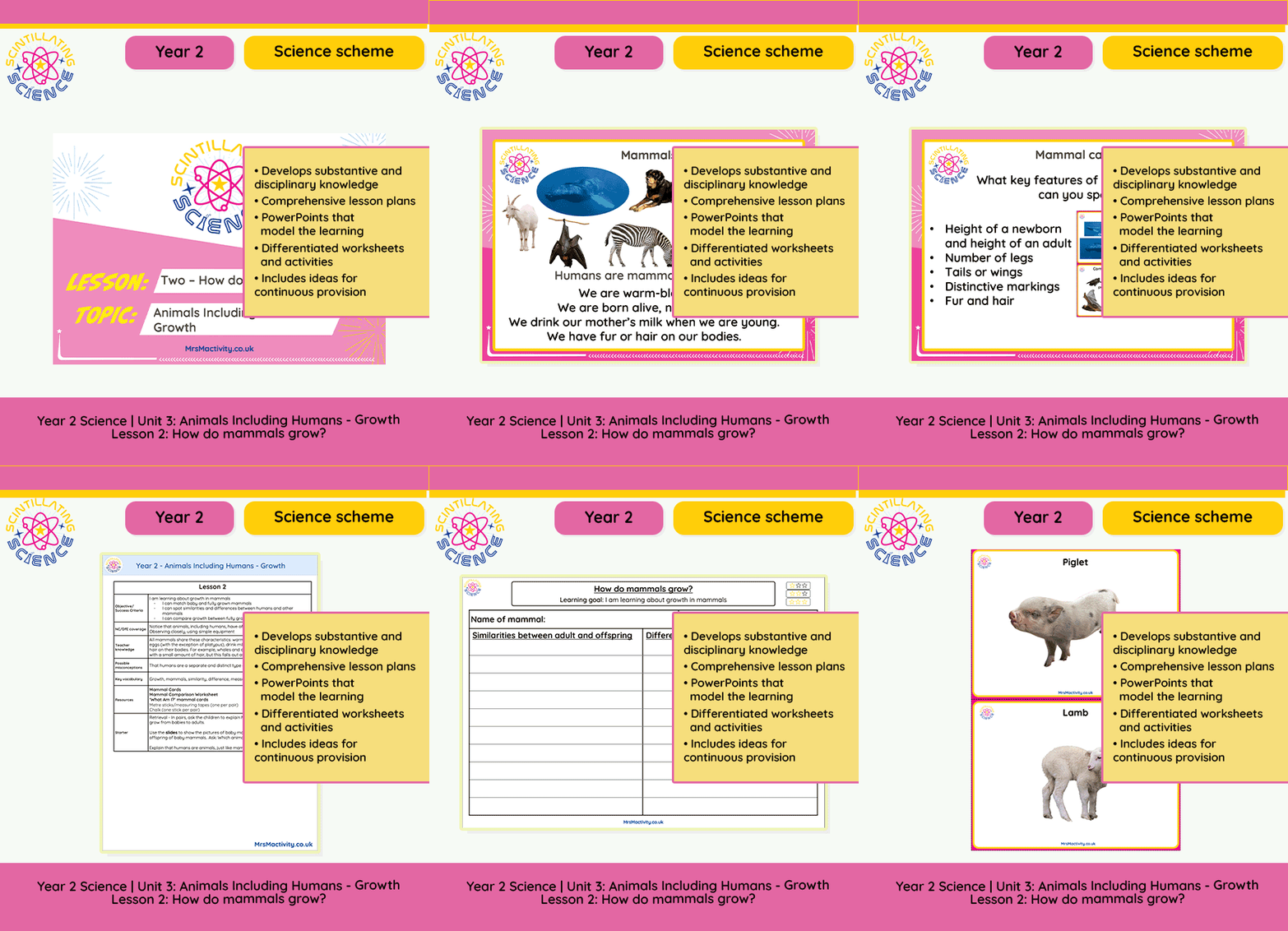
Pupils compare mammal offspring and adults, looking closely at their size, appearance and features. A practical measuring activity helps pupils visualise the difference between newborn and adult mammals and compare animal growth with their own.
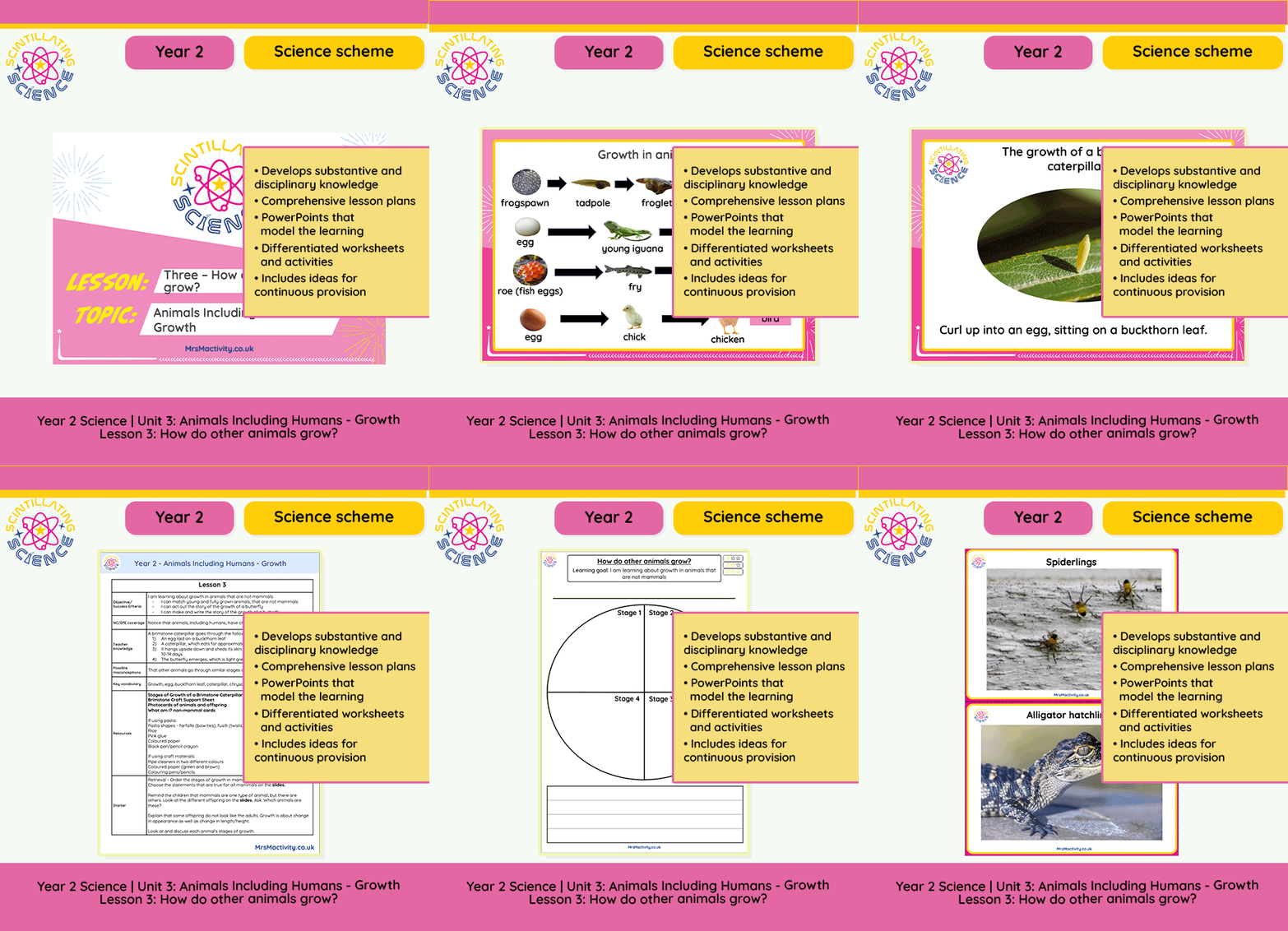
Not all offspring resemble the adults they will become. Pupils compare young and adult non-mammals before exploring the butterfly life cycle in more detail, learning about the stages from egg to caterpillar, chrysalis and adult butterfly.
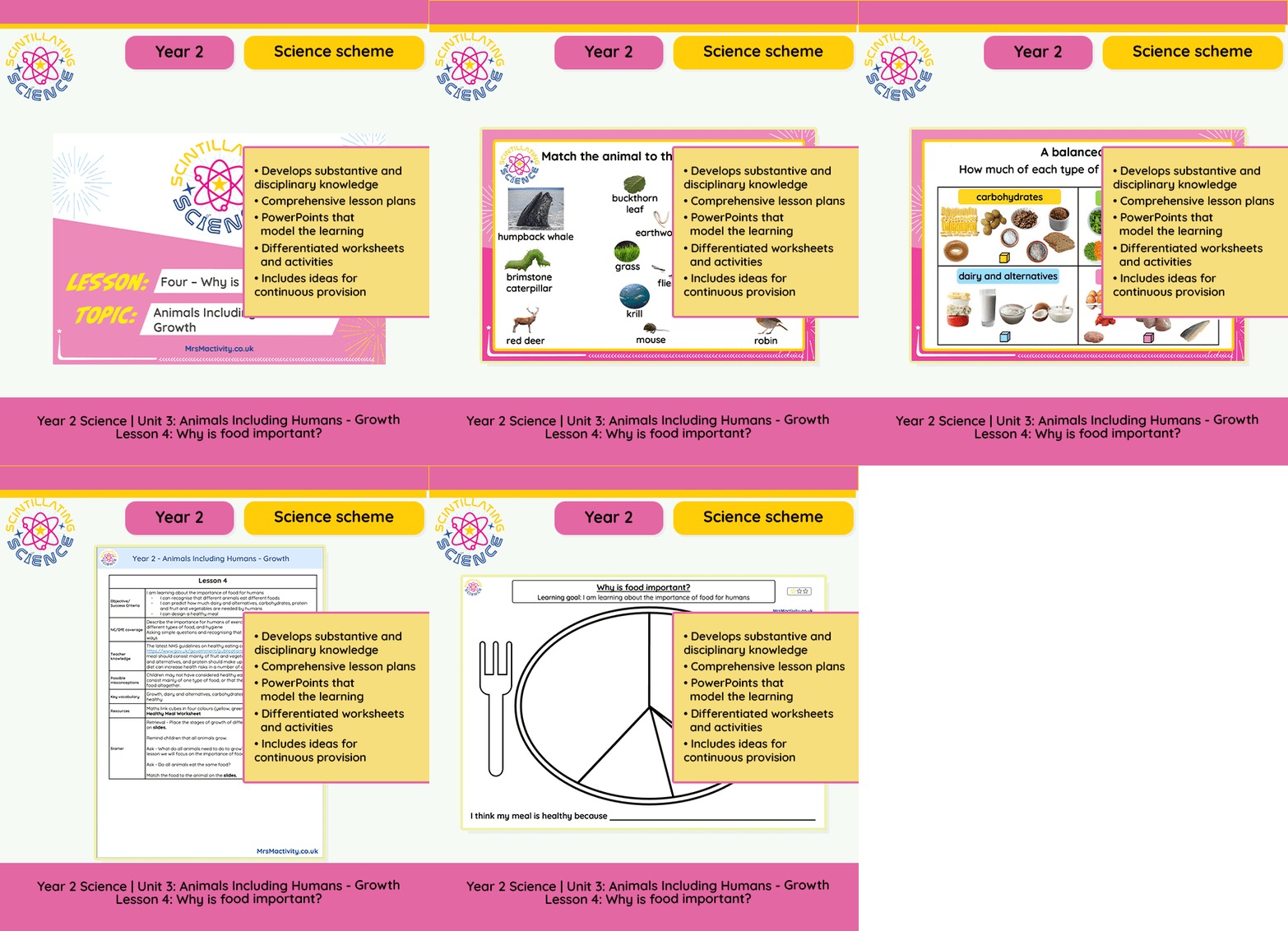
Pupils learn why humans need the right amounts of different types of food. They explore healthy eating and food groups, consider appropriate proportions and use their knowledge to design and explain a healthy meal.
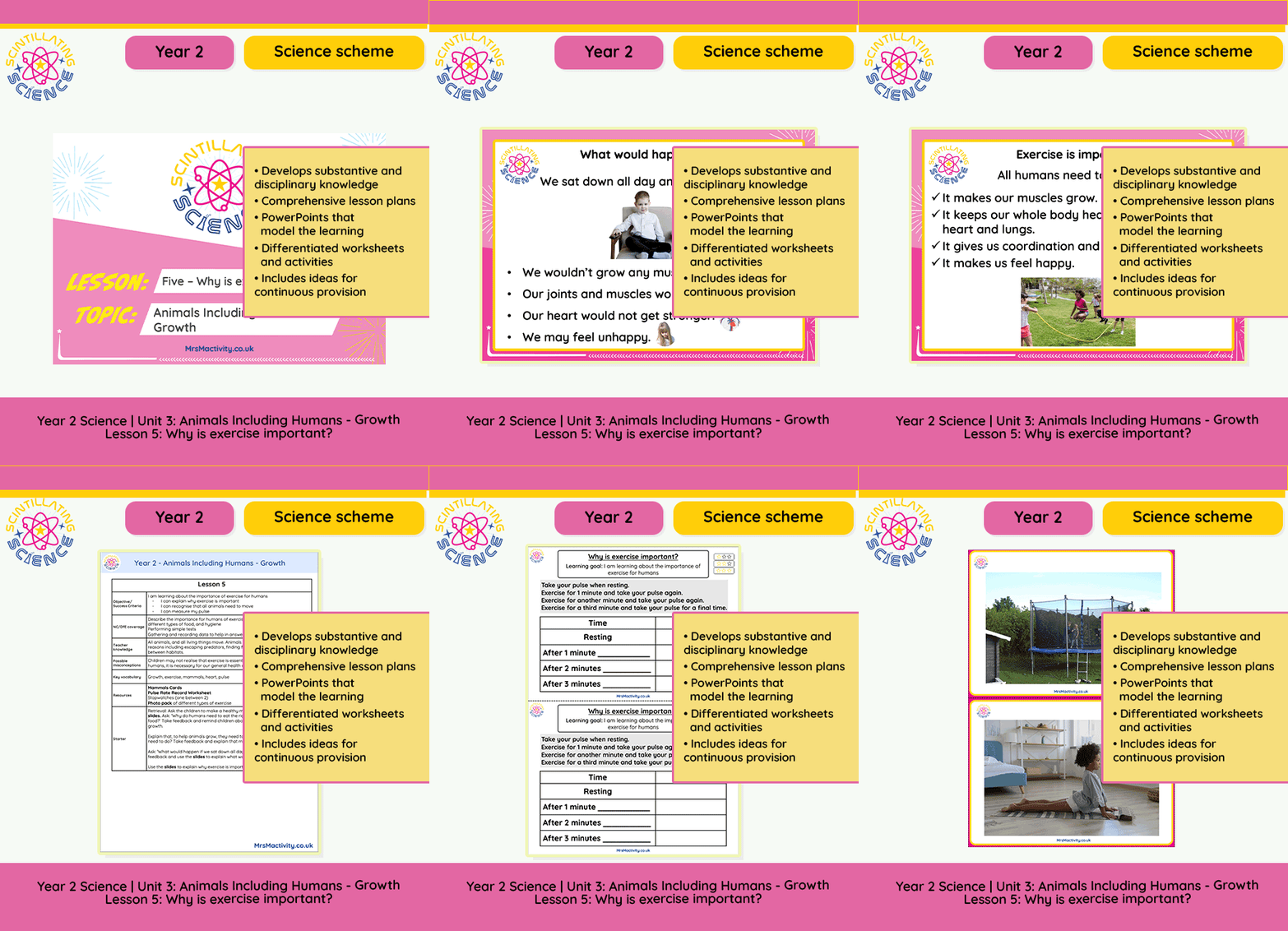
Pupils explore the importance of exercise and investigate what happens to the heart during physical activity. They measure their pulse at rest and after exercise, record their results and use the data to identify changes in pulse rate.
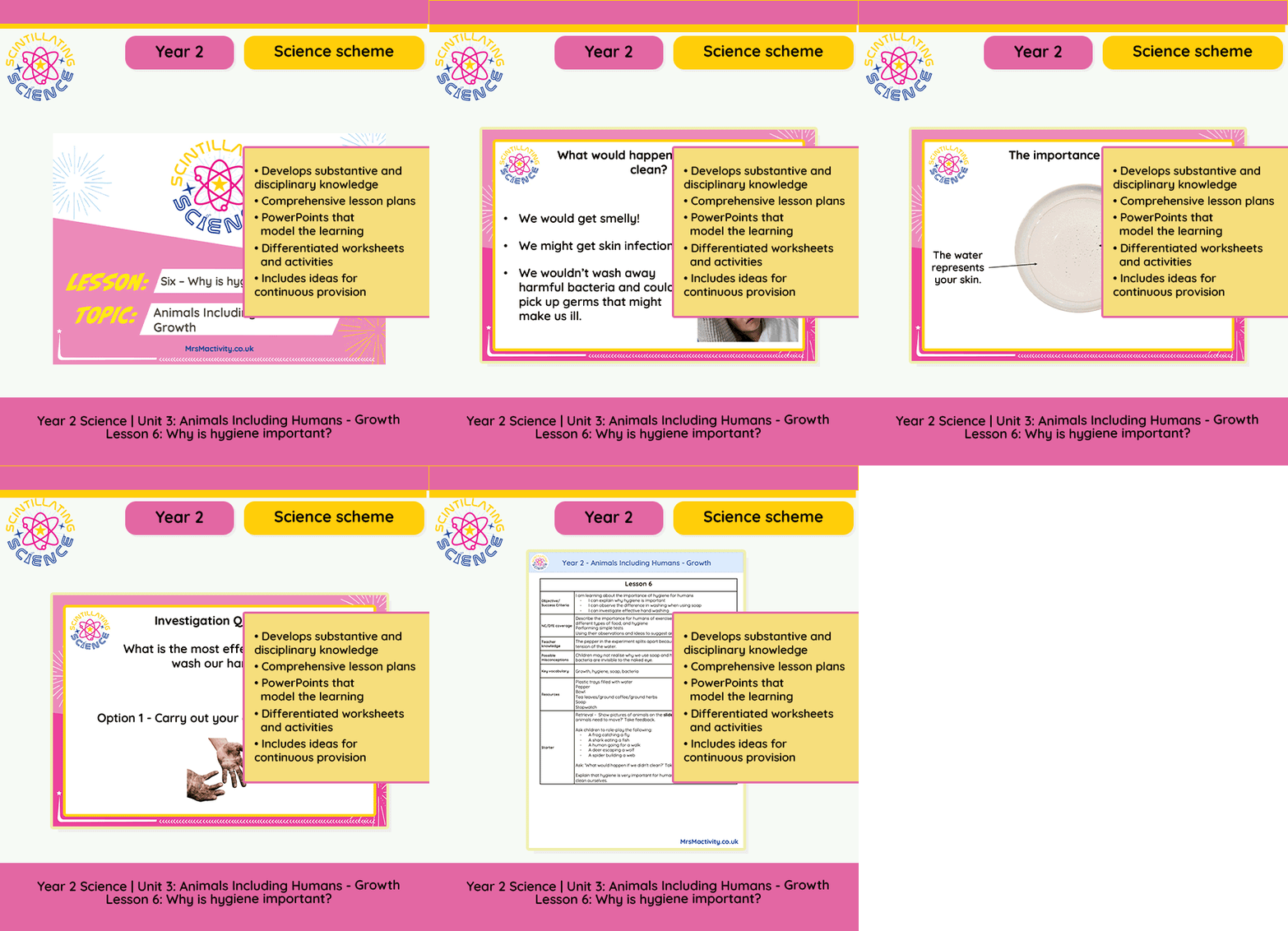
Pupils investigate hygiene and effective handwashing, exploring how simulated germs can spread and comparing washing with water alone with using soap and water. They use their observations to consider why good hygiene is important for keeping humans healthy.
Scientific enquiry is embedded throughout the unit. Pupils observe and compare animals, use measuring equipment, ask questions, carry out simple tests and gather and record data. Practical investigations into animal growth, pulse rate and handwashing give pupils opportunities to use observations and evidence to answer scientific questions.
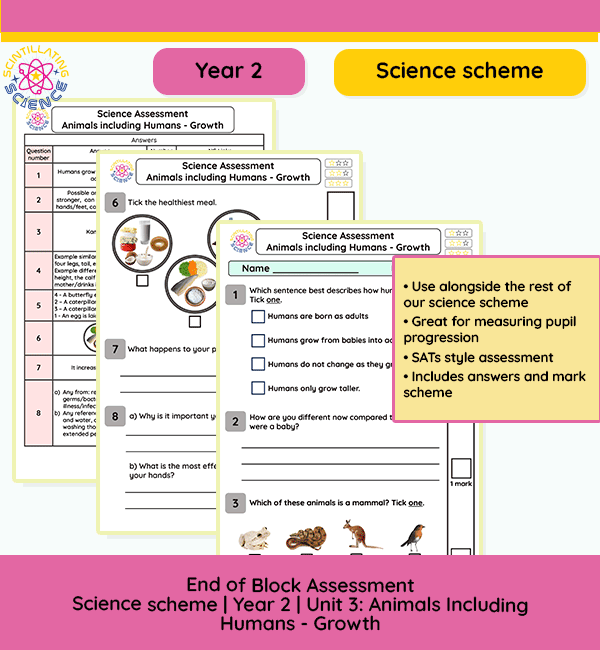
This Year 2 Animals Including Humans – Growth unit includes six sequenced science lessons with resources to support teaching, practical enquiry and assessment:
See how this unit fits into the wider curriculum and explore Year 2 science planning and resources, or browse our primary science scheme of work for Reception to Year 6.
| Cookie | Duration | Description |
|---|---|---|
| _fbp | 3 months | Facebook sets this cookie to display advertisements when either on Facebook or on a digital platform powered by Facebook advertising after visiting the website. |
| _ga | 1 year 1 month 4 days | Google Analytics sets this cookie to calculate visitor, session and campaign data and track site usage for the site's analytics report. The cookie stores information anonymously and assigns a randomly generated number to recognise unique visitors. |
| _ga_* | 1 year 1 month 4 days | Google Analytics sets this cookie to store and count page views. |
| _gcl_au | 3 months | Google Tag Manager sets the cookie to experiment advertisement efficiency of websites using their services. |
| Cookie | Duration | Description |
|---|---|---|
| edd-rvi | 3 months | Description is currently not available. |
| GFE_RTT | 5 minutes | No description available. |
| m | 1 year 1 month 4 days | No description available. |
| Cookie | Duration | Description |
|---|---|---|
| fr | 3 months | Facebook sets this cookie to show relevant advertisements by tracking user behaviour across the web, on sites with Facebook pixel or Facebook social plugin. |
| NID | 6 months | Google sets the cookie for advertising purposes; to limit the number of times the user sees an ad, to unwanted mute ads, and to measure the effectiveness of ads. |
| VISITOR_INFO1_LIVE | 6 months | YouTube sets this cookie to measure bandwidth, determining whether the user gets the new or old player interface. |
| VISITOR_PRIVACY_METADATA | 6 months | YouTube sets this cookie to store the user's cookie consent state for the current domain. |
| YSC | session | Youtube sets this cookie to track the views of embedded videos on Youtube pages. |
| yt-remote-connected-devices | never | YouTube sets this cookie to store the user's video preferences using embedded YouTube videos. |
| yt-remote-device-id | never | YouTube sets this cookie to store the user's video preferences using embedded YouTube videos. |
| yt.innertube::nextId | never | YouTube sets this cookie to register a unique ID to store data on what videos from YouTube the user has seen. |
| yt.innertube::requests | never | YouTube sets this cookie to register a unique ID to store data on what videos from YouTube the user has seen. |