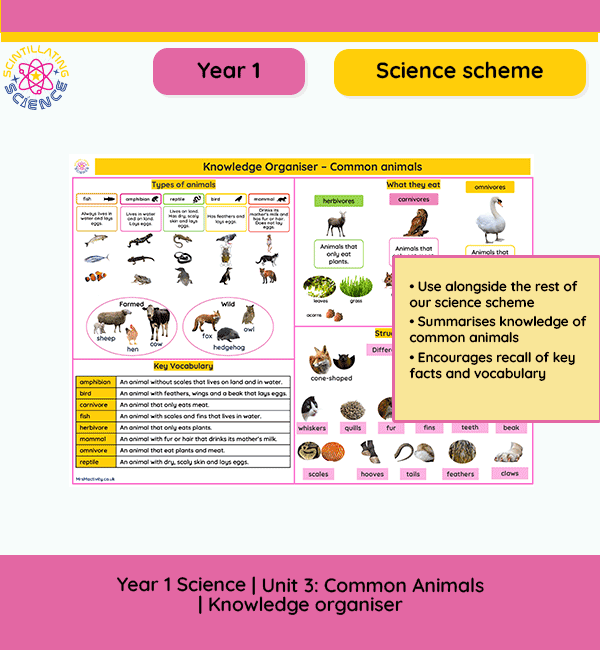
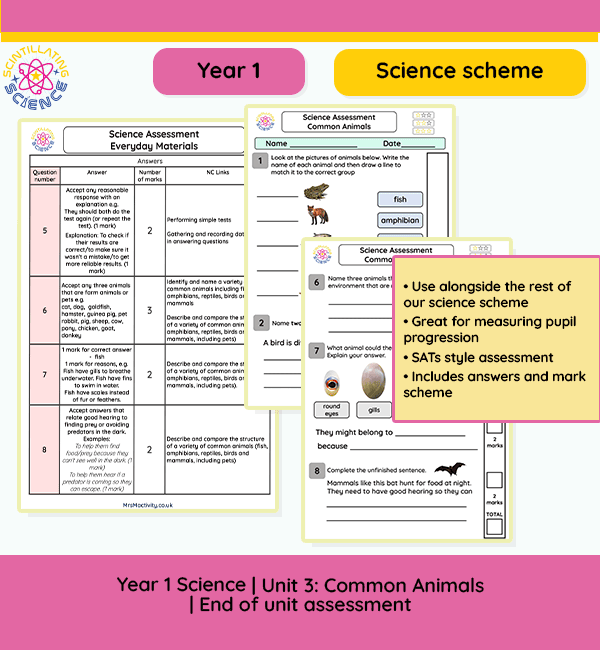
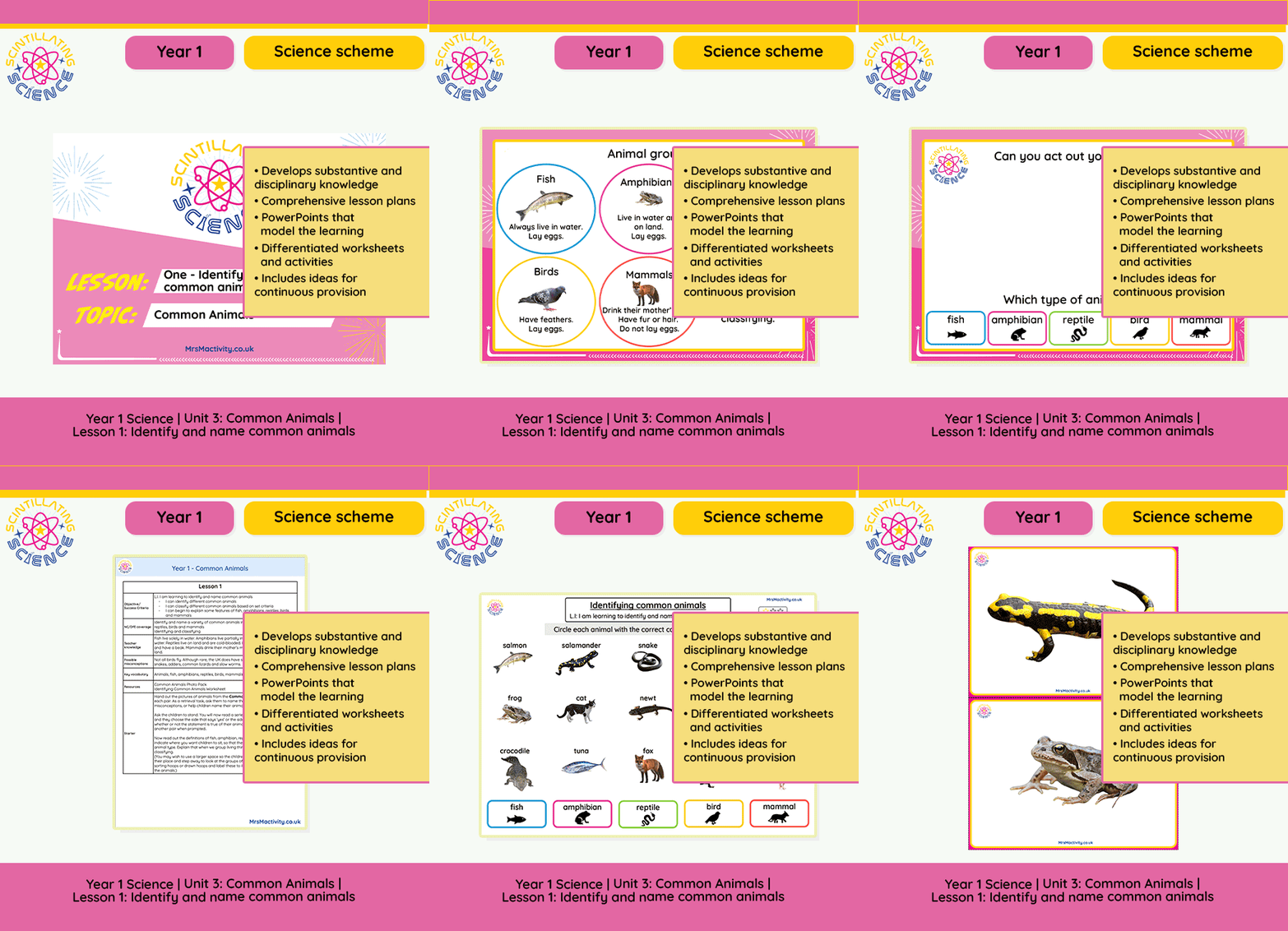
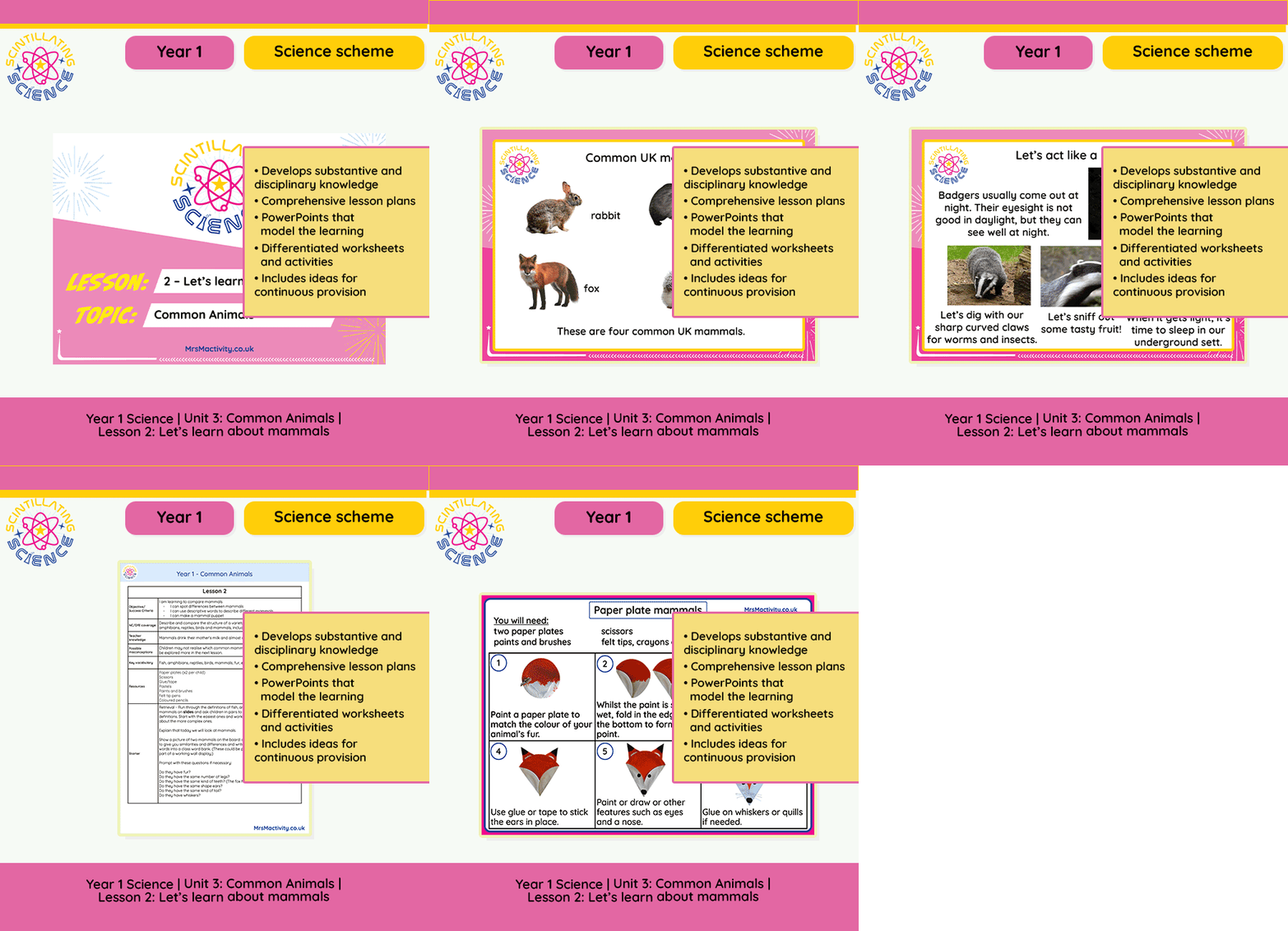
This Year 1 common animals unit helps pupils identify, name, describe and classify a variety of familiar animals. Across six sequenced lessons, pupils learn about fish, amphibians, reptiles, birds and mammals, compare animal structures and explore animals found in the local environment.
Pupils also classify animals as herbivores, carnivores and omnivores, investigate what common birds eat and explore how the structure of mammals can differ. Practical activities develop Working Scientifically skills including close observation, identifying and classifying, performing simple tests and gathering and recording data.
The Common Animals unit develops pupils’ knowledge of animal groups, structures and diets while building early scientific skills through classification, outdoor observation, comparison and simple testing.
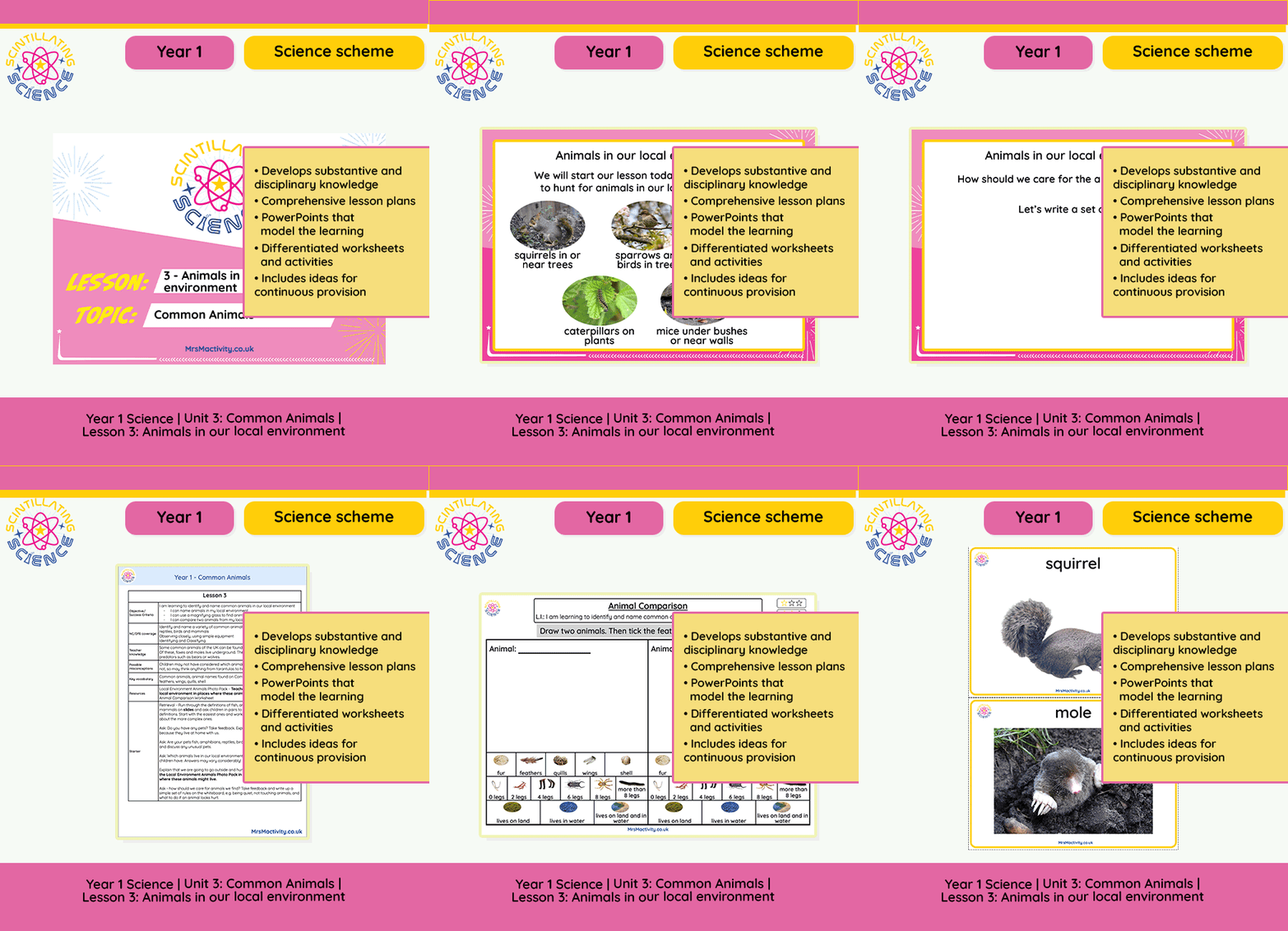
This Year 1 Common Animals unit builds pupils’ knowledge through identification, observation, comparison and classification. Pupils begin by learning the main animal groups before looking more closely at mammals, animals in their local environment and the different ways animals can be classified according to what they eat.
Pupils identify and name fish, amphibians, reptiles, birds and mammals and begin to recognise characteristics that distinguish the groups. They compare animals, describe similarities and differences and use these characteristics to classify familiar examples.
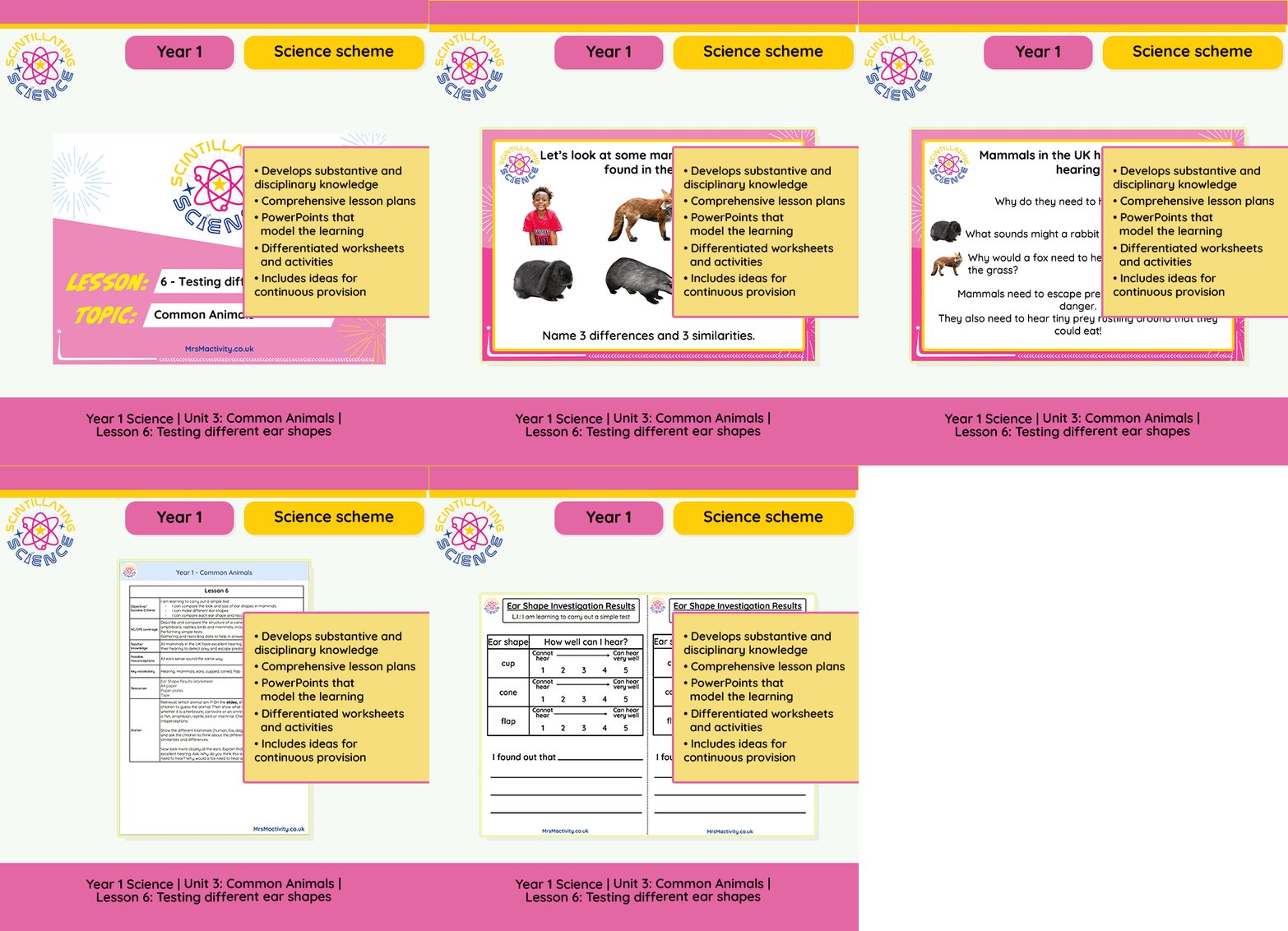
Pupils look closely at common mammals including foxes, rabbits, hedgehogs and badgers and compare features such as fur, ears, legs, teeth, tails and whiskers. Later in the unit, they investigate different mammal ear shapes and consider how structural features can differ between animals.
Outdoor observation gives pupils opportunities to think about the animals living around them. They use magnifying glasses to look closely for animals and evidence such as tracks, nests, droppings and feeding marks before comparing animals they might find locally.
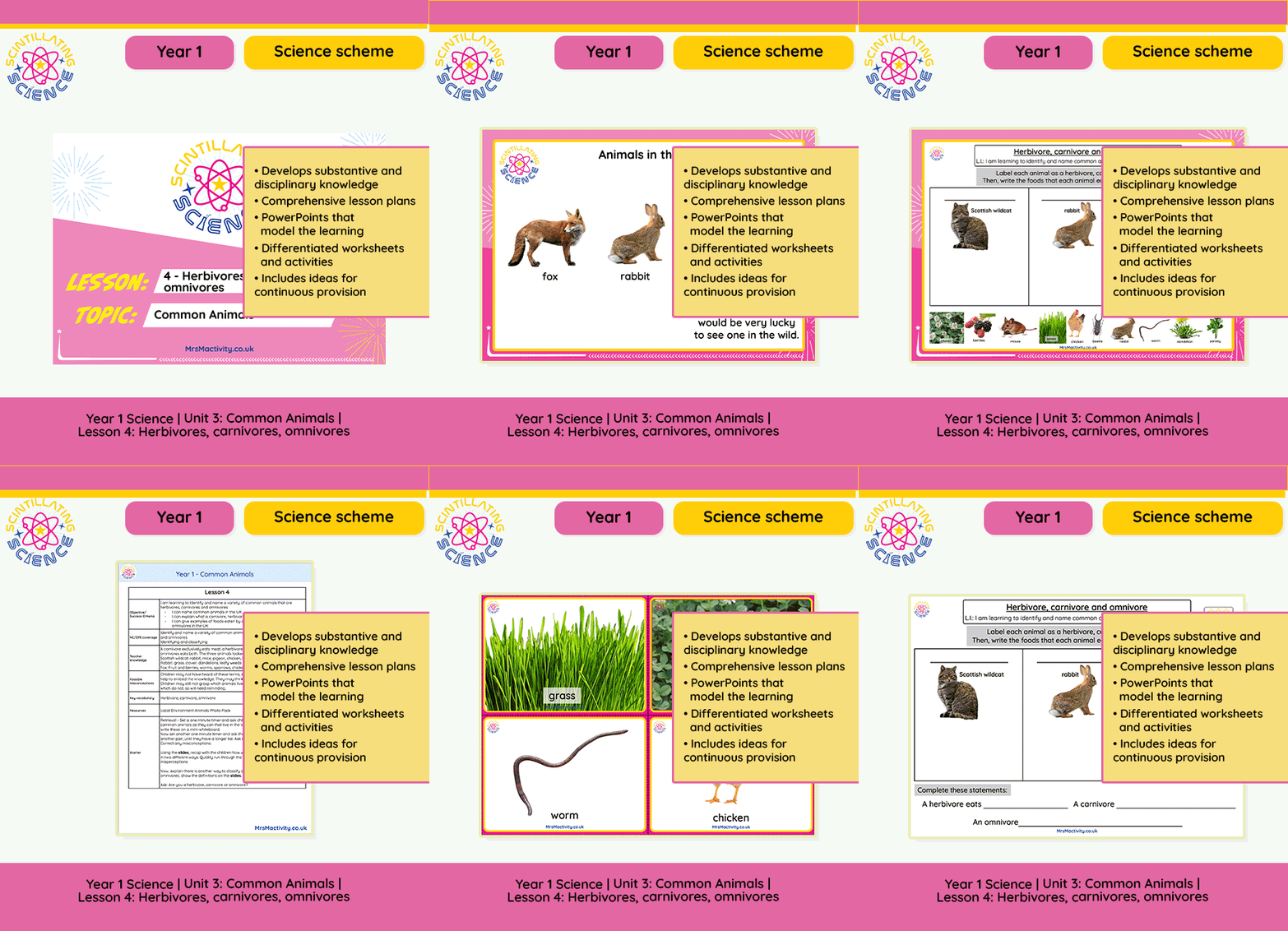
Pupils learn that animals can also be classified according to what they eat. They explore examples of herbivores, carnivores and omnivores, match animals with foods and use information about diet to explain how an animal should be classified.
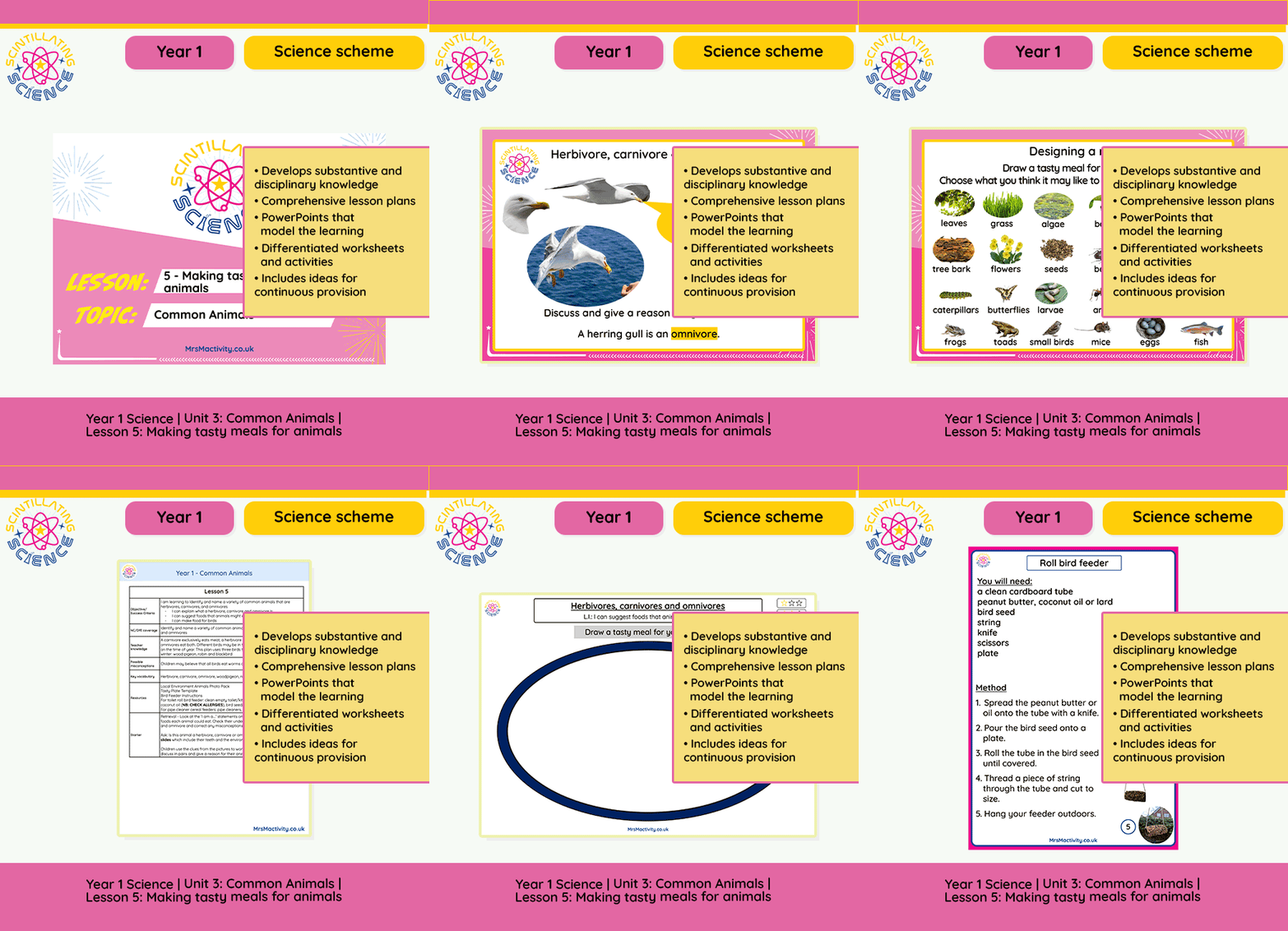
Pupils apply their knowledge of animal diets to familiar birds including wood pigeons, robins and blackbirds. They consider suitable foods before making bird feeders, with opportunities to observe visiting birds and record what they see and what the birds eat.
Scientific enquiry is developed throughout the unit through close observation, classification, comparison and data gathering. In the final lesson, pupils make different mammal ear shapes and perform a simple test to compare them. They record their findings, compare results between groups and begin to consider why results can differ and when a test might need to be repeated.
The six-lesson unit includes:
Explore the wider Year 1 science curriculum and scheme, or see our primary science scheme of work.
| Cookie | Duration | Description |
|---|---|---|
| _fbp | 3 months | Facebook sets this cookie to display advertisements when either on Facebook or on a digital platform powered by Facebook advertising after visiting the website. |
| _ga | 1 year 1 month 4 days | Google Analytics sets this cookie to calculate visitor, session and campaign data and track site usage for the site's analytics report. The cookie stores information anonymously and assigns a randomly generated number to recognise unique visitors. |
| _ga_* | 1 year 1 month 4 days | Google Analytics sets this cookie to store and count page views. |
| _gcl_au | 3 months | Google Tag Manager sets the cookie to experiment advertisement efficiency of websites using their services. |
| Cookie | Duration | Description |
|---|---|---|
| edd-rvi | 3 months | Description is currently not available. |
| GFE_RTT | 5 minutes | No description available. |
| m | 1 year 1 month 4 days | No description available. |
| Cookie | Duration | Description |
|---|---|---|
| fr | 3 months | Facebook sets this cookie to show relevant advertisements by tracking user behaviour across the web, on sites with Facebook pixel or Facebook social plugin. |
| NID | 6 months | Google sets the cookie for advertising purposes; to limit the number of times the user sees an ad, to unwanted mute ads, and to measure the effectiveness of ads. |
| VISITOR_INFO1_LIVE | 6 months | YouTube sets this cookie to measure bandwidth, determining whether the user gets the new or old player interface. |
| VISITOR_PRIVACY_METADATA | 6 months | YouTube sets this cookie to store the user's cookie consent state for the current domain. |
| YSC | session | Youtube sets this cookie to track the views of embedded videos on Youtube pages. |
| yt-remote-connected-devices | never | YouTube sets this cookie to store the user's video preferences using embedded YouTube videos. |
| yt-remote-device-id | never | YouTube sets this cookie to store the user's video preferences using embedded YouTube videos. |
| yt.innertube::nextId | never | YouTube sets this cookie to register a unique ID to store data on what videos from YouTube the user has seen. |
| yt.innertube::requests | never | YouTube sets this cookie to register a unique ID to store data on what videos from YouTube the user has seen. |