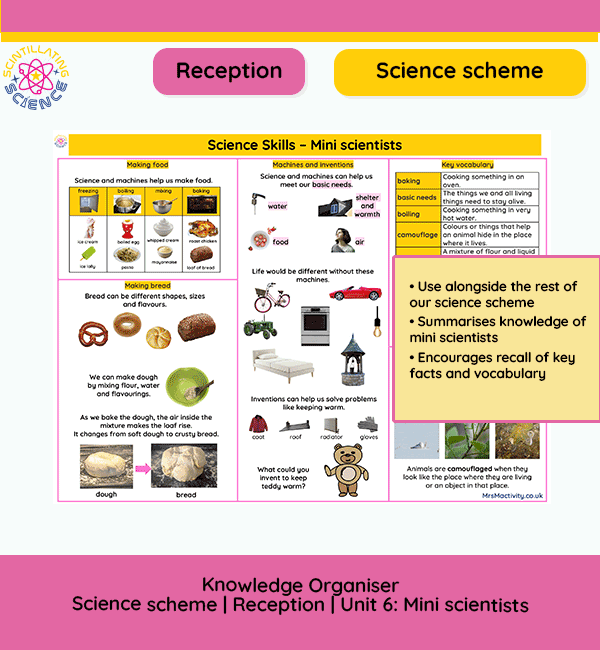
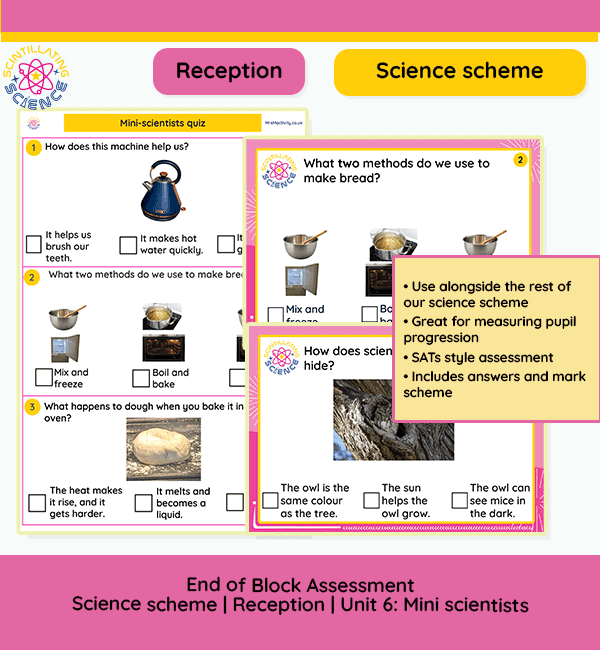
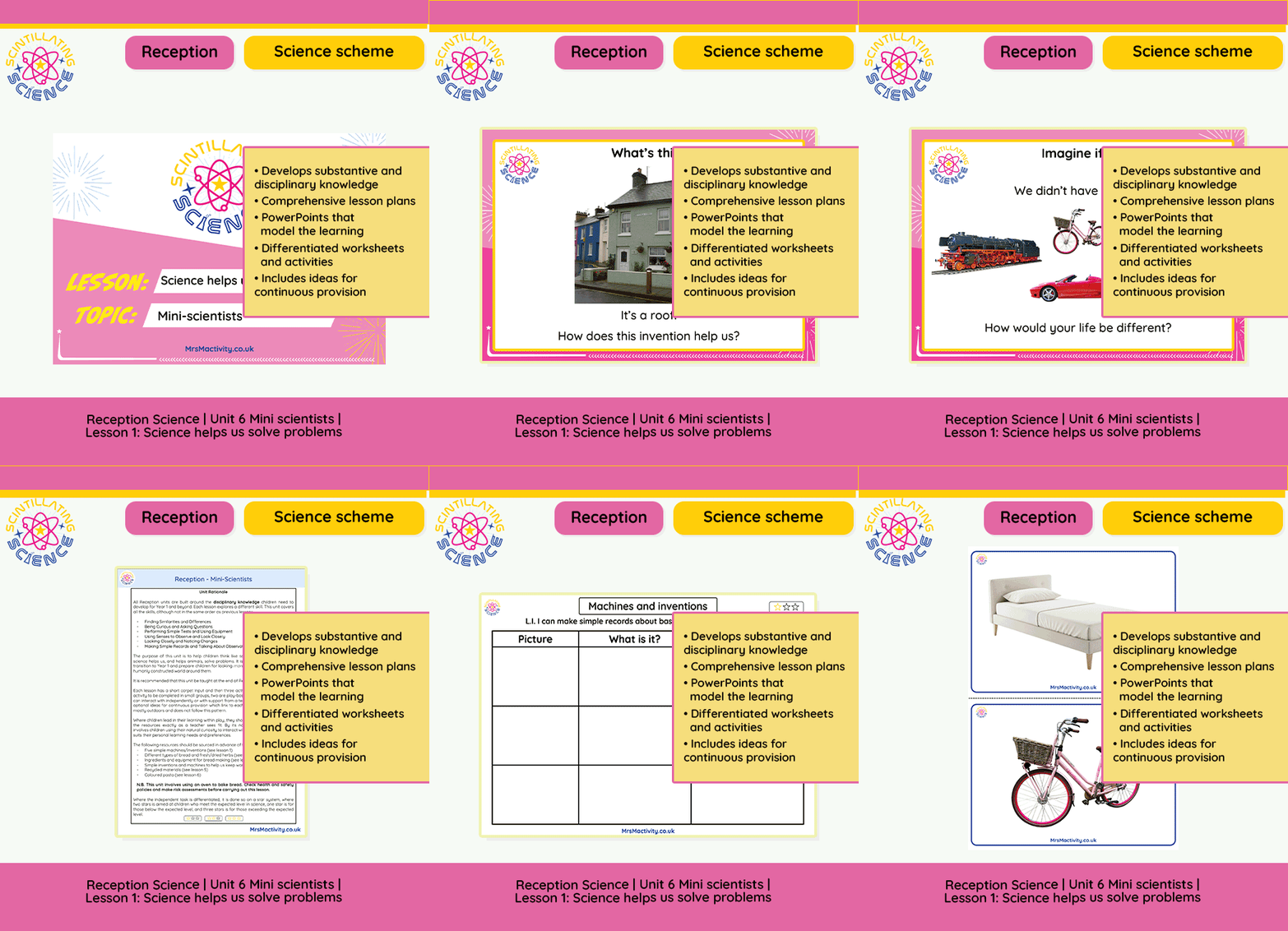
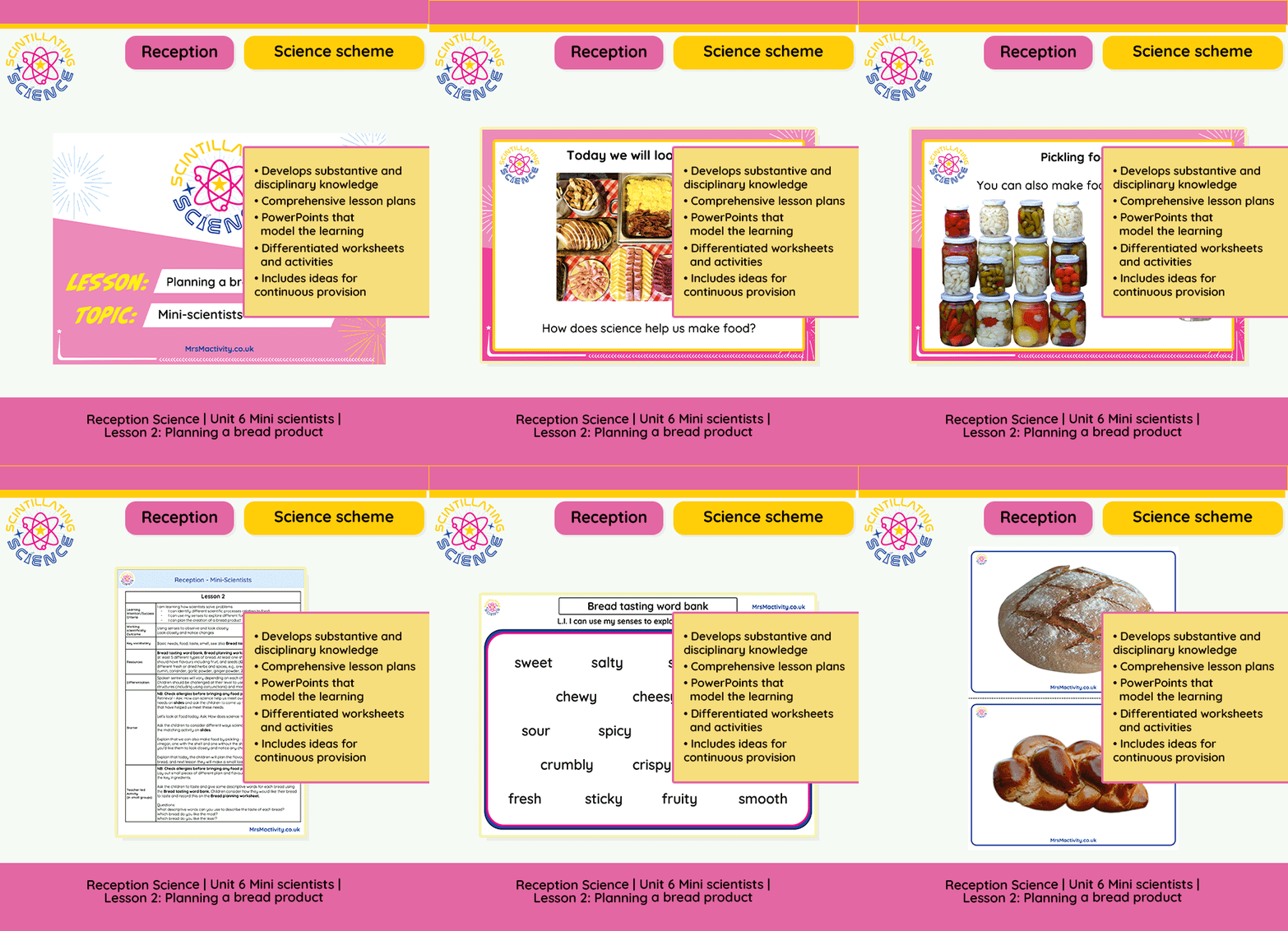
Mini Scientists is a practical Reception science investigations unit designed to bring together the early scientific enquiry skills children have developed across the year. Children solve problems, ask questions, compare and observe, use simple equipment, carry out investigations and talk about what they discover.
Across six lessons, children explore how science helps us solve everyday problems, investigate and make bread, find out how objects and structures help us keep warm, design and make an invention and explore how camouflage helps animals hide. The unit provides an opportunity to apply scientific thinking through practical experiences towards the end of Reception.
The unit supports Understanding the World through practical experiences that encourage children to explore how things work, investigate materials and changes, consider human needs and observe features of the natural world.
Mini Scientists gives children opportunities to revisit and apply scientific enquiry towards the end of Reception. Through questioning, observing, comparing, testing, measuring and recording, children develop useful foundations for Working Scientifically as they move into KS1.
Mini Scientists gives children opportunities to use their scientific enquiry skills in different contexts. The six lessons combine practical investigations, problem-solving and discussion, helping children make connections between science, everyday life and the natural world.
Children begin by considering basic human needs and exploring familiar inventions and objects that help us meet them. They compare everyday objects, consider what they are made from and investigate how shelter can help provide warmth and protection.
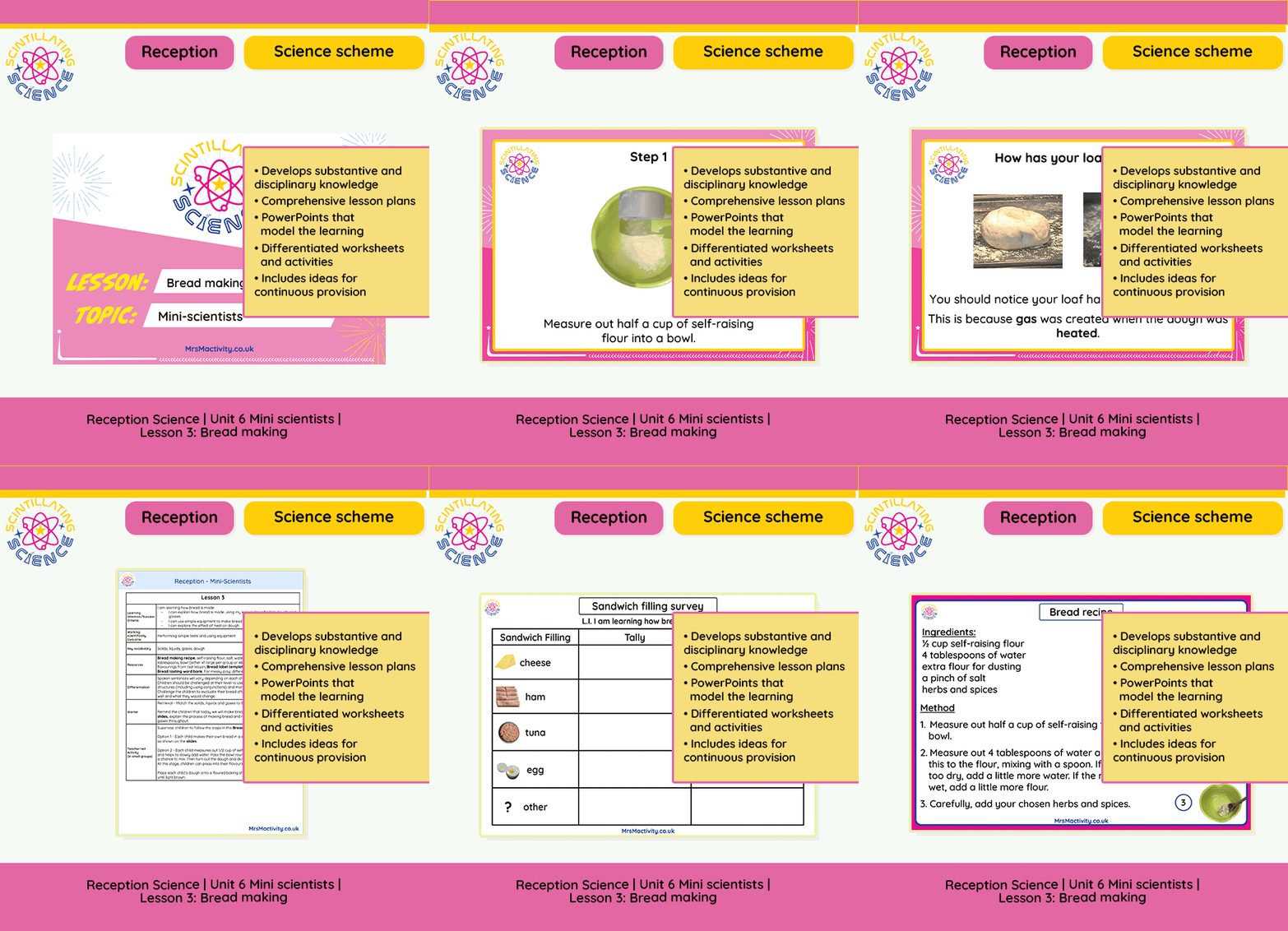
Two linked lessons use bread to develop observation and practical enquiry. Children taste different breads, use their senses to explore herbs and spices and plan their own bread product. They then measure and mix ingredients, make dough and observe how it changes when baked, revisiting their understanding of solids, liquids and gases.
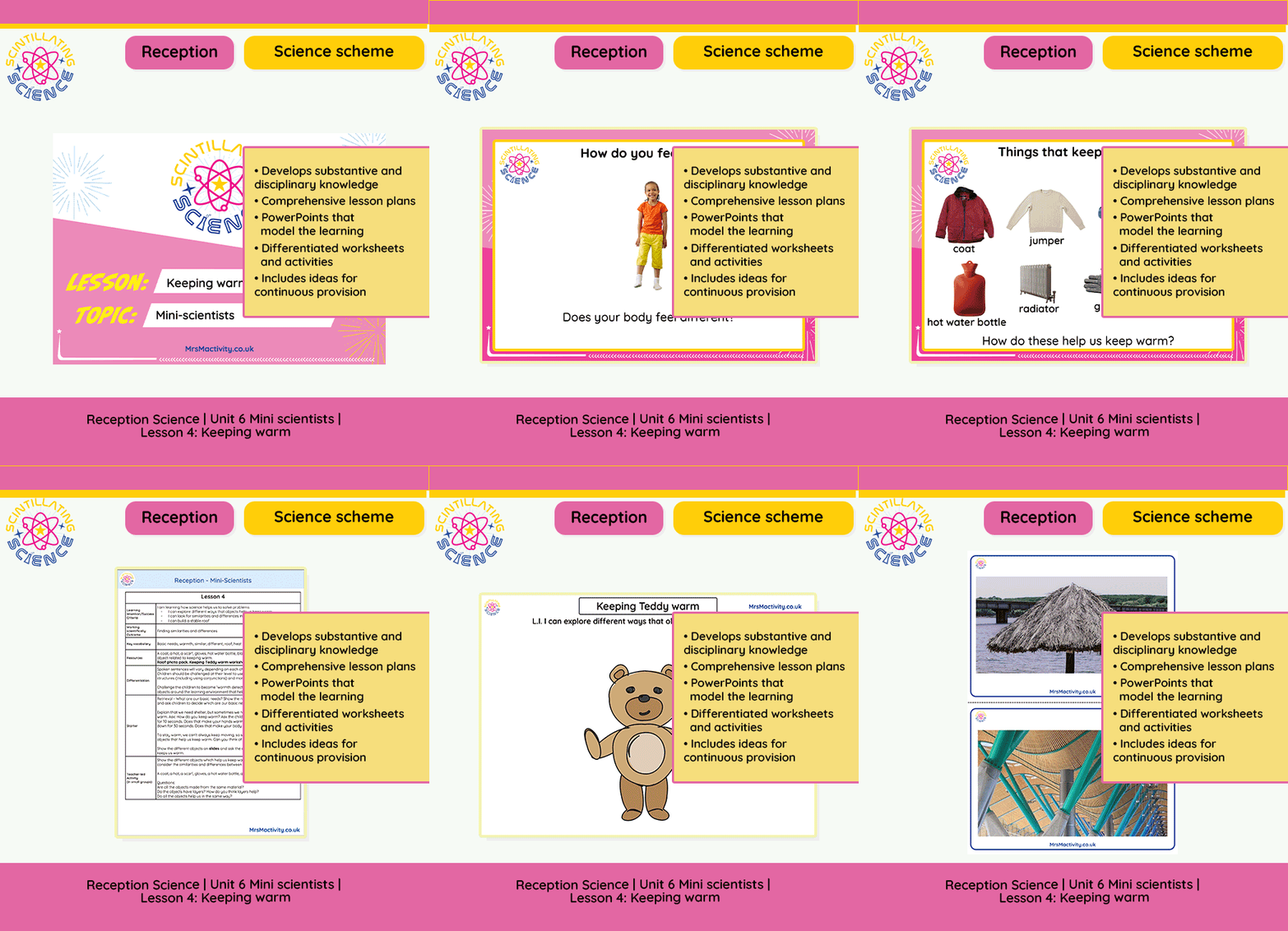
Children compare coats, hats, scarves, blankets and other objects used for warmth, looking at materials, layers, similarities and differences. They also investigate roofs and use construction materials to build a stable roof, applying their ideas about shelter to a practical challenge.
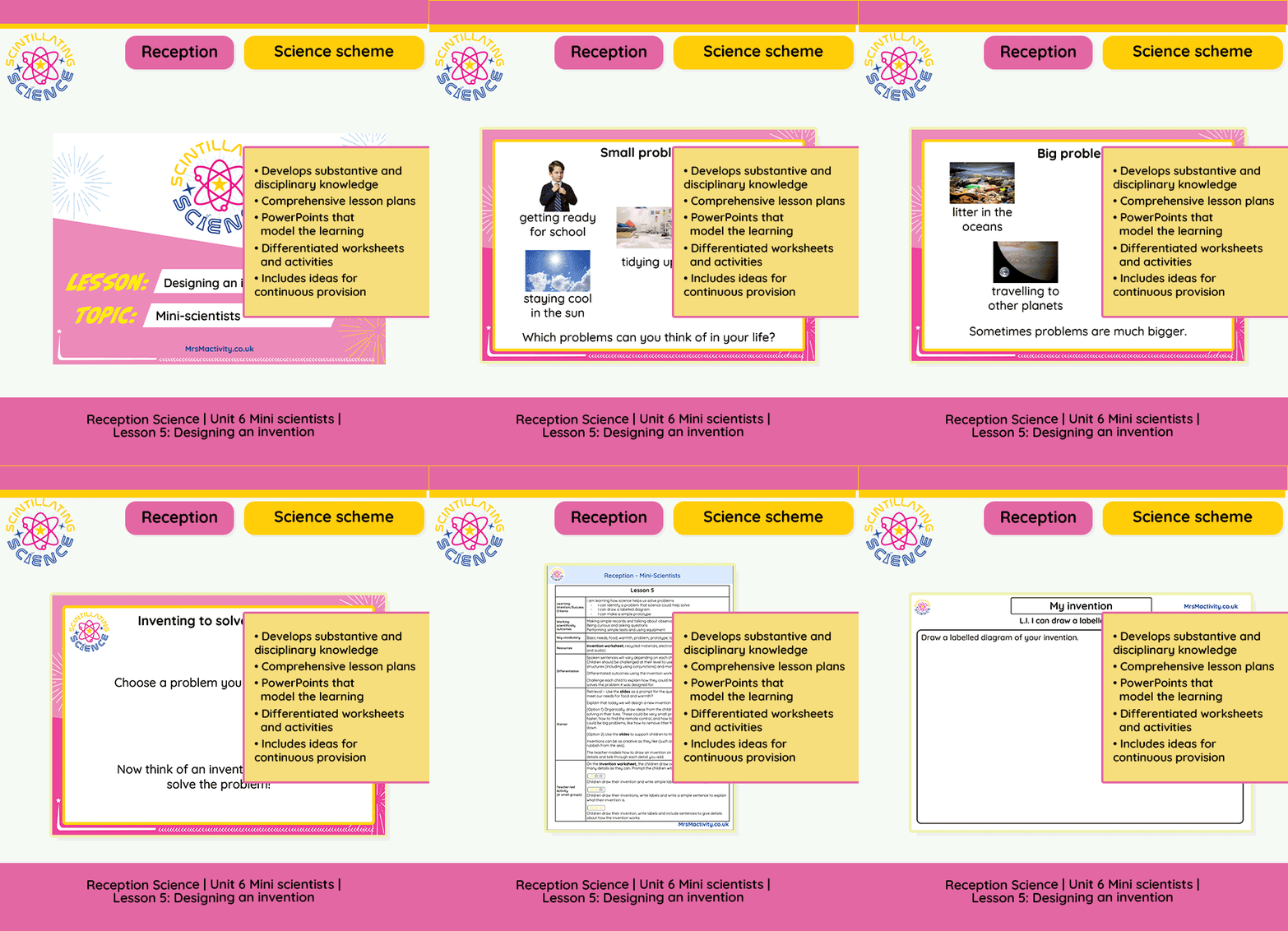
Children identify a problem, draw a labelled invention and make a simple prototype from recycled materials. They explain how their invention works and consider how it could be tested, introducing the idea that solutions can be explored and improved.
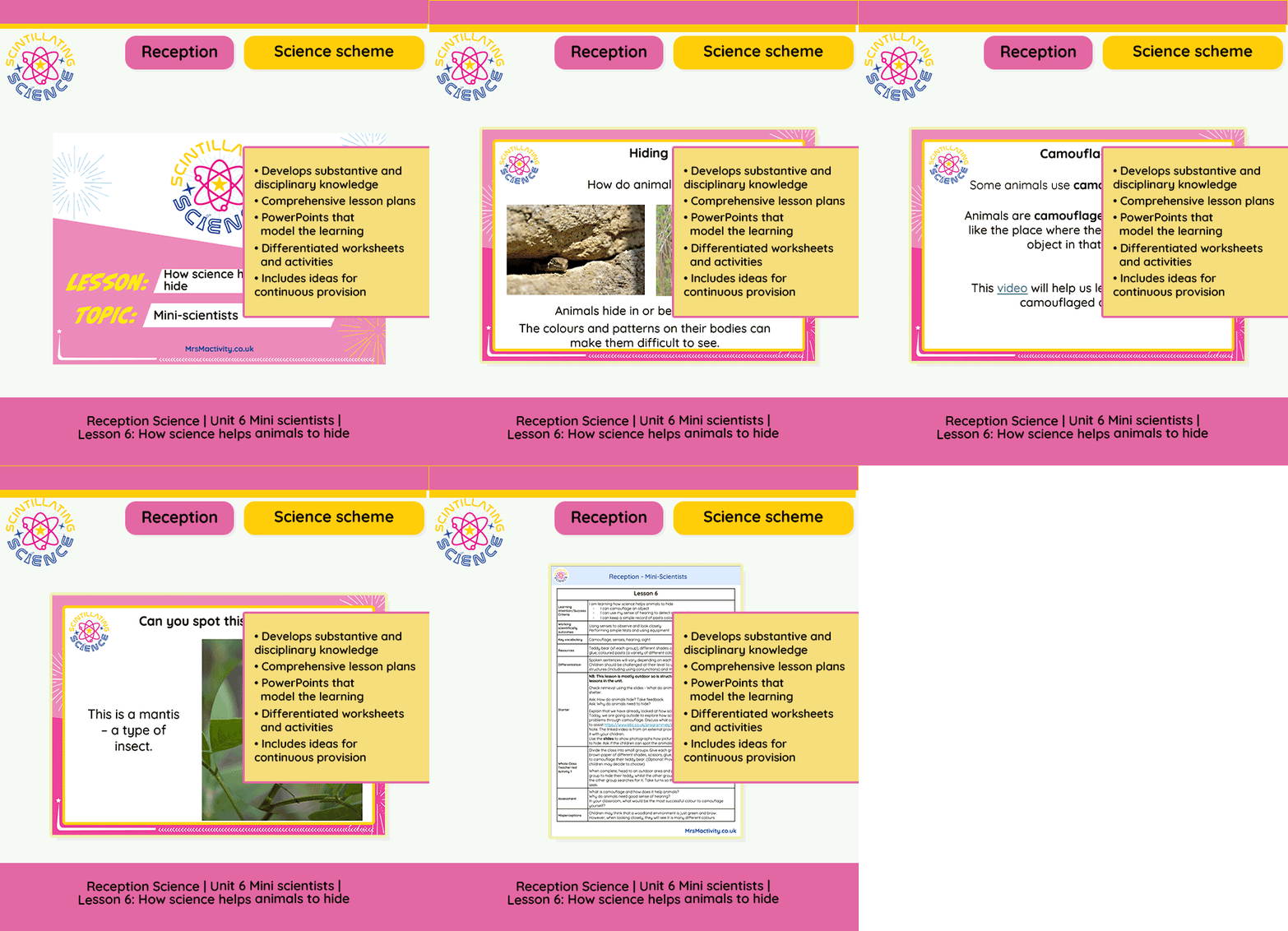
Outdoor camouflage investigations encourage children to use sight and hearing to explore how animals can remain hidden. Children camouflage a teddy, investigate which colours are easiest to find against natural backgrounds and record the results of a coloured pasta investigation using a simple tally.
The six-lesson Mini Scientists unit includes:
Explore the wider Reception science curriculum and scheme, or see our complete primary science scheme of work.
| Cookie | Duration | Description |
|---|---|---|
| _fbp | 3 months | Facebook sets this cookie to display advertisements when either on Facebook or on a digital platform powered by Facebook advertising after visiting the website. |
| _ga | 1 year 1 month 4 days | Google Analytics sets this cookie to calculate visitor, session and campaign data and track site usage for the site's analytics report. The cookie stores information anonymously and assigns a randomly generated number to recognise unique visitors. |
| _ga_* | 1 year 1 month 4 days | Google Analytics sets this cookie to store and count page views. |
| _gcl_au | 3 months | Google Tag Manager sets the cookie to experiment advertisement efficiency of websites using their services. |
| Cookie | Duration | Description |
|---|---|---|
| edd-rvi | 3 months | Description is currently not available. |
| GFE_RTT | 5 minutes | No description available. |
| m | 1 year 1 month 4 days | No description available. |
| Cookie | Duration | Description |
|---|---|---|
| fr | 3 months | Facebook sets this cookie to show relevant advertisements by tracking user behaviour across the web, on sites with Facebook pixel or Facebook social plugin. |
| NID | 6 months | Google sets the cookie for advertising purposes; to limit the number of times the user sees an ad, to unwanted mute ads, and to measure the effectiveness of ads. |
| VISITOR_INFO1_LIVE | 6 months | YouTube sets this cookie to measure bandwidth, determining whether the user gets the new or old player interface. |
| VISITOR_PRIVACY_METADATA | 6 months | YouTube sets this cookie to store the user's cookie consent state for the current domain. |
| YSC | session | Youtube sets this cookie to track the views of embedded videos on Youtube pages. |
| yt-remote-connected-devices | never | YouTube sets this cookie to store the user's video preferences using embedded YouTube videos. |
| yt-remote-device-id | never | YouTube sets this cookie to store the user's video preferences using embedded YouTube videos. |
| yt.innertube::nextId | never | YouTube sets this cookie to register a unique ID to store data on what videos from YouTube the user has seen. |
| yt.innertube::requests | never | YouTube sets this cookie to register a unique ID to store data on what videos from YouTube the user has seen. |