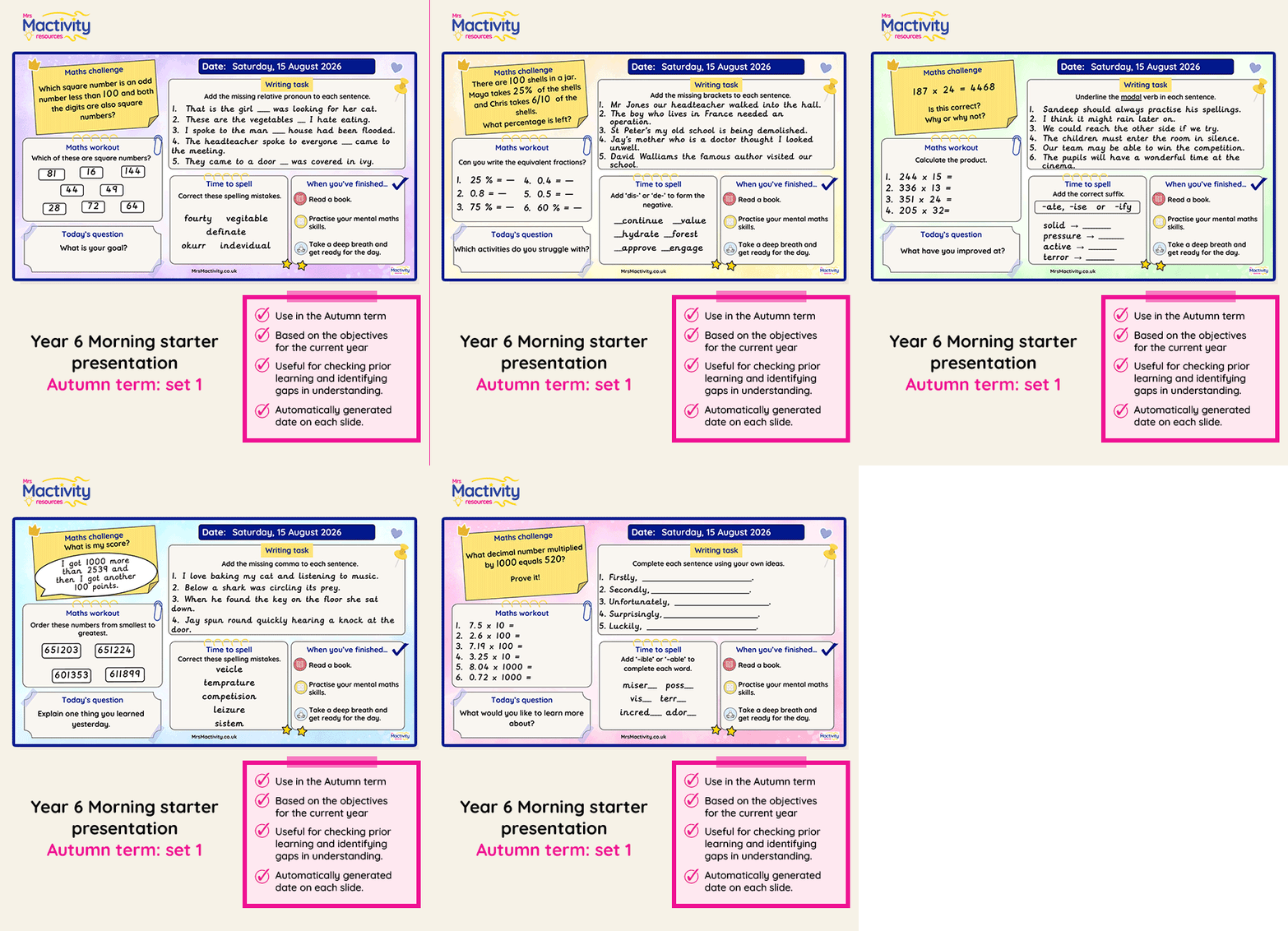
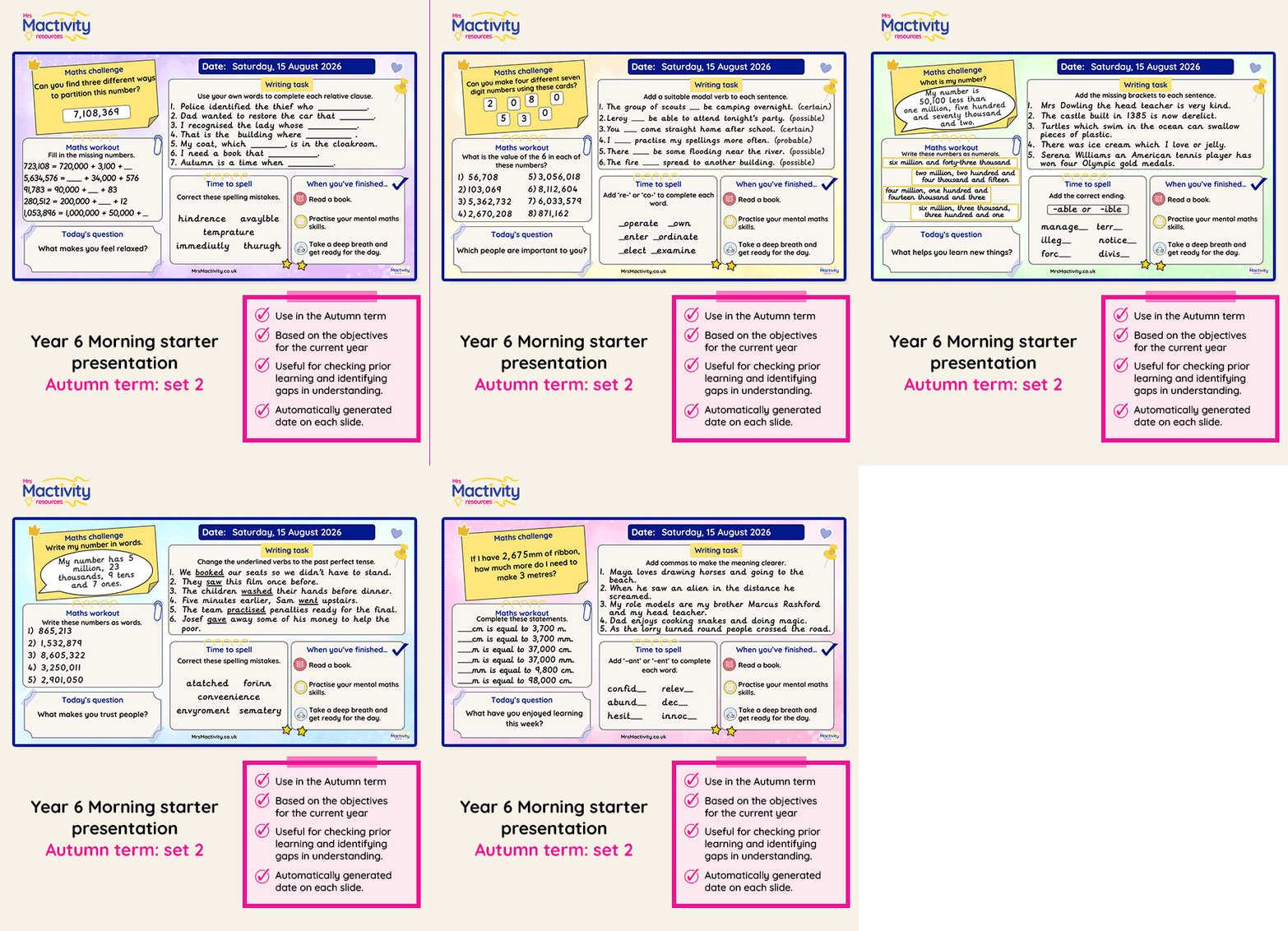
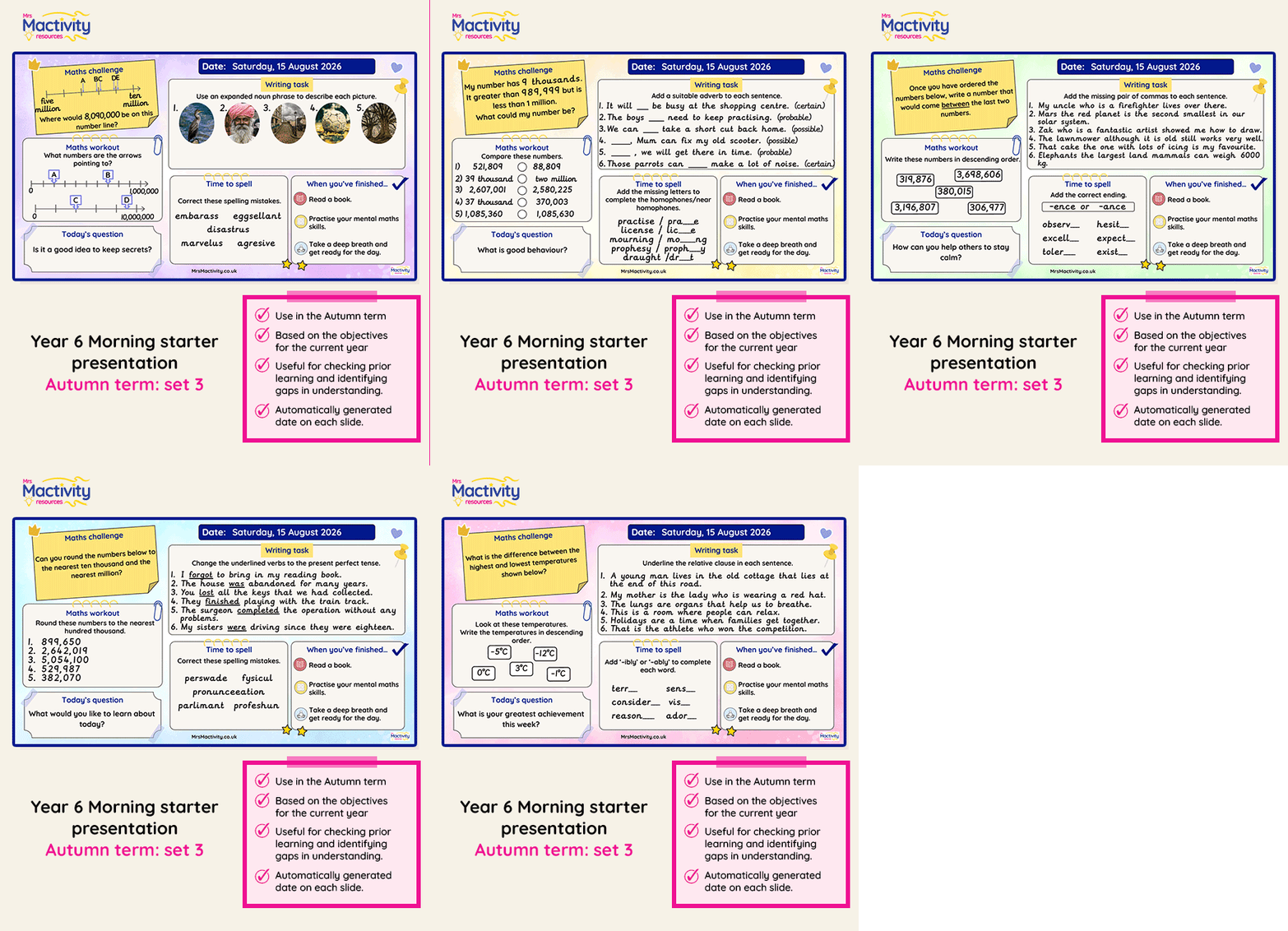
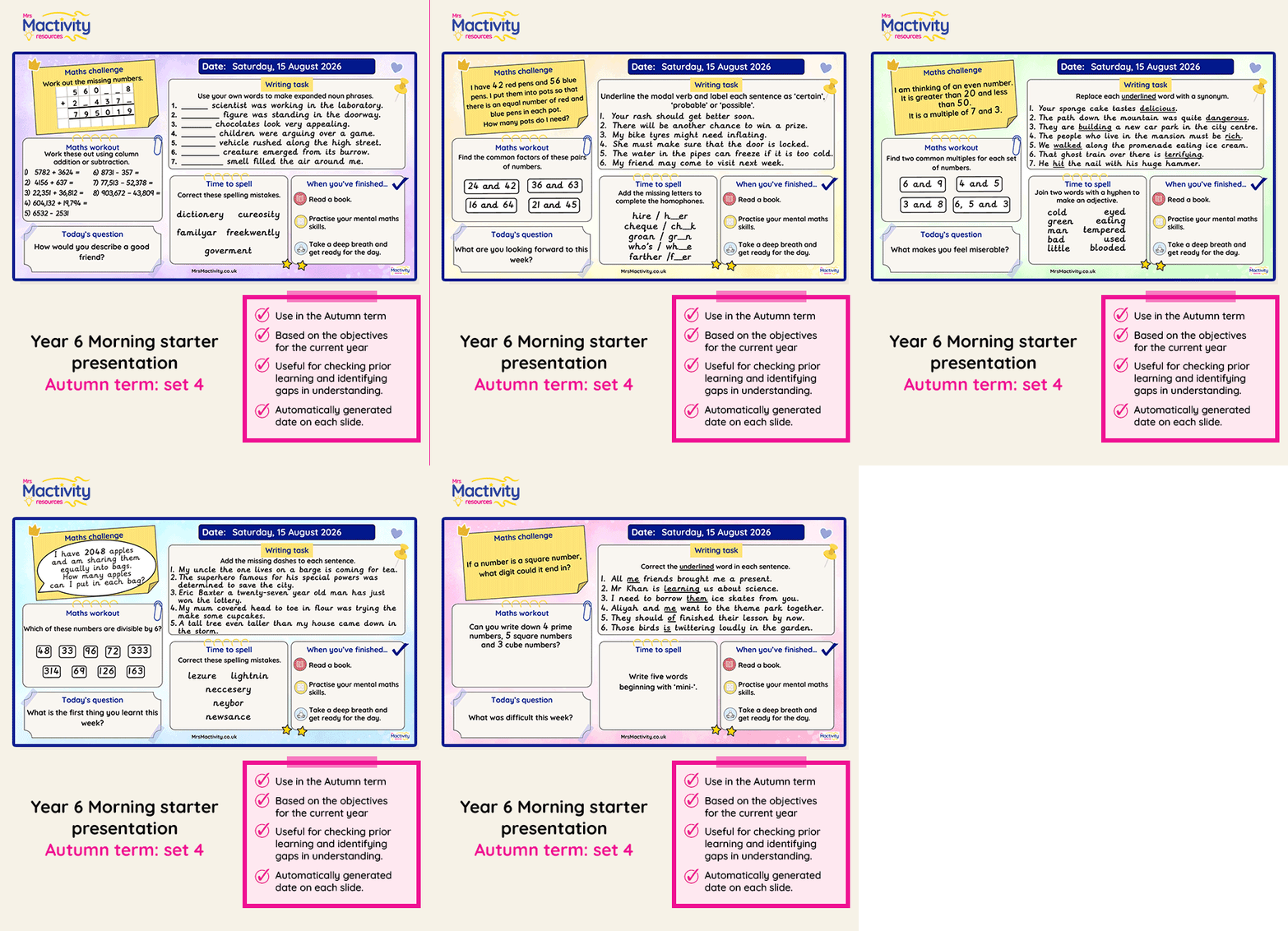
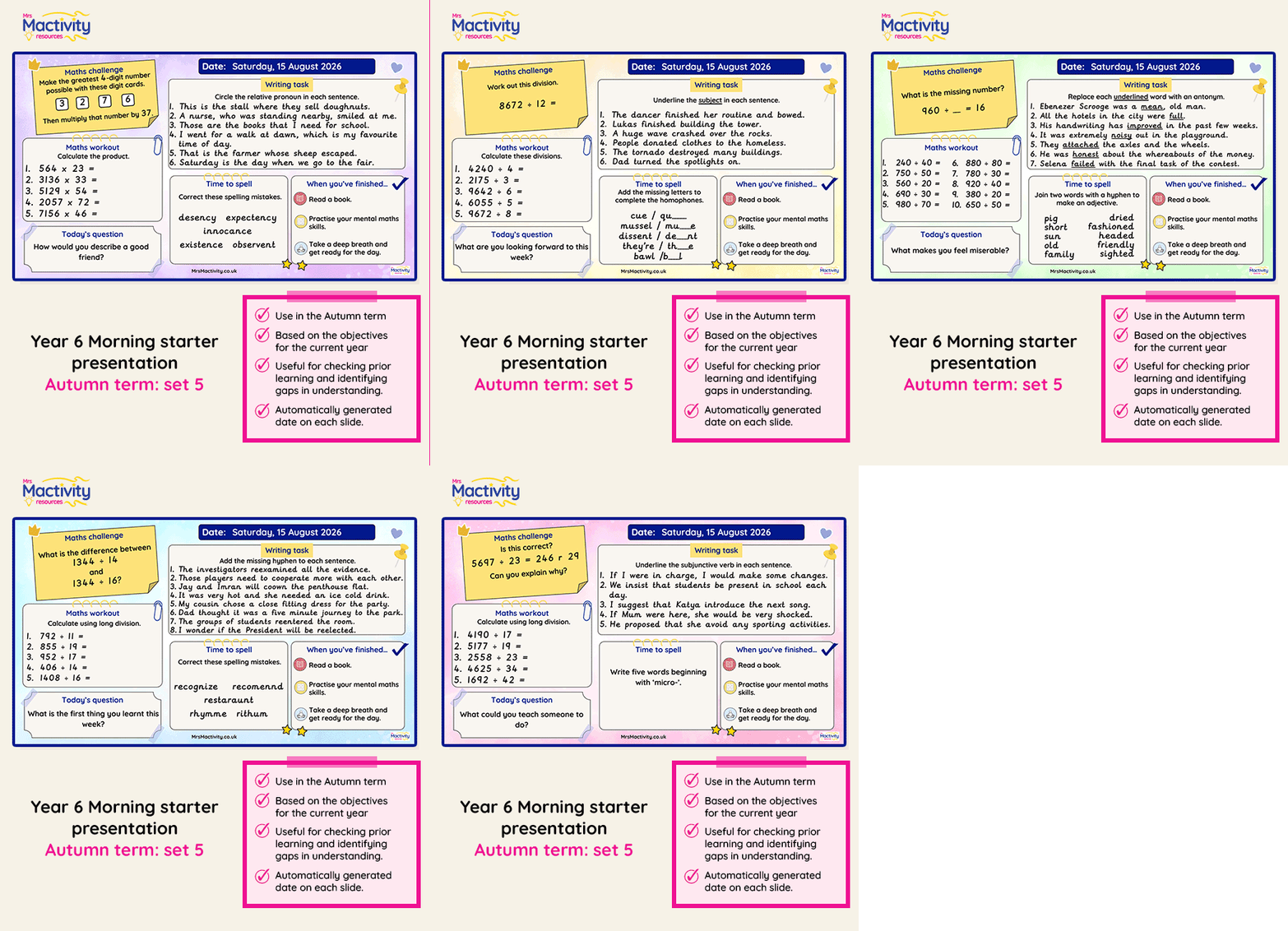
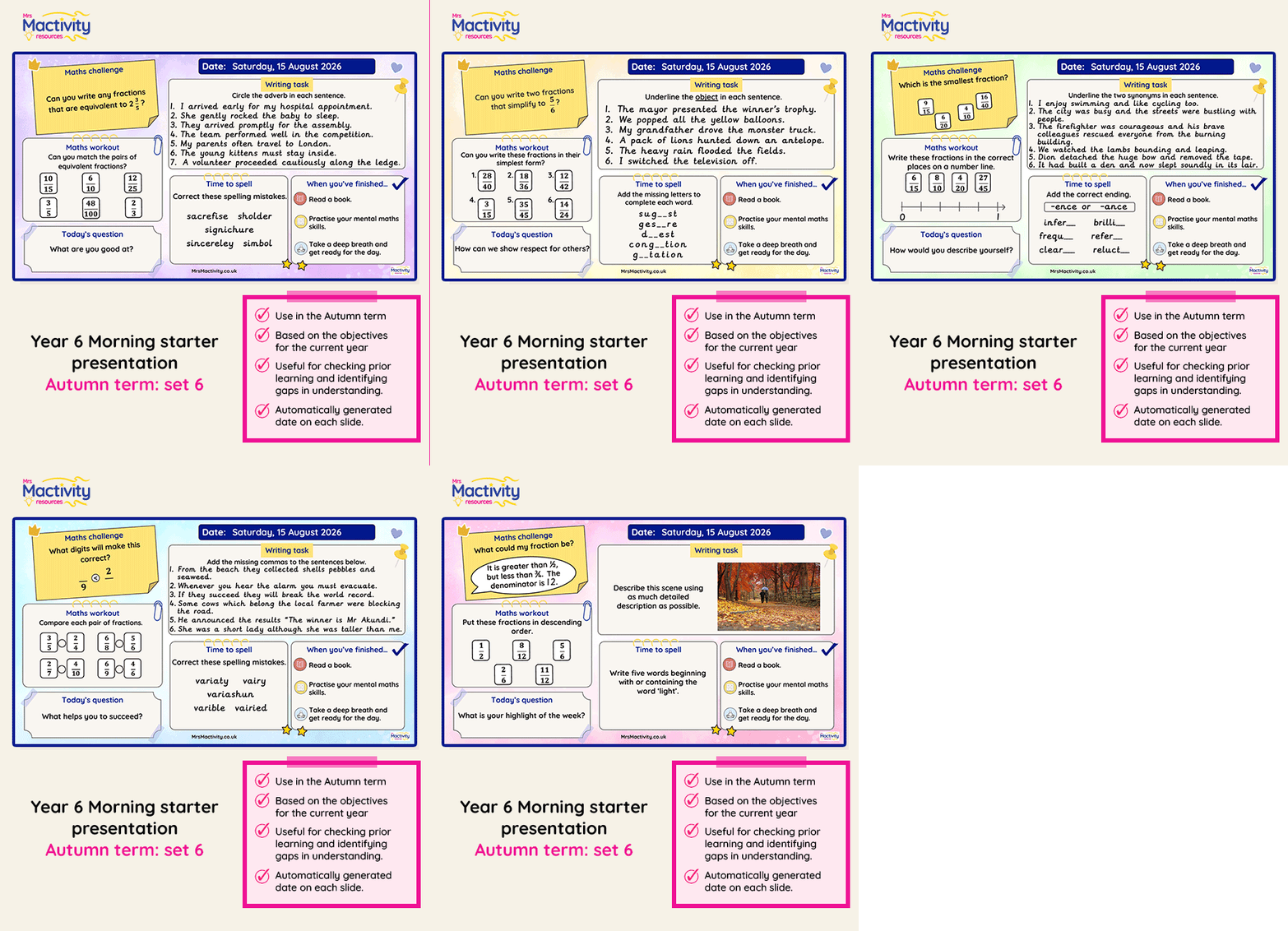
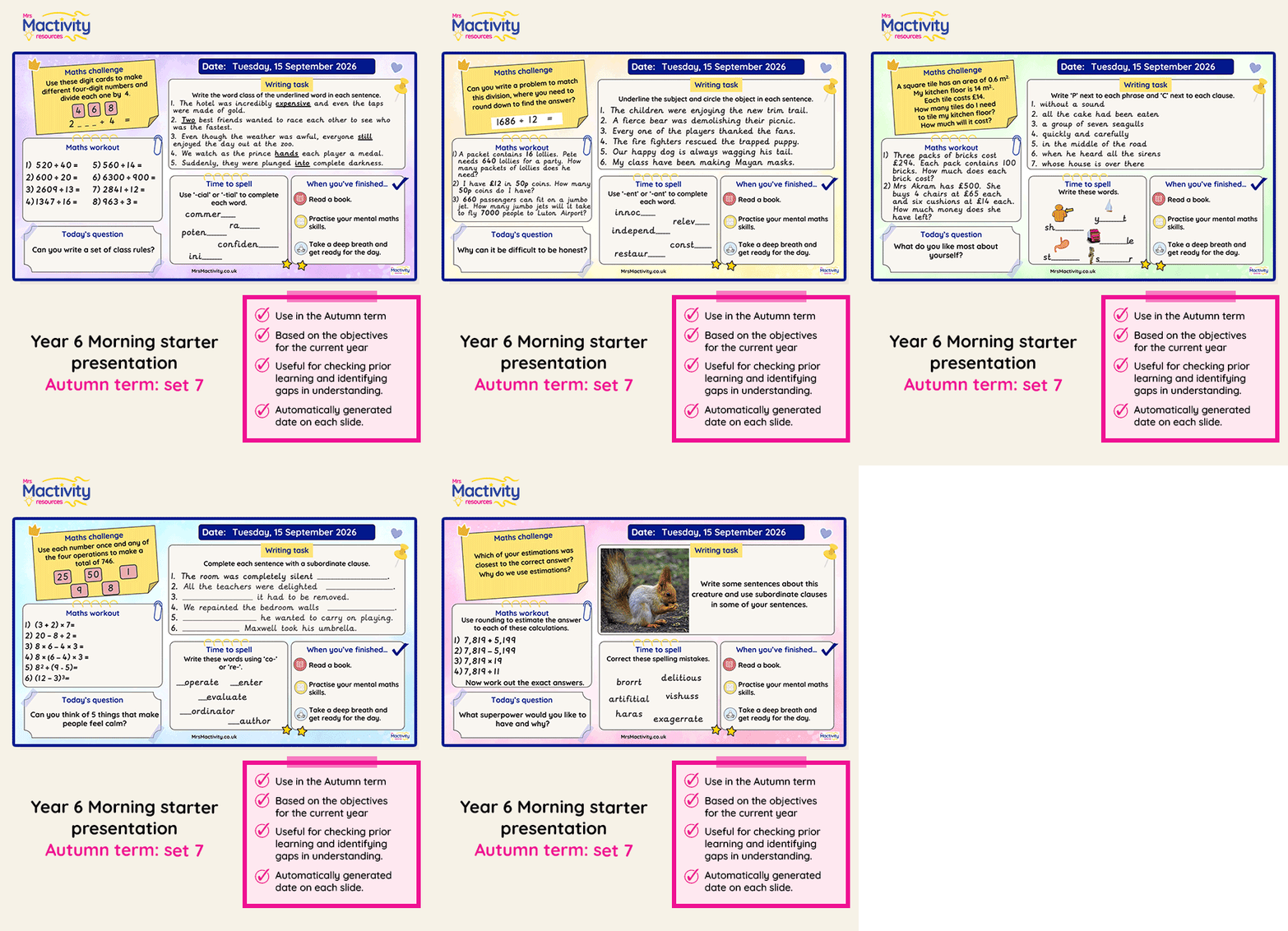
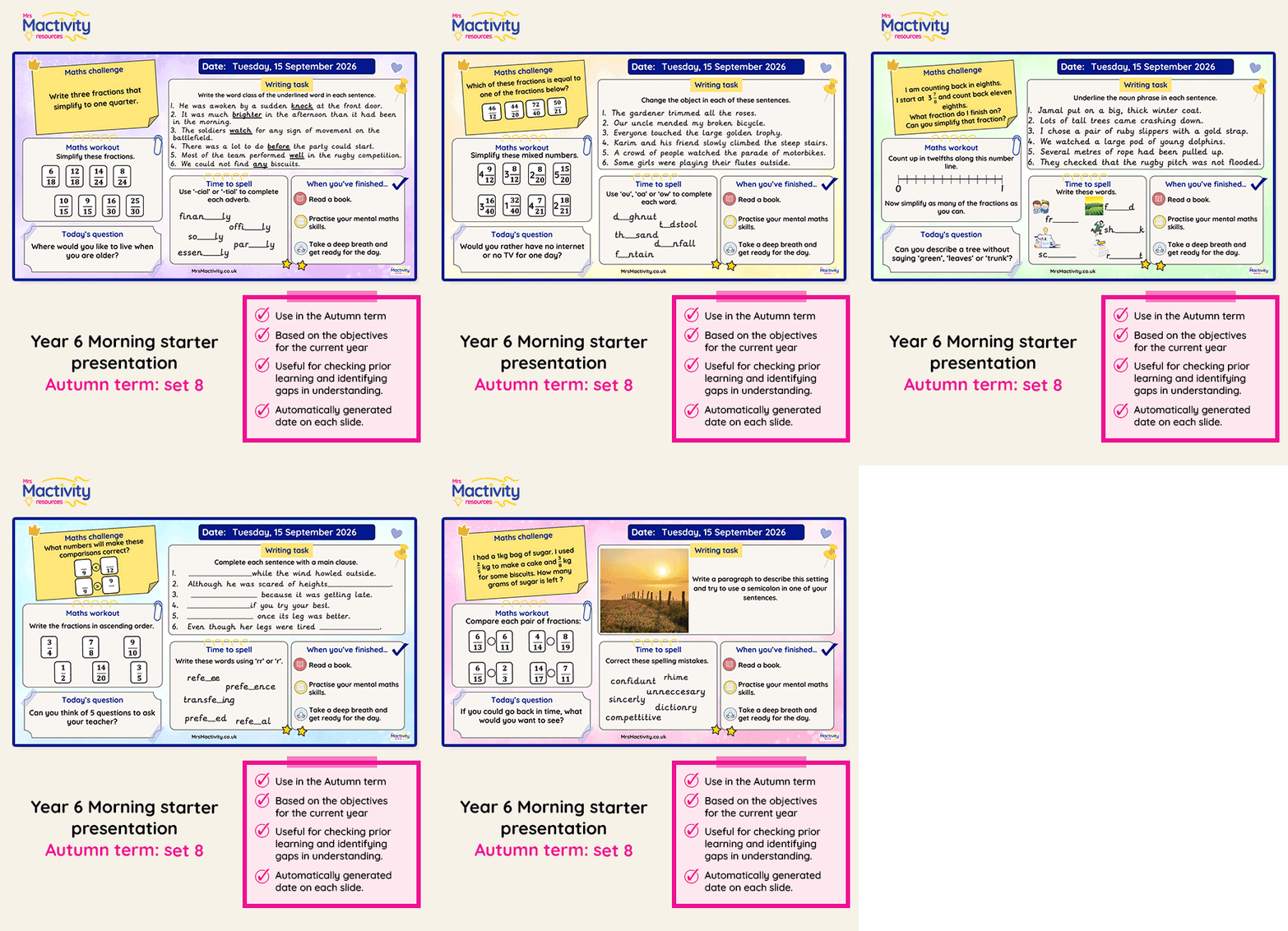
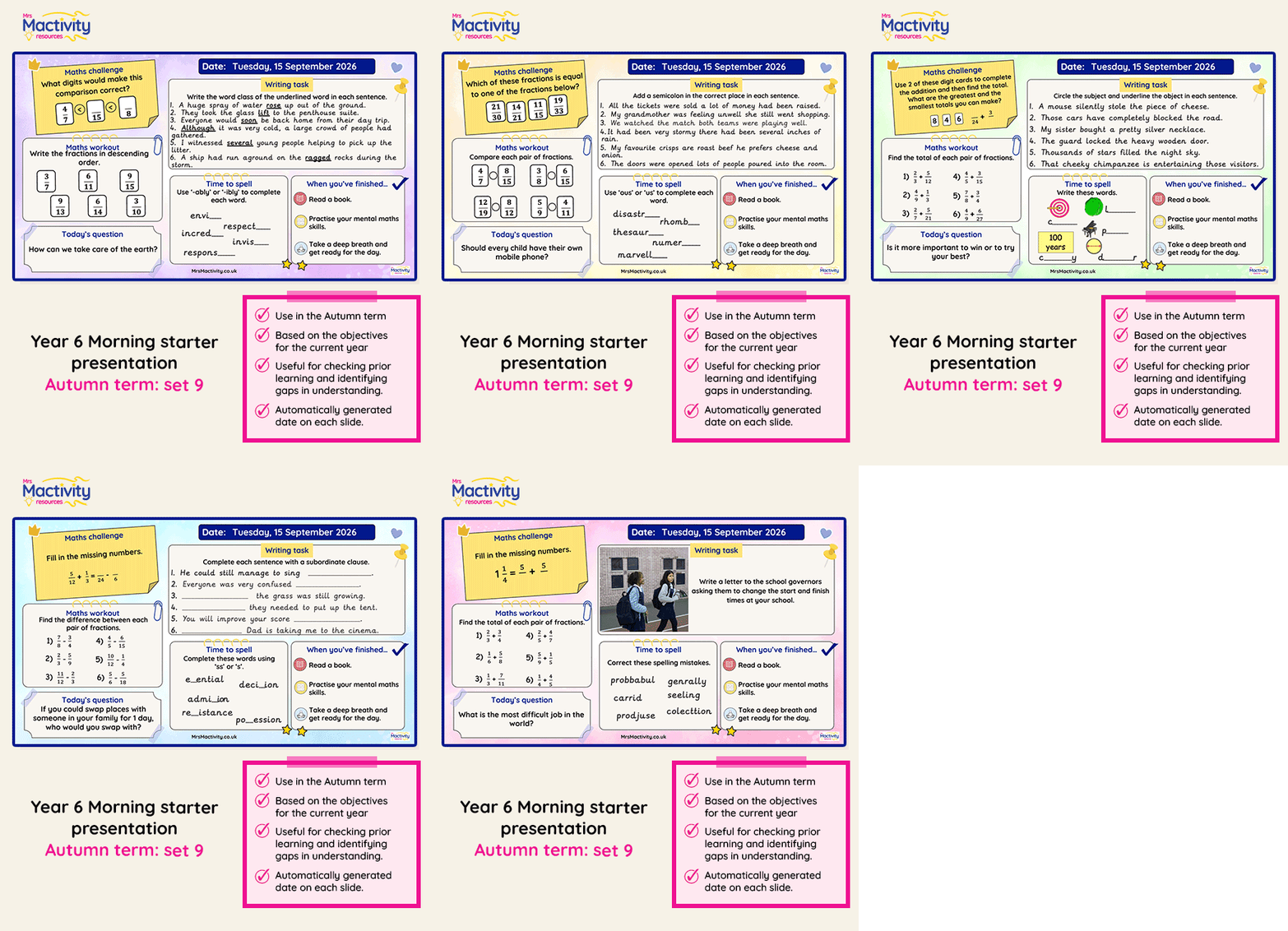
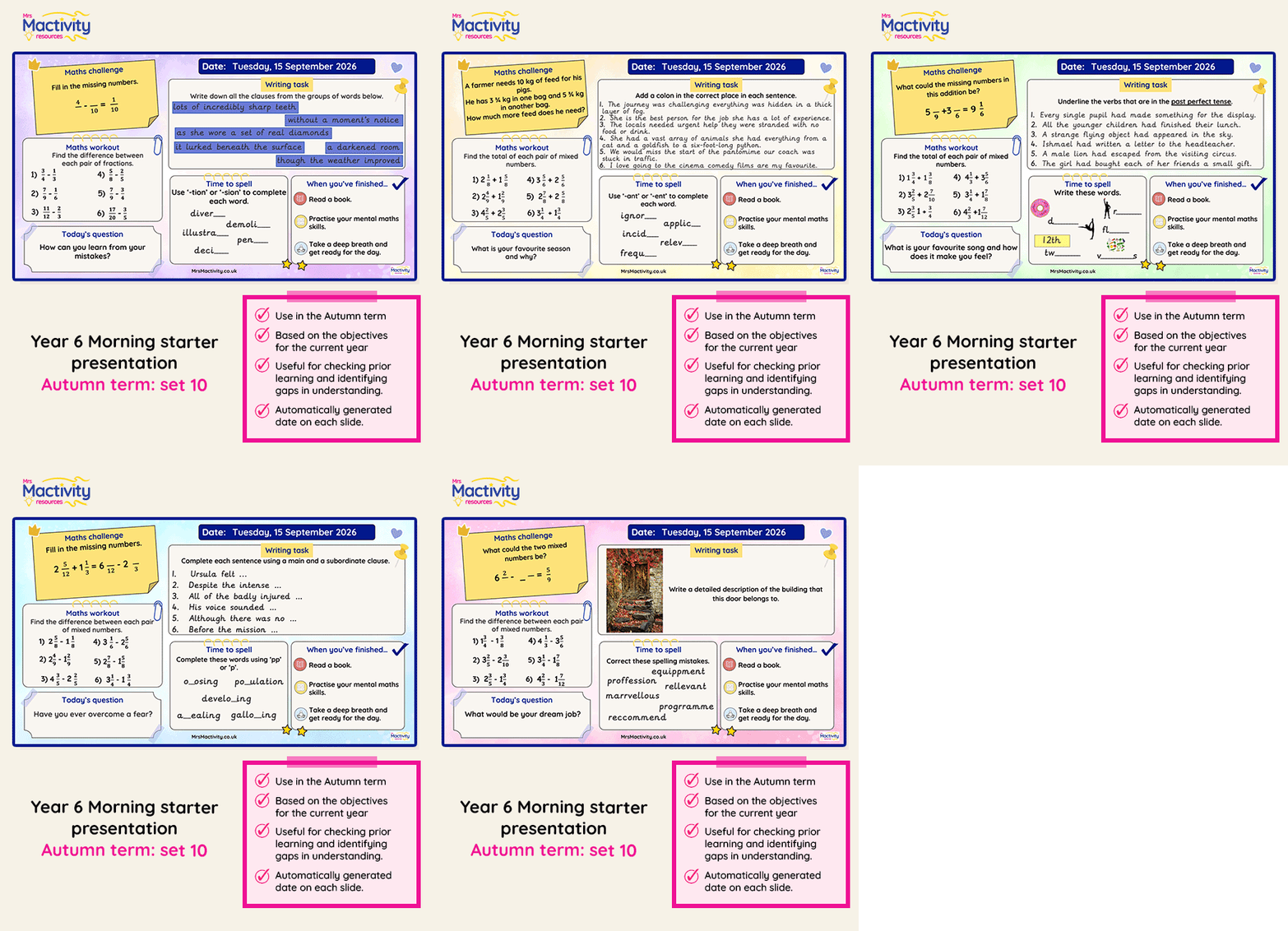
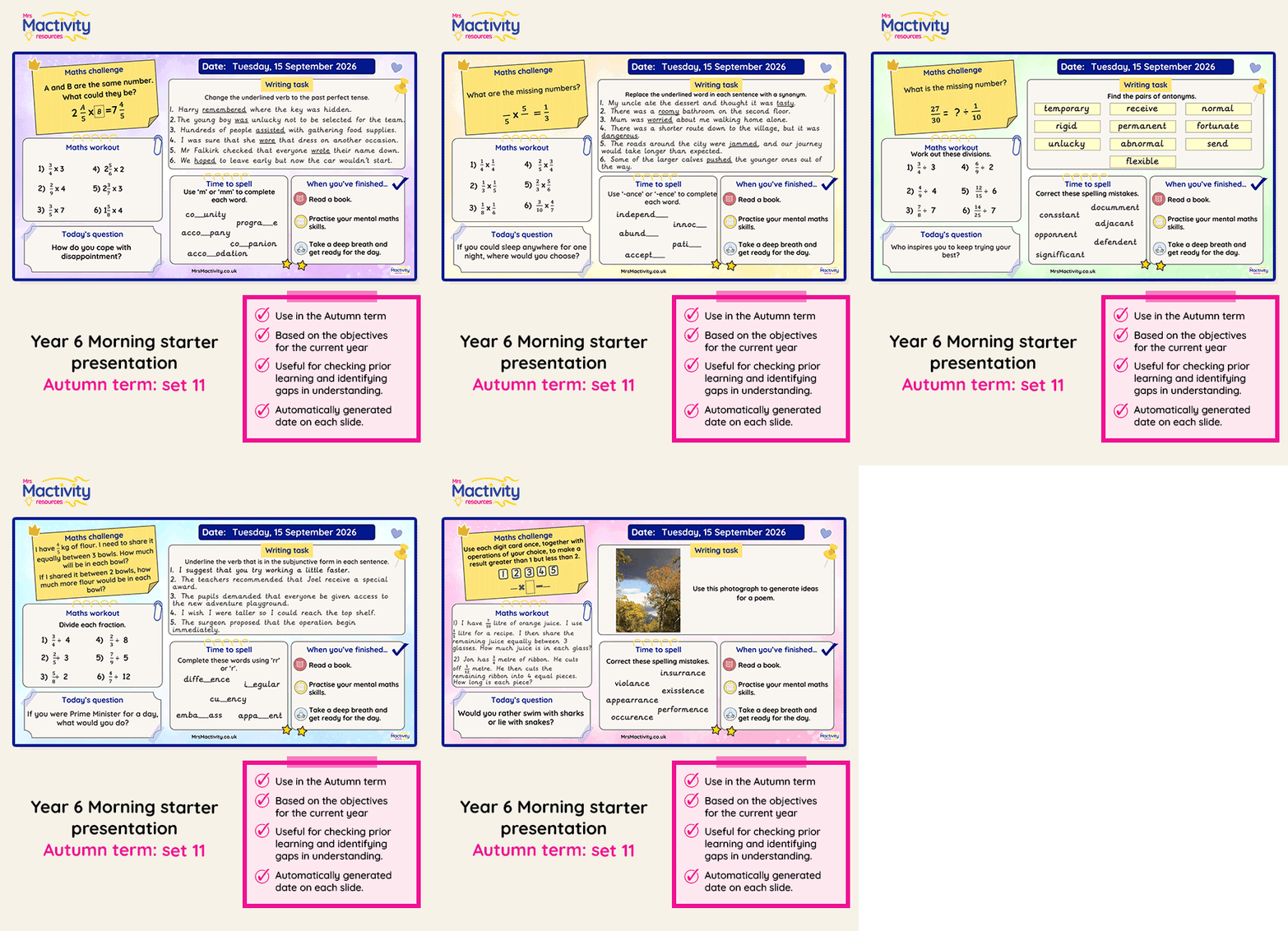
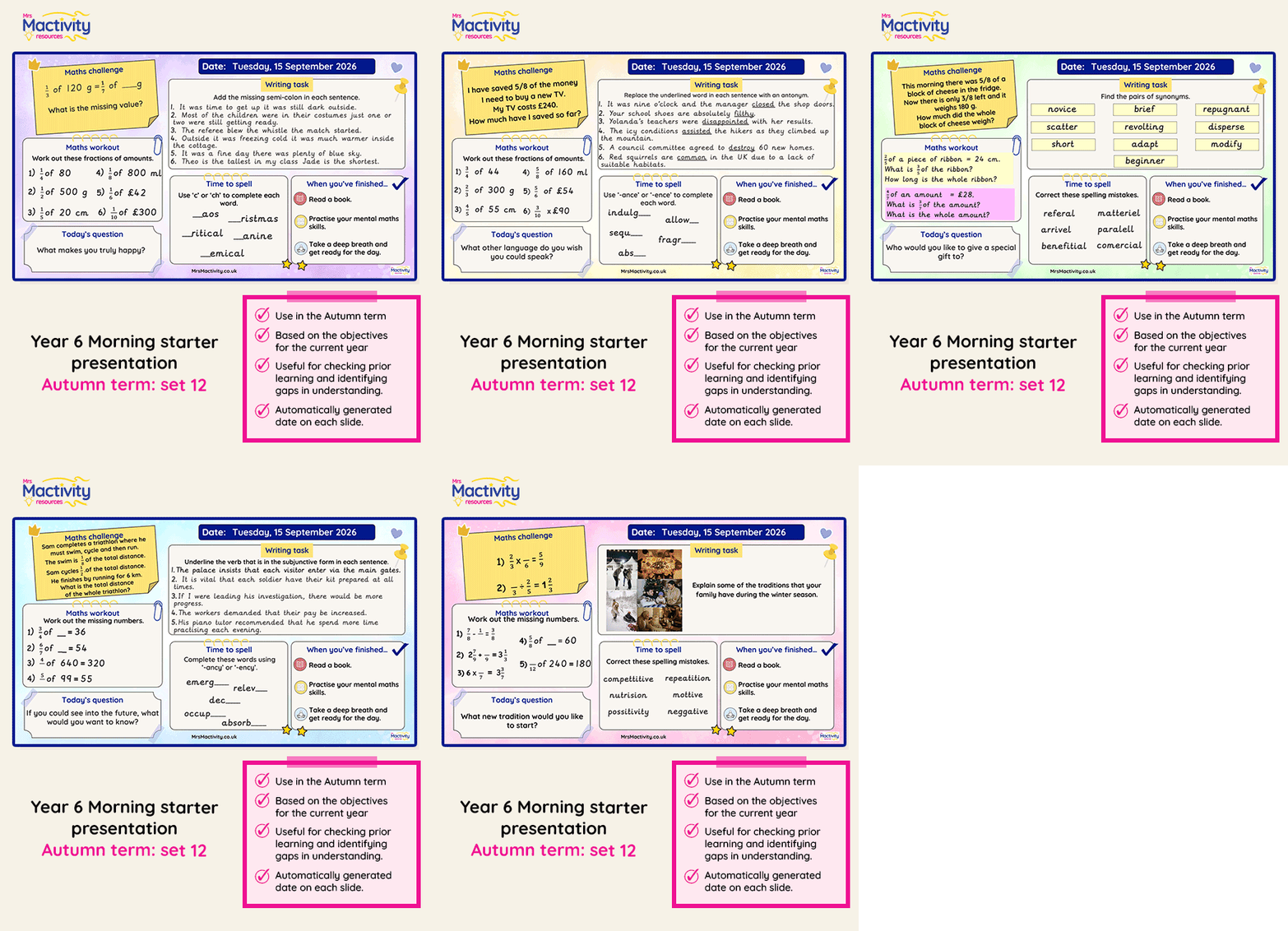
Morning work for Year 6
By Year 6, pupils are increasingly expected to work independently, but a clear and predictable start to the day still matters. Our Year 6 morning work gives pupils something purposeful to begin as they arrive, while providing regular opportunities to retrieve and apply learning from across the curriculum.
The presentations are designed to be short and manageable rather than another full lesson. This makes them useful for keeping important skills fresh, identifying areas that may need revisiting and establishing a consistent Year 6 early morning work routine.
What do the Year 6 morning starter activities include?
Activities vary throughout the collection so that pupils revisit a broad range of knowledge and skills. Morning starters can include:
- Maths fluency, arithmetic, reasoning and problem solving
- Spelling practice and Year 6 spelling patterns
- Grammar and punctuation questions
- Short writing and vocabulary activities
- Daily challenges to encourage pupils to think and apply previous learning
- Questions for discussion and reflection
The familiar structure helps pupils know what is expected each morning, while changing activities provide regular retrieval and practice across different areas of learning.
How to use Year 6 morning starters
Launch the presentation and display it on your interactive whiteboard as pupils arrive. Pupils can work through the activities in their morning books, on individual whiteboards or verbally where appropriate. You can then briefly discuss responses as a class or use particular questions to identify learning that would benefit from further practice.
The automatically generated date means the presentation is ready for the day you use it, removing the need to update dates manually before displaying your morning activity.
Year 6 morning starters for SATs preparation
Morning work can be particularly useful in Year 6 because it creates regular opportunities to revisit prior learning without adding another lengthy revision session to the timetable. Short maths, spelling, grammar and punctuation activities can help pupils retrieve knowledge frequently and highlight gaps that may need further teaching.
In the run-up to KS2 SATs, these Year 6 morning starter activities can therefore sit alongside your wider revision and teaching. They are not designed as SATs practice papers, but they provide a manageable way to keep key skills in regular use as assessments approach.
Year 6 morning starter FAQs
What is early morning work in Year 6?
Early morning work is a short activity pupils begin when they arrive in the classroom. In Year 6, it can be used to revisit previous learning, practise key skills and give pupils a clear task while the class settles for the day.
How long should a Year 6 morning starter take?
Around 5 to 10 minutes is usually enough for a morning starter. Keeping activities short means pupils can practise important skills regularly without morning work taking time away from the main teaching for the day.
What should Year 6 morning work include?
Useful Year 6 morning work can include arithmetic and reasoning, spelling, grammar and punctuation, vocabulary, short writing tasks and retrieval questions. Varying the focus across the week gives pupils opportunities to revisit learning from different areas of the Year 6 curriculum.
Can morning starters help with Year 6 SATs revision?
Yes. Short morning activities can provide regular retrieval practice for maths and English knowledge that pupils will also draw on during KS2 SATs. They work best as one part of normal teaching and revision rather than being used as a replacement for focused SATs preparation.