News and Views: Black History Month assembly
Black History Month assembly for EYFS, KS1 and KS2
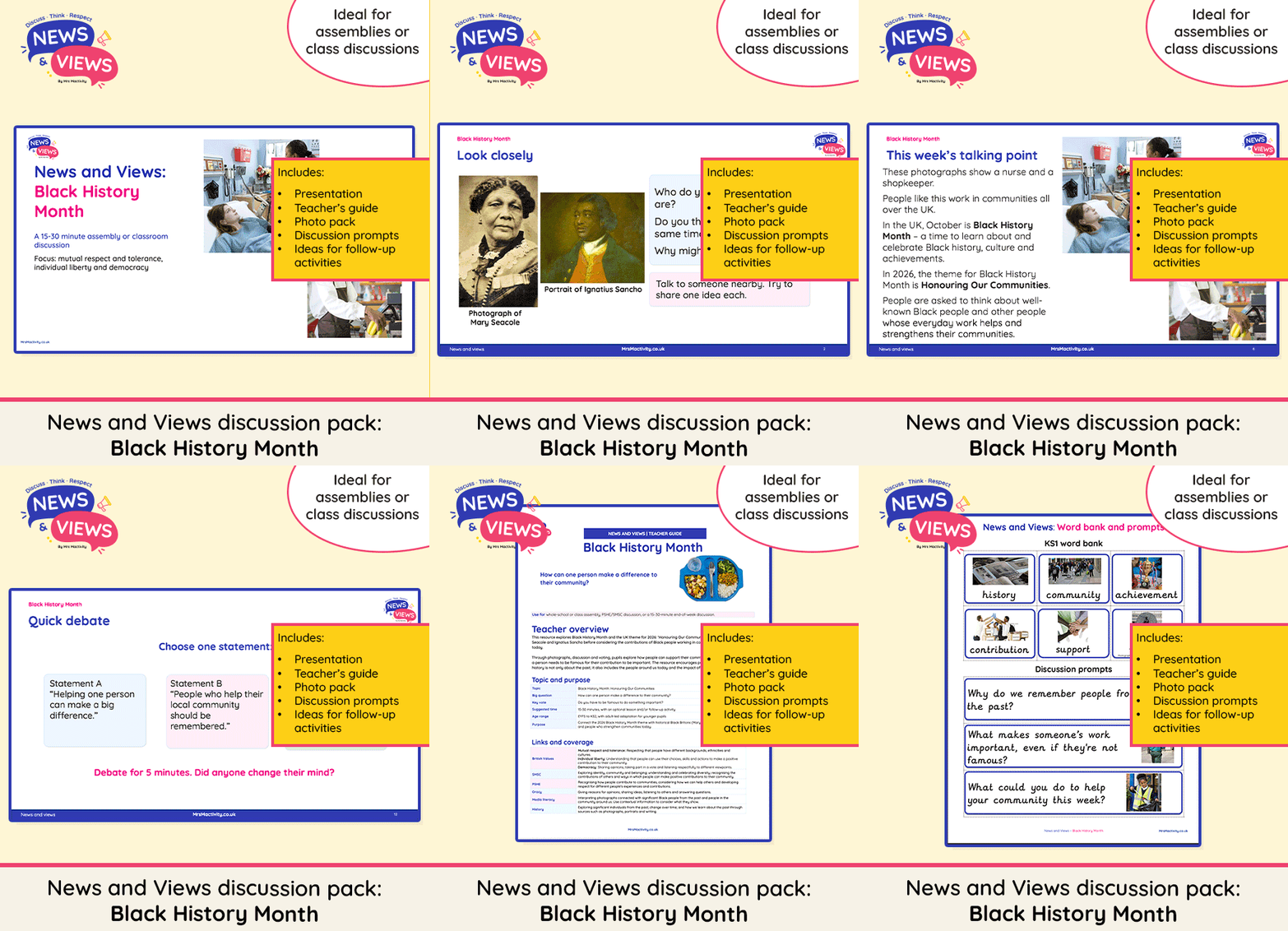
This Black History Month assembly gives pupils the opportunity to explore the 2026 UK Black History Month theme, Honouring Our Communities, and consider how one person can make a difference to their community.
Designed for EYFS, KS1 and KS2, the resource can be used for a whole-school assembly, class assembly, PSHE or SMSC discussion, or a 15–30 minute classroom discussion. Pupils learn about Mary Seacole and Ignatius Sancho before considering the contributions of Black people working in communities across Britain today.
Through photographs, discussion, voting and debate, pupils explore the idea that Black history is not only about well-known people from the past. It also includes people making a difference in communities today.
How can one person make a difference to their community?
The assembly centres on the big question: How can one person make a difference to their community?
After learning about Mary Seacole, Ignatius Sancho and people helping communities today, pupils vote on the question: Do you have to be famous to do something important?
They consider why well-known people may be remembered, why less well-known people can be just as important, and the different ways people can support their communities. Pupils then take part in a short debate before voting again and considering whether listening to other viewpoints has changed their thinking.
What’s included in the Black History Month assembly?
The complete topic pack includes:
- ready-to-use assembly slides
- a detailed teacher guide with background information, suggested timings and delivery guidance
- a Black History Month photo pack
- differentiated word banks and discussion prompts for EYFS, KS1 and KS2
- phase-specific lesson and follow-up activities
- a family discussion prompt
- a pupil voice challenge
✨ How to use the launchable slides
Launch the presentation directly in your browser and use it on your interactive whiteboard.
🧭 Use the lesson menu at the start of the presentation to jump straight to the lesson you are teaching.
📝 Click Notes to see teacher guidance, answers and additional information where included.
⬅️ ➡️ To move through the presentation, click on the slides first, then use the left and right cursor arrow keys on your keyboard.
For technical and copyright reasons, these presentation slides are available to launch online rather than download.
Black History Month activities for EYFS, KS1 and KS2
The follow-up activities are adapted for each phase. EYFS children think about someone who helps them or their family and draw them helping. KS1 pupils think of someone who helps their community and create a thank-you card or poster explaining why their contribution matters. KS2 pupils research a Black British person who has made a difference to a community, either in the past or today, and create a factsheet about their contribution.
The differentiated discussion prompts also allow the topic to be explored at an appropriate level. Younger children consider who helps them and how they can help their community, while older pupils consider why some people’s contributions are remembered more widely than others and whether fame affects how we value someone’s contribution.
Curriculum links
This Black History Month assembly makes meaningful connections with history, British Values, SMSC, PSHE, oracy and media literacy.
Pupils explore significant people from the past, community and belonging, diversity and the contributions people make to others. Voting and discussion provide opportunities to express opinions, give reasons, listen respectfully to different viewpoints and consider whether new ideas might change their thinking.
The assembly can also support pupils in recognising practical ways people contribute to communities, including caring for others, sharing skills, giving their time and bringing people together.
Part of News and Views, our collection of ready-to-use whole-school and class assemblies exploring current affairs, real-world issues and thought-provoking questions. Explore News and Views and find more primary assembly topics.